All species › Potoos › Potoos
Potoos | Nyctibiidae
Reuzennachtzwaluwen | Nictibios
Nocturnal birds of tropical America, represented in this guide by three species of a single genus, from the lowlands of Mexico to Panama, in forest, forest edge, open country with scattered trees and mangroves. They are related to the nightjars, with a large head, a tiny bill and an enormously wide gape, with which they catch large flying insects such as beetles and moths in short sallies from a fixed perch. The plumage is grey and brown, finely mottled and barred like tree bark. By day they sit upright and completely still at the end of a broken branch, head pointed upward and tail pressed against the wood, so that they look like a stump of the branch itself. Even with the eyes closed they can detect movement through small notches in the eyelids; at night the large eyes shine brightly in a torch beam. The voice is striking: in the common species a series of melancholy descending whistles, in others a harsh growl or hoarse croak. No nest is built: the single spotted egg rests in a depression or knot on top of a branch, and parent and chick hold the same branch-like posture.
Native species 3 species
Species that occur here by nature: breeding birds, winter visitors and passage migrants. They are arranged by genus, in the sequence of the list.
Nyctibius 3 species
-
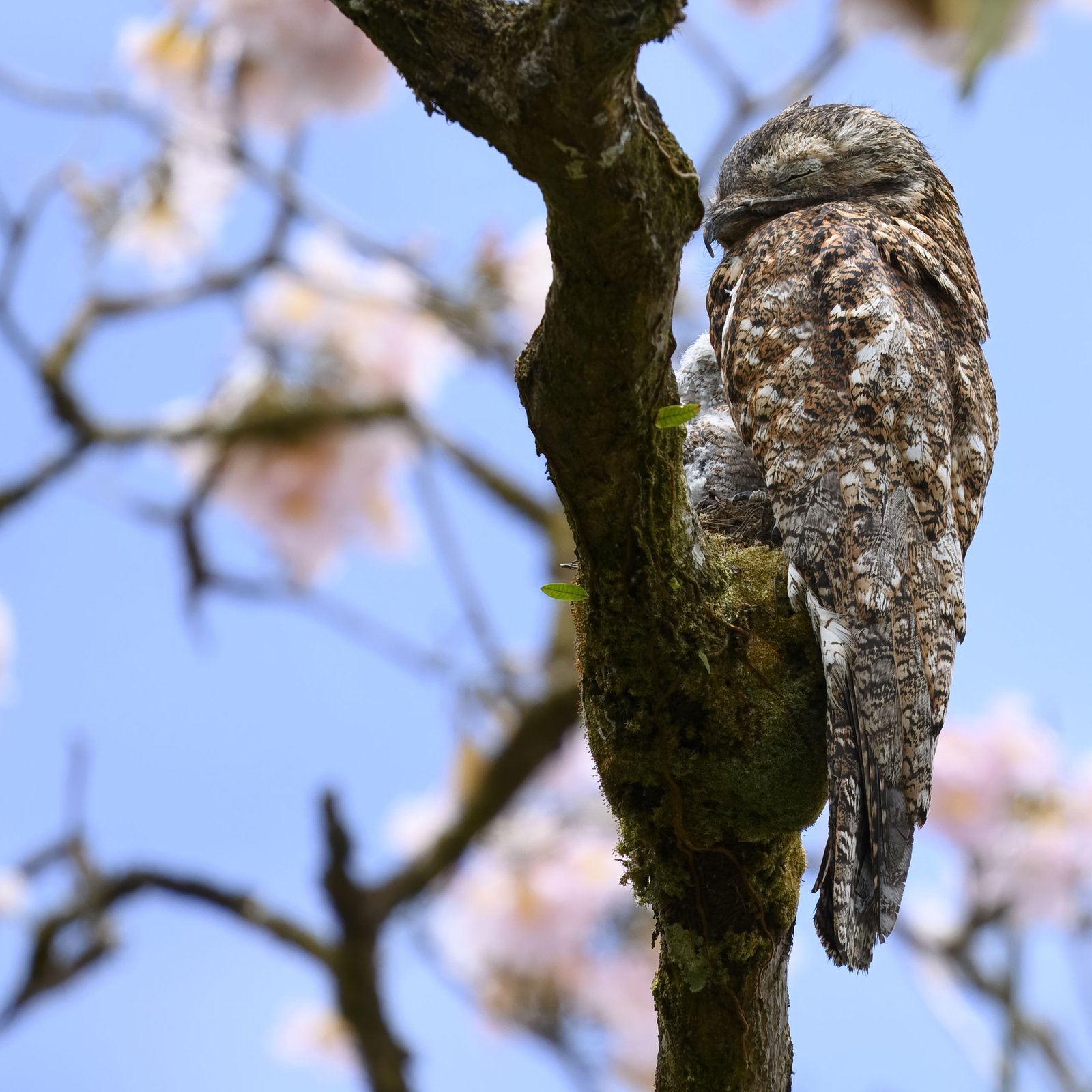
Great Potoo
Nyctibius grandis Lowland rainforest
 Foothill (submontane) forest
 Chocó-Darién rainforest
 Floodplain and gallery forest
 Secondary forest and forest edge
-
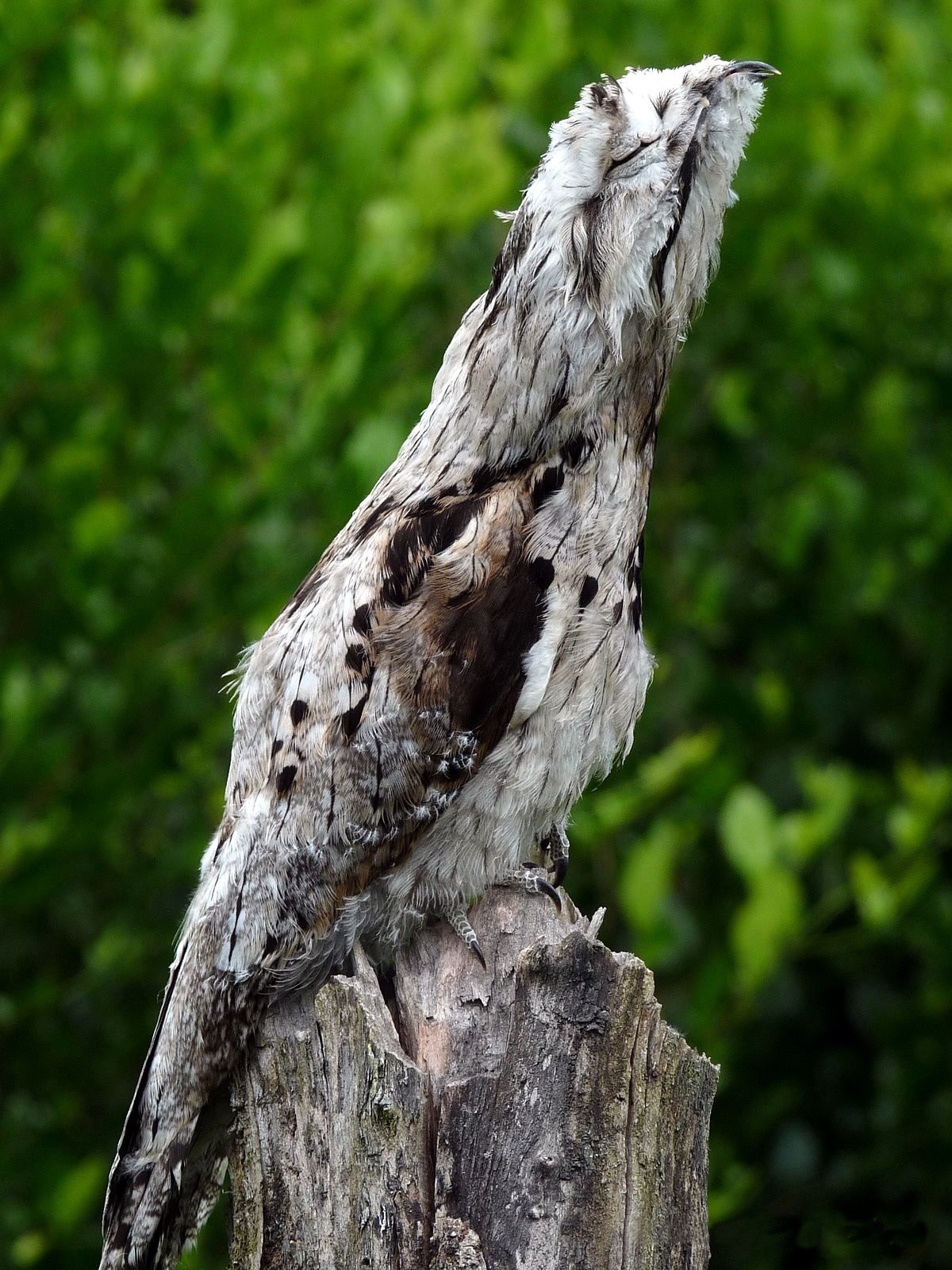
Common Potoo
Nyctibius griseus- Secondary forest and forest edge
- Lowland rainforest
- Floodplain and gallery forest
 Lowland savanna and open grassland
 Pasture and grazing land with trees
-
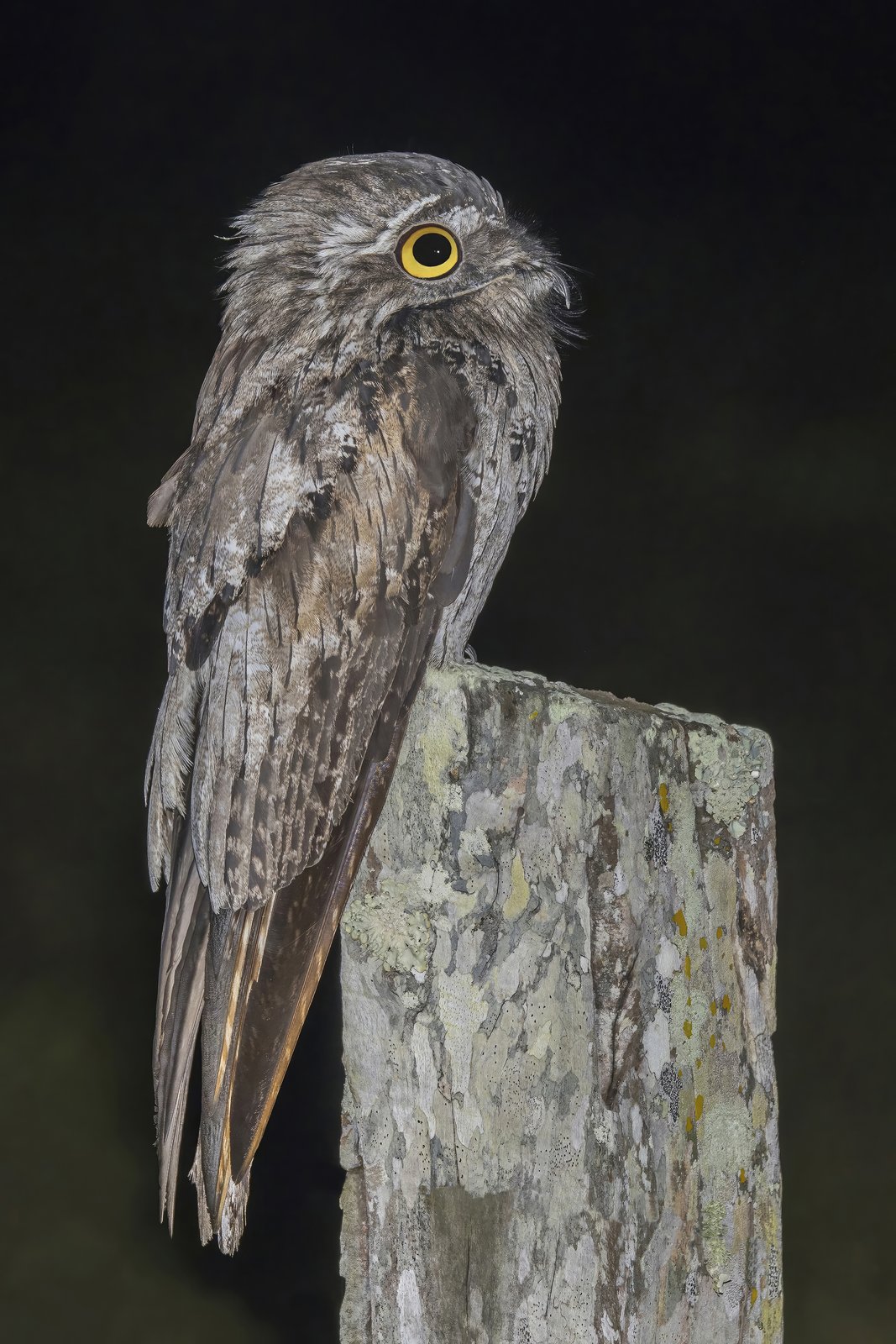
Northern Potoo
Nyctibius jamaicensis Pacific tropical dry forest
 Yucatán and Caribbean-interior seasonal forest
- Secondary forest and forest edge
- Floodplain and gallery forest
- Lowland savanna and open grassland
- Pasture and grazing land with trees