All species › Potoos › Potoos › Northern Potoo
Position in the tree Birds Aves › Birds with a flexible palate Neognathae › All other modern birds Neoaves › Birds of the elements Elementaves › Nightjars and swifts Strisores
Northern Potoo | Nyctibius jamaicensis
Noordelijke reuzennachtzwaluw | Nictibio norteño
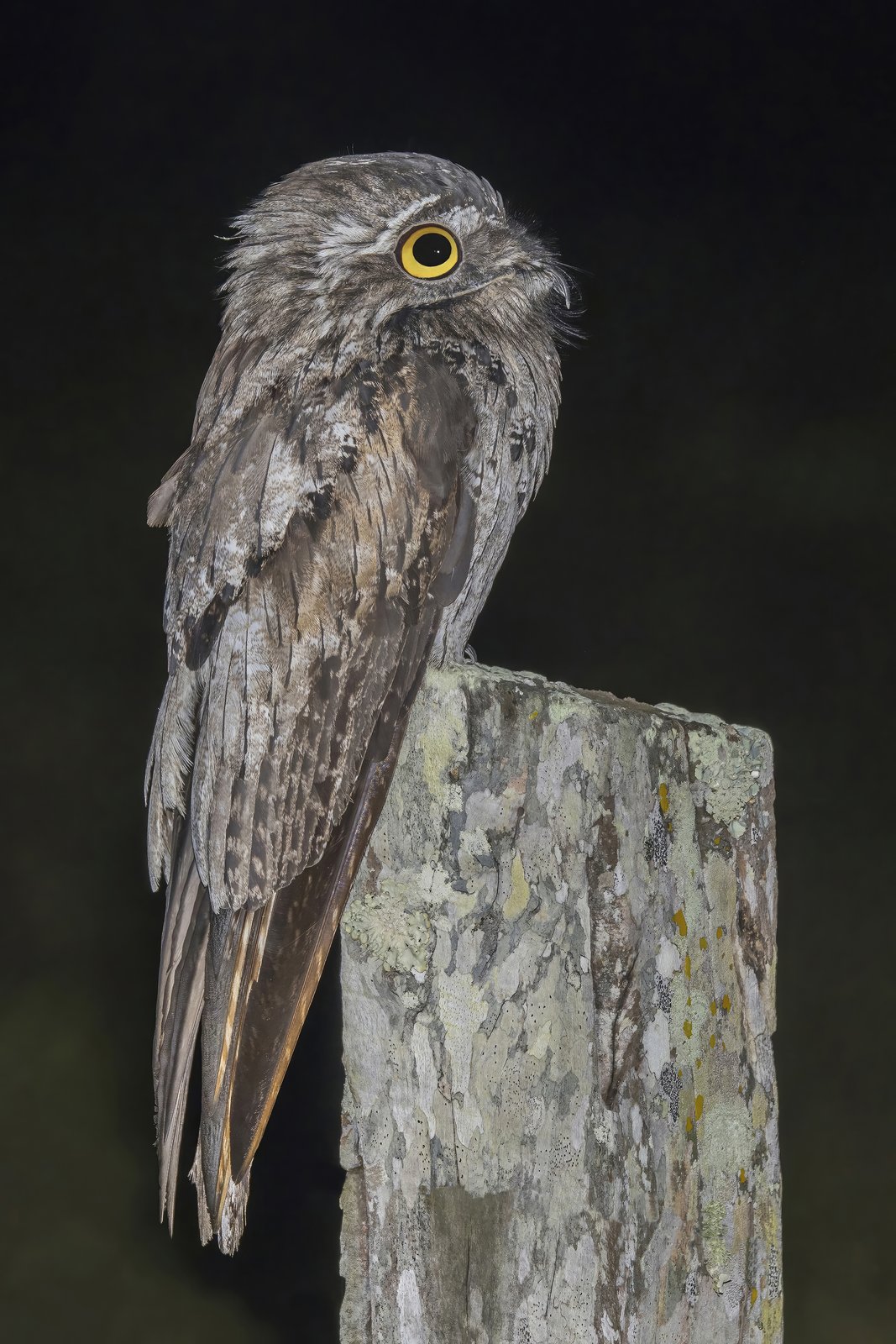
The Northern Potoo is the potoo of Mexico and northern Central America. It was long regarded as a subspecies of Common Potoo, but since the 1990s has mostly been treated as a separate species, mainly on the basis of its very different voice. By day it sits motionless and upright on a broken branch or post and is then barely noticeable among the wood. In the guide area it is resident in the lowlands, from western and eastern Mexico to north-western Costa Rica.
Voice
A harsh, croaking kwaaah, kwa-kwa-kwa or waa, wa-wa, hoarse and guttural, very different from the mournful whistles of Common Potoo. Also emphatic, barking alarm calls. Sings at night, especially in moonlight.
Recording: Paul Driver — CC BY-NC-SA 4.0 · converted to mono · xeno-canto
Identification
38–46 cm. Slightly larger and heavier than Common Potoo, with a large head, a tiny bill with a very wide gape, long, pointed wings, a long tail and very short legs. The plumage is grey-brown with an intricate pattern of black, grey and cream spots and streaks, with a row of black spots across the breast; the cheeks are pale with a dark moustachial stripe below. The eyes are large and yellow and shine orange-red in torchlight at night. The sexes are alike.
Confusion species
Common Potoo Nyctibius griseus, which occurs from south-eastern Nicaragua and in most of Costa Rica, is hardly separable in the field: slightly smaller, with a whistled, descending song instead of a harsh, croaking call. Great Potoo Nyctibius grandis is much larger and paler, with dark eyes, and lives in humid lowland forest. Nightjars such as Pauraque Nyctidromus albicollis and Yucatan Nightjar Antrostomus badius are smaller and rest lying flat on the ground or lengthwise on a branch. Owls have a facial disc and a hooked bill.
Habitat
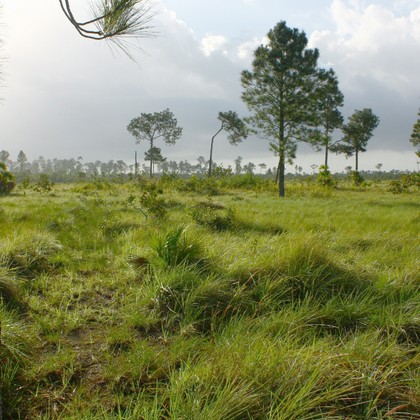
Mainly the lowlands and lower hills up to about 1500 m: dry and semi-evergreen forest, forest edges, gallery forest, savanna and pasture with scattered trees, open farmland with posts and dead trunks, and the edges of mangroves. At night it hunts from a regular perch for large flying insects and then returns to the same perch. It lays a single egg without nest material in a hollow on top of a broken branch or stump; both parents incubate and feed the chick.
Where the bird is most at home, classified by the vegetation units of Mexico and Central America.





Range and movements
In Mexico on the Pacific side from Sinaloa south to Chiapas, and on the Gulf side from southern Tamaulipas through Veracruz and Tabasco to the Yucatán Peninsula. Further in Belize, Guatemala, El Salvador, Honduras and Nicaragua, and in north-western Costa Rica, mainly in the dry lowlands of Guanacaste and northern Puntarenas. A single report from Panama is unsubstantiated. Outside the guide area in Jamaica and Hispaniola.
- Resident
- dark = core range, pale = thinly spread
How and when to look
Best found on clear nights by listening for the harsh call and then locating the bird with a torch by its eyeshine on a post or branch along a road or forest edge. Good areas include the dry lowlands of Guanacaste in Costa Rica, northern Belize and the forests of the Yucatán Peninsula. A torch should be used sparingly.
Conservation status
Not threatened. The species has a large range and tolerates semi-open and cultivated land with trees.
Scientific name
Nyctibius jamaicensis | (Gmelin, 1789)
Gmelin described the species in 1789 as Caprimulgus jamaicensis; because it was later moved to another genus, the author and year stand in brackets. The genus Nyctibius was introduced in 1816 by Vieillot. Nyctibius is Greek, from nux, nuktos 'night' and bios 'life': 'night-living', after its nocturnal habits. jamaicensis means 'from Jamaica', where the type specimen came from. The specimen the first description was based on came from Jamaica.