All species › Passerines › New World blackbirds, troupials and allies › Yellow-hooded Blackbird
Position in the tree Birds Aves › Birds with a flexible palate Neognathae › All other modern birds Neoaves › Landbirds Telluraves › Falcons, parrots and passerines Australaves › Falcons and passerines Eufalconimorphae › Parrots and passerines Psittacopasserae
Yellow-hooded Blackbird | Chrysomus icterocephalus
Geelkaptroepiaal | Turpial cabeciamarillo
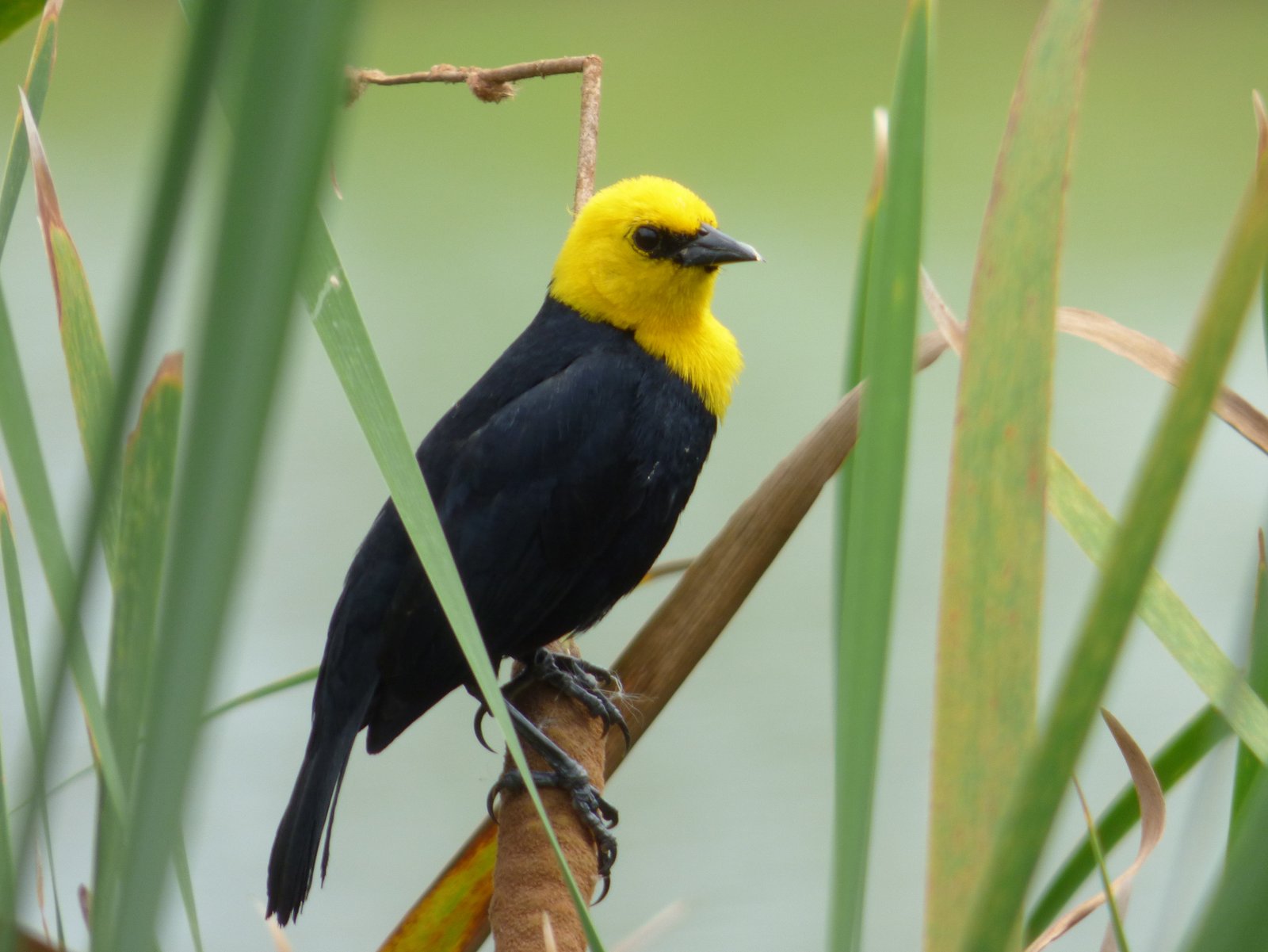
The Yellow-hooded Blackbird is a small blackbird of marshes in northern South America. The male is black with a bright yellow hood. In the guide area it occurs only locally in Panama, at the north-western edge of its range.
Voice
The song is a squeaky, grating chatter ending in a drawn-out, nasal note. The call is a short check.
Recording: David Ricardo Rodríguez-Villamil — CC BY-NC-SA 4.0 · converted to mono · xeno-canto
Identification
17–18 cm. Male black with a bright yellow head, neck and breast; a narrow black mask runs from the bill to the eye. Bill black, pointed and conical. Female olive-brown with dark streaks on the back, a yellow supercilium, a yellow throat and a yellowish breast; the belly is grey-brown. Young males are at first coloured like females and gradually turn black.
Confusion species
Yellow-headed Blackbird Xanthocephalus xanthocephalus, a winter visitor to Mexico, is larger, the male with white wing patches and no black mask; the two species do not occur together in the guide area. Females may resemble the female Red-winged Blackbird Agelaius phoeniceus, which however is heavily streaked below and lacks a yellow throat.
Habitat
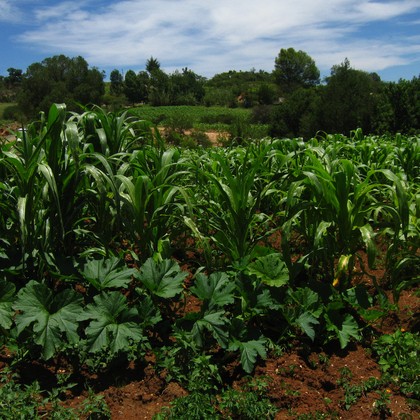
Freshwater marshes with reeds, cattails and tall grasses, edges of lakes and ponds, and rice fields. It breeds in colonies in marsh vegetation. It eats insects and seeds and forages in the vegetation and on the ground; outside the breeding season in flocks.
Where the bird is most at home, classified by the vegetation units of Mexico and Central America.


Range and movements
Northern South America, from Colombia and Venezuela to the Guianas, northern Brazil and eastern Peru, and on Trinidad. In the guide area locally in marshes of central and eastern Panama, mainly in Panamá province.
- Resident
- dark = core range, pale = thinly spread
How and when to look
In Panama best looked for in marshes with reeds and tall grasses in the lowlands east of Panama City; males sing from reed stems and are visible at a distance thanks to the yellow hood.
Conservation status
Not threatened (LC). Widespread and locally common in South America; in the guide area restricted to a few marshes, where drainage and building reduce the habitat.
Scientific name
Chrysomus icterocephalus | (Linnaeus, 1766)
Linnaeus described the species in 1766 as O[riolus] icterocephalus; because it was later moved to another genus, the author and year stand in brackets. The genus Chrysomus was introduced in 1837 by Swainson. Chrysomus is Greek, from khrusōma 'wrought gold, something made of gold', after the golden-yellow plumage. icterocephalus is Greek, from ikteros 'jaundice, yellow' and -kephalos '-headed', after the male's yellow head. The specimen the first description was based on came from Cayenne, French Guiana.