All species › Passerines › New World blackbirds, troupials and allies › Common Grackle
Position in the tree Birds Aves › Birds with a flexible palate Neognathae › All other modern birds Neoaves › Landbirds Telluraves › Falcons, parrots and passerines Australaves › Falcons and passerines Eufalconimorphae › Parrots and passerines Psittacopasserae
Common Grackle | Quiscalus quiscula
Glanstroepiaal | Zanate común
The Common Grackle is one of the most numerous birds of eastern North America. The guide area lies just outside its normal range; it appears mainly in winter as a rare visitor to north-eastern Mexico, usually among other blackbirds.
Voice
The song is a short, grating kssh-reek, like a rusty hinge. The call is a loud, dry chack.
Recording: Stanislas Wroza — CC BY-NC-SA 4.0 · shortened to the first 60 s, mono · xeno-canto
Identification
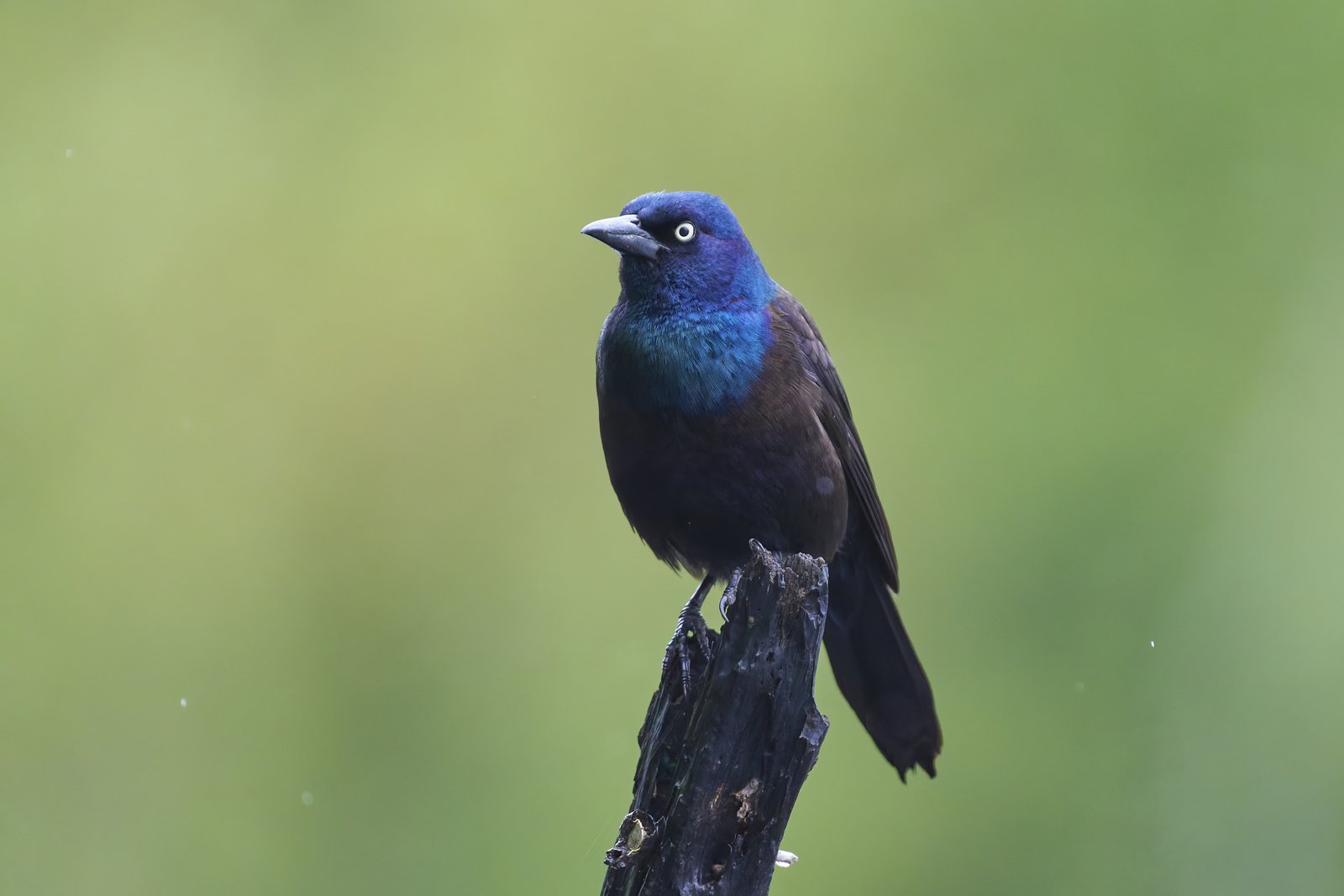
28–34 cm. Male black with a strong metallic gloss: head and neck purple-blue, the body bronze in the most frequent form and purple or green-blue in other forms; eye pale yellow. Bill long, heavy and slightly curved. Tail long and keeled in flight, with a rounded tip. Female smaller, duller and browner black, with less gloss and a shorter tail; eye also pale. Juveniles brown with a dark eye.
Confusion species
Great-tailed Grackle Quiscalus mexicanus is clearly larger, the male with a much longer tail and a uniform purple-blue gloss without a bronze back; the female is warm brown with a pale throat. Brewer's Blackbird Euphagus cyanocephalus is smaller, with a shorter, square tail and a slimmer bill.
Habitat
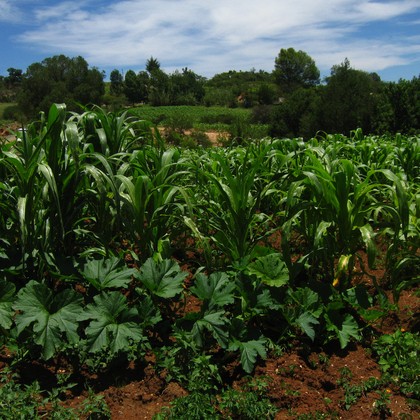
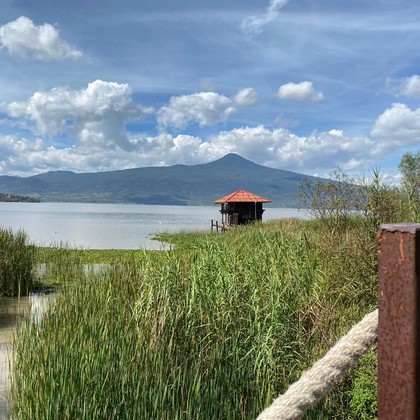
In the guide area mainly in fields and pastures and in villages and towns, often in mixed flocks with other blackbirds and cowbirds; also near water. In its breeding range it lives in open country with scattered trees, along forest edges, in parks and in gardens.
Where the bird is most at home, classified by the vegetation units of Mexico and Central America.


Range and movements
Breeds in eastern and central North America, from Canada to the Gulf Coast of the United States; northern populations winter in the south-eastern United States. In the guide area a vagrant with scattered records, mainly in Tamaulipas, Nuevo León and Coahuila; elsewhere very rare, with a single record in Guatemala.
How and when to look
In winter in north-eastern Mexico check flocks of Great-tailed Grackles and Brewer's Blackbirds for a medium-sized grackle with a bronze back and a keeled tail.
Conservation status
Near Threatened (NT). Still very numerous, but the world population has declined steeply since the 1970s. In the guide area a rare visitor.
Scientific name
Quiscalus quiscula | (Linnaeus, 1758)
Linnaeus described the species in 1758 as G[racula] Quiscula; because it was later moved to another genus, the author and year stand in brackets. The genus Quiscalus was introduced in 1816 by Vieillot. Quiscalus goes back to Linnaeus's species name Gracula quiscula; where he got the word is uncertain, possibly from Taíno quisqueya, a name for Hispaniola. quiscula is a puzzling word that Linnaeus took over as a vernacular name; suggestions include Low Latin quisquilla 'quail', a Carib word and imitation of the call. The origin is uncertain. The specimen the first description was based on came from the coast of South Carolina (USA).