All species › Parrots › African and New World parrots › Blue-and-yellow Macaw
Position in the tree Birds Aves › Birds with a flexible palate Neognathae › All other modern birds Neoaves › Landbirds Telluraves › Falcons, parrots and passerines Australaves › Falcons and passerines Eufalconimorphae › Parrots and passerines Psittacopasserae
Blue-and-yellow Macaw | Ara ararauna
Blauwgele ara | Guacamayo azuliamarillo
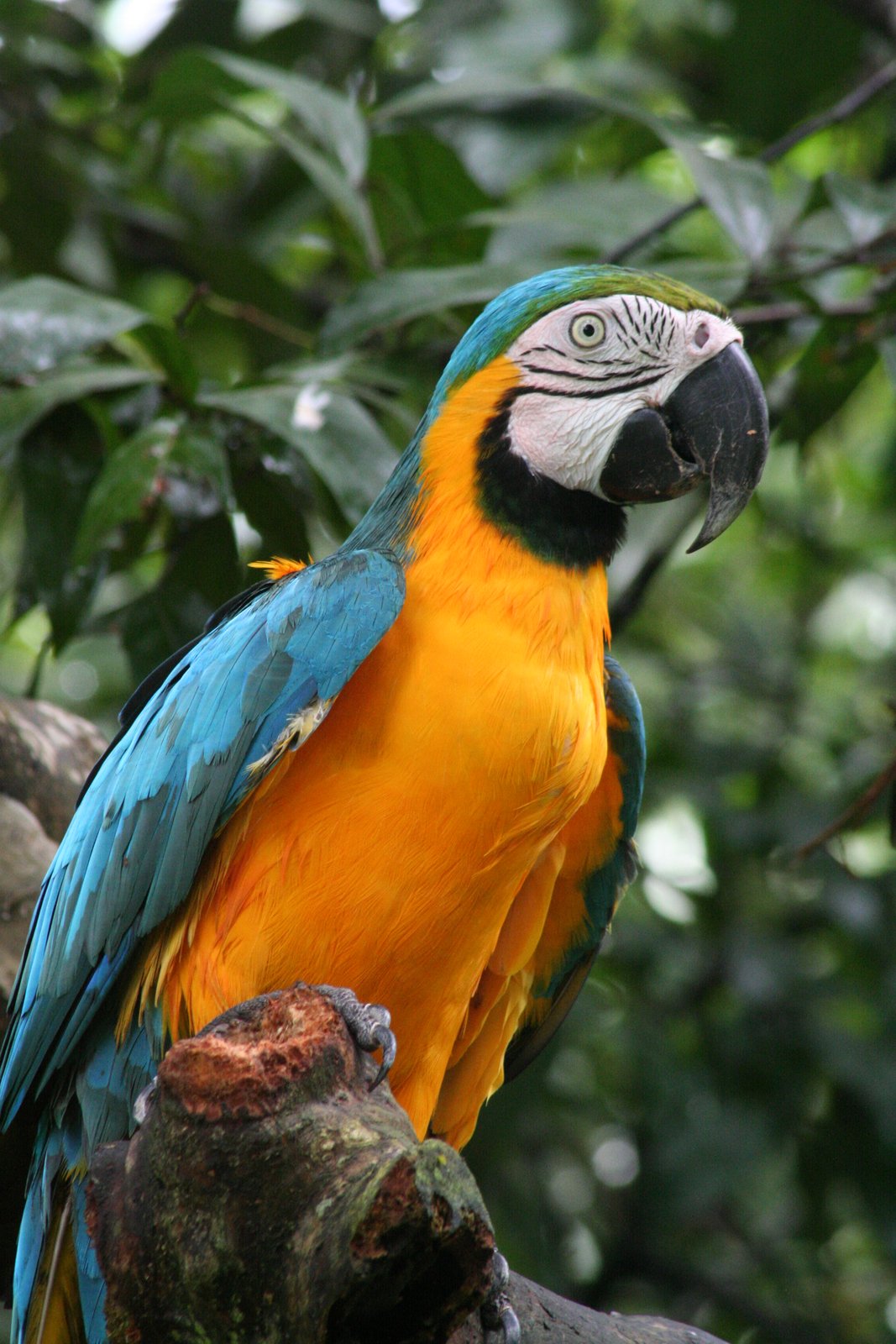
The Blue-and-yellow Macaw is a large macaw with blue upperparts and golden-yellow underparts, widespread in South America. In the guide area it occurs naturally only in eastern Panama, mainly in Darién. Released birds live in north-western Costa Rica, and escaped cage birds turn up elsewhere too.
Voice
A loud, raw, grating raa-aah, mainly in flight and audible over a great distance; perched birds also give a lower growl.
Recording: JAYRSON ARAUJO DE OLIVEIRA — CC BY-NC-SA 4.0 · converted to mono · xeno-canto
Identification
81–86 cm including the long, pointed tail, which makes up more than half of the length. The upperparts, wings and tail are blue, the underparts and the underside of wings and tail golden yellow; the forehead and crown are green. The face is bare and white with narrow lines of black feathers, and the throat is black. The bill is black. The sexes are alike. Flight is on slow, deep beats, usually in pairs or small groups.
Confusion species
Not to be confused with any other macaw of the guide area: Scarlet Macaw Ara macao and Red-and-green Macaw Ara chloropterus are red, Military Macaw Ara militaris and Great Green Macaw Ara ambiguus green. Escaped cage birds may be hybrids with other macaws.
Habitat
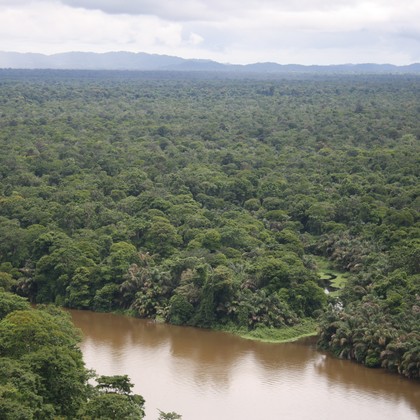
Humid lowland forest, gallery forest along rivers and swamp forest with palms, also semi-open country with large isolated trees; in the guide area mostly below 500 m. It eats seeds, nuts and fruit, including those of palms. It nests in a cavity in a dead palm or tree.
Where the bird is most at home, classified by the vegetation units of Mexico and Central America.




Range and movements
Native to eastern Panama, in Darién and the Emberá comarca, mainly in the Tuira and Chucunaque basins; scattered records west to Panamá and Colón provinces may partly involve escapes. Released birds live in north-western Costa Rica (Guanacaste, Alajuela); records in Mexico and Belize involve escaped cage birds. Outside the guide area in northern and central South America, south to Bolivia, Paraguay and south-eastern Brazil.
- Resident
- dark = core range, pale = thinly spread
How and when to look
In Darién along the rivers around El Real and Yaviza, where pairs and small groups fly over calling loudly in the morning and evening; the blue and yellow only show in good light.
Conservation status
Not globally threatened. In Panama restricted to the east and locally reduced there by deforestation and trapping for the trade. The birds in Costa Rica were released from rescue and breeding programmes.
Scientific name
Ara ararauna | (Linnaeus, 1758)
Linnaeus described the species in 1758 as Psittacus Ararauna; because it was later moved to another genus, the author and year stand in brackets. The genus Ara was introduced in 1799 by De Lacépède. Ara comes from Tupí, where ará is an onomatopoeic name for the macaws. ararauna is the Tupí name for this macaw, probably from ará 'macaw' and una 'dark'. The specimen the first description was based on came from Pernambuco, Brazil.