All species › Parrots › African and New World parrots › Chestnut-fronted Macaw
Position in the tree Birds Aves › Birds with a flexible palate Neognathae › All other modern birds Neoaves › Landbirds Telluraves › Falcons, parrots and passerines Australaves › Falcons and passerines Eufalconimorphae › Parrots and passerines Psittacopasserae
Chestnut-fronted Macaw | Ara severus
Dwergara | Guacamayo frenticastaño
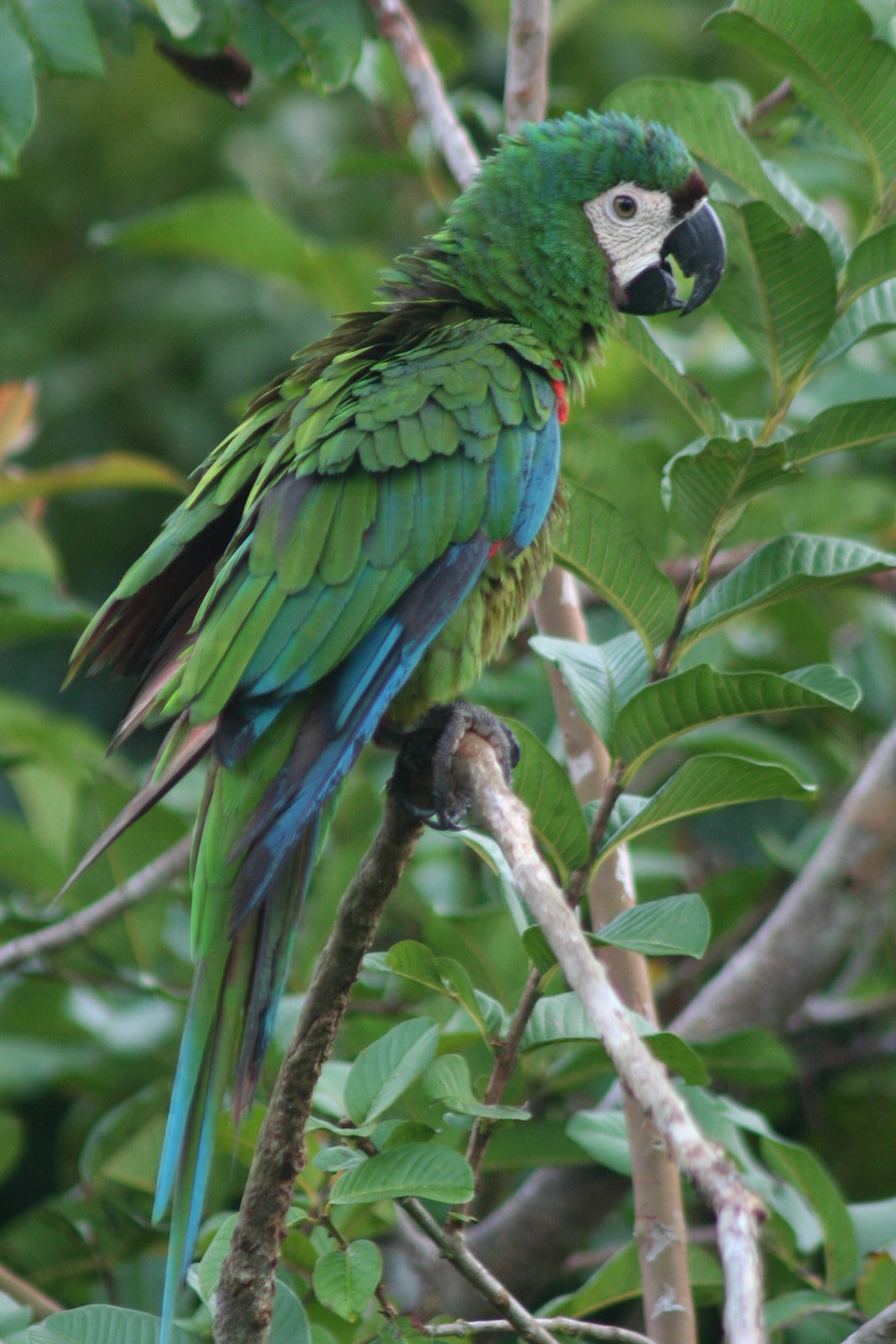
The Chestnut-fronted Macaw is the smallest macaw of the guide area, a bird of northern South America and Amazonia that reaches the northern limit of its range in eastern Panama. It is mostly green and in flight looks like a large parakeet with a very long tail.
Voice
A high, grating kraa-ak, shriller and less raw than in the large macaws; groups call constantly in flight.
Recording: Juan Freile — CC BY-NC-SA 4.0 · converted to mono · xeno-canto
Identification
46–50 cm including the long, pointed tail. Mostly green, with a narrow chestnut border to the forehead and chin and a bare white face with lines of small black feathers. The crown is bluish. The bend of the wing and the underwing coverts are red, the primaries blue; the tail is reddish brown above with a blue tip. The bill is black. The sexes are alike.
Confusion species
Larger and longer-tailed than the parakeets in its range, such as Subandean Parakeet Pyrrhura subandina and Orange-chinned Parakeet Brotogeris jugularis, and identified by the bare white face and red underwing. Great Green Macaw Ara ambiguus, which also occurs in Darién, is much larger and has a red forehead.
Habitat
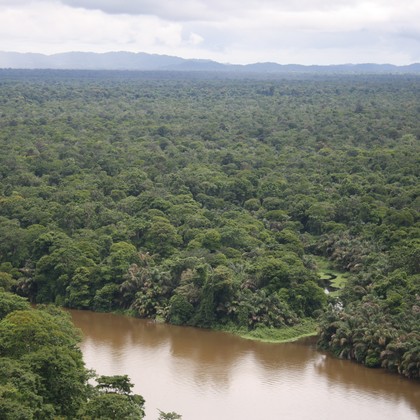
Humid lowland forest, forest edges, gallery forest and swamp forest, also semi-open country with scattered tall trees and palms; in the guide area in the lowlands. Usually in pairs or small groups. It eats seeds, fruit and flowers. It nests in a cavity in a dead tree or palm.
Where the bird is most at home, classified by the vegetation units of Mexico and Central America.





Range and movements
In the guide area only in eastern Panama: in Darién and the Emberá comarca, with a few records in eastern Panamá province. Outside the guide area in Colombia, Venezuela and Amazonia, south to Bolivia and Brazil.
- Resident
- dark = core range, pale = thinly spread
How and when to look
In Darién in small groups over the forest and along the rivers around El Real and Yaviza; in flight the long tail stands out, and in good light the red underwing shows.
Conservation status
Least Concern and widespread in Amazonia. In Panama restricted to the east, where it is locally fairly common.
Scientific name
Ara severus | (Linnaeus, 1758)
Linnaeus described the species in 1758 as Psittacus severus; because it was later moved to another genus, the author and year stand in brackets. The genus Ara was introduced in 1799 by De Lacépède. Ara comes from Tupí, where ará is an onomatopoeic name for the macaws. severus is Latin for 'stern, grim', after Linnaeus's 1754 'Papegoja trumpen', the surly parrot. The specimen the first description was based on came from Amazon River (originally 'the Indies', in error).