All species › Passerines › New World warblers › Black-throated Grey Warbler
Position in the tree Birds Aves › Birds with a flexible palate Neognathae › All other modern birds Neoaves › Landbirds Telluraves › Falcons, parrots and passerines Australaves › Falcons and passerines Eufalconimorphae › Parrots and passerines Psittacopasserae
Black-throated Grey Warbler | Setophaga nigrescens
Grijze zwartkeelzanger | Chipe negrogrís
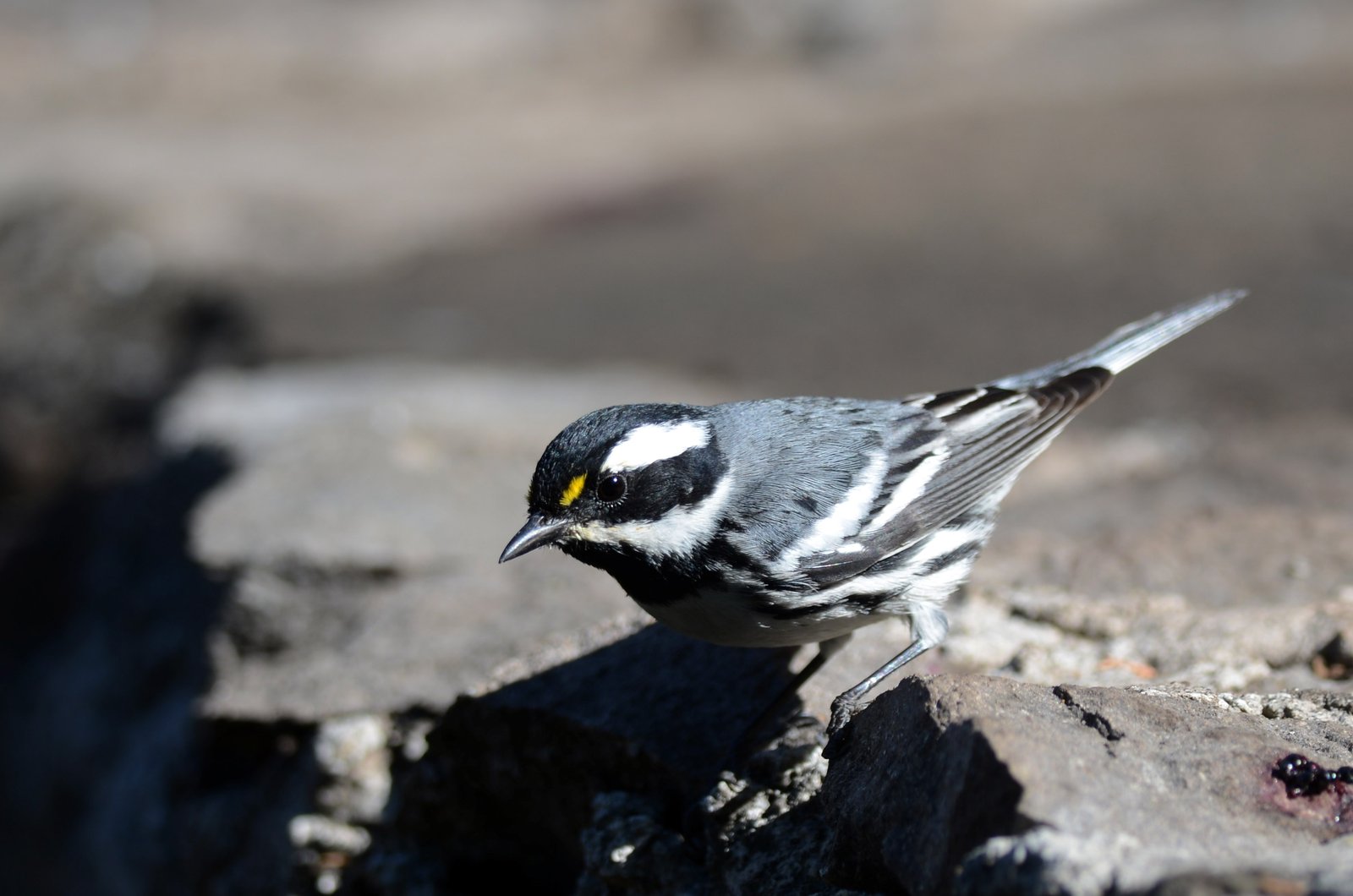
The Black-throated Grey Warbler is a grey, black and white warbler with a small yellow spot in front of the eye. It breeds in dry oak and coniferous forest in western North America. In the guide area it is a common winter visitor in western and central Mexico.
Voice
The song is a series of buzzy notes with a short, sharper final note, roughly weezy weezy weezy zee-weet; in the guide area heard mainly in spring. The call is a dull tchup.
Recording: Ned Bohman — CC BY-NC-SA 4.0 · converted to mono · xeno-canto
Identification
12–13 cm. Blue-grey upperparts, two white wing bars, a black-and-white striped head with a small yellow spot between eye and bill, white underparts with black flank streaks and much white in the outer tail feathers. The male has a black crown, cheek and throat; the female has a grey crown and a white throat with at most a black band at the bottom. Young birds are duller, with a greyer head.
Confusion species
Black-and-white Warbler Mniotilta varia has a white-striped crown and back, no yellow in front of the eye and creeps along trunks. Townsend's Warbler Setophaga townsendi and Hermit Warbler Setophaga occidentalis share its shape and pattern, but have yellow in the face and an olive-green back. Blackpoll Warbler Setophaga striata in breeding plumage has a white cheek and a streaked back.
Habitat
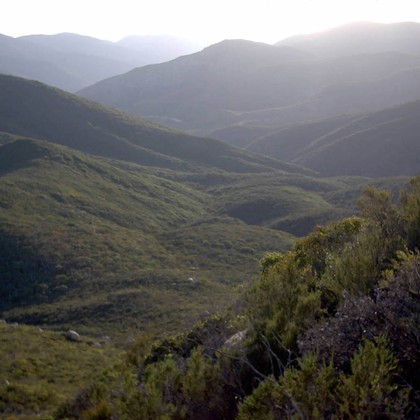
In winter oak and pine-oak forest, dry seasonal forest, thorn scrub, riparian woodland, mesquite and gardens, from the coast to about 2500 m. It searches trees and shrubs for insects, often in mixed flocks. It breeds in dry oak and pine-oak forest and chaparral with trees in the mountains.
Where the bird is most at home, classified by the vegetation units of Mexico and Central America.






Range and movements
Breeds in western North America, from south-western Canada to northern Baja California and southern Arizona and New Mexico. Winters in the south-western United States and in Mexico: in southern Baja California, on the Pacific slope from Sonora to Oaxaca and in the interior and highlands of central Mexico to Veracruz; rare in Guatemala.
- Winter visitor (c. Oct–Mar)
- dark = core range, pale = thinly spread
How and when to look
In winter often found in mixed warbler flocks in mid-elevation oak forest in western Mexico; look for the black-and-white head with the yellow spot in front of the eye.
Conservation status
Not threatened (LC). Common and widespread; the population appears stable.
Scientific name
Setophaga nigrescens | (Townsend, 1837)
Townsend described the species in 1837 as Sylvia nigrescens; because it was later moved to another genus, the author and year stand in brackets. The genus Setophaga was introduced in 1827 by Swainson. Setophaga is Greek, from sēs, sētos 'moth' and -phagos '-eating': 'moth-eater'. nigrescens is Latin for 'blackish', after the black head and throat markings. The specimen the first description was based on came from vicinity of Portland, Oregon.