All species › Passerines › New World warblers › Belding's Yellowthroat
Position in the tree Birds Aves › Birds with a flexible palate Neognathae › All other modern birds Neoaves › Landbirds Telluraves › Falcons, parrots and passerines Australaves › Falcons and passerines Eufalconimorphae › Parrots and passerines Psittacopasserae
Belding's Yellowthroat | Geothlypis beldingi
Beldings maskerzanger | Mascarita peninsular
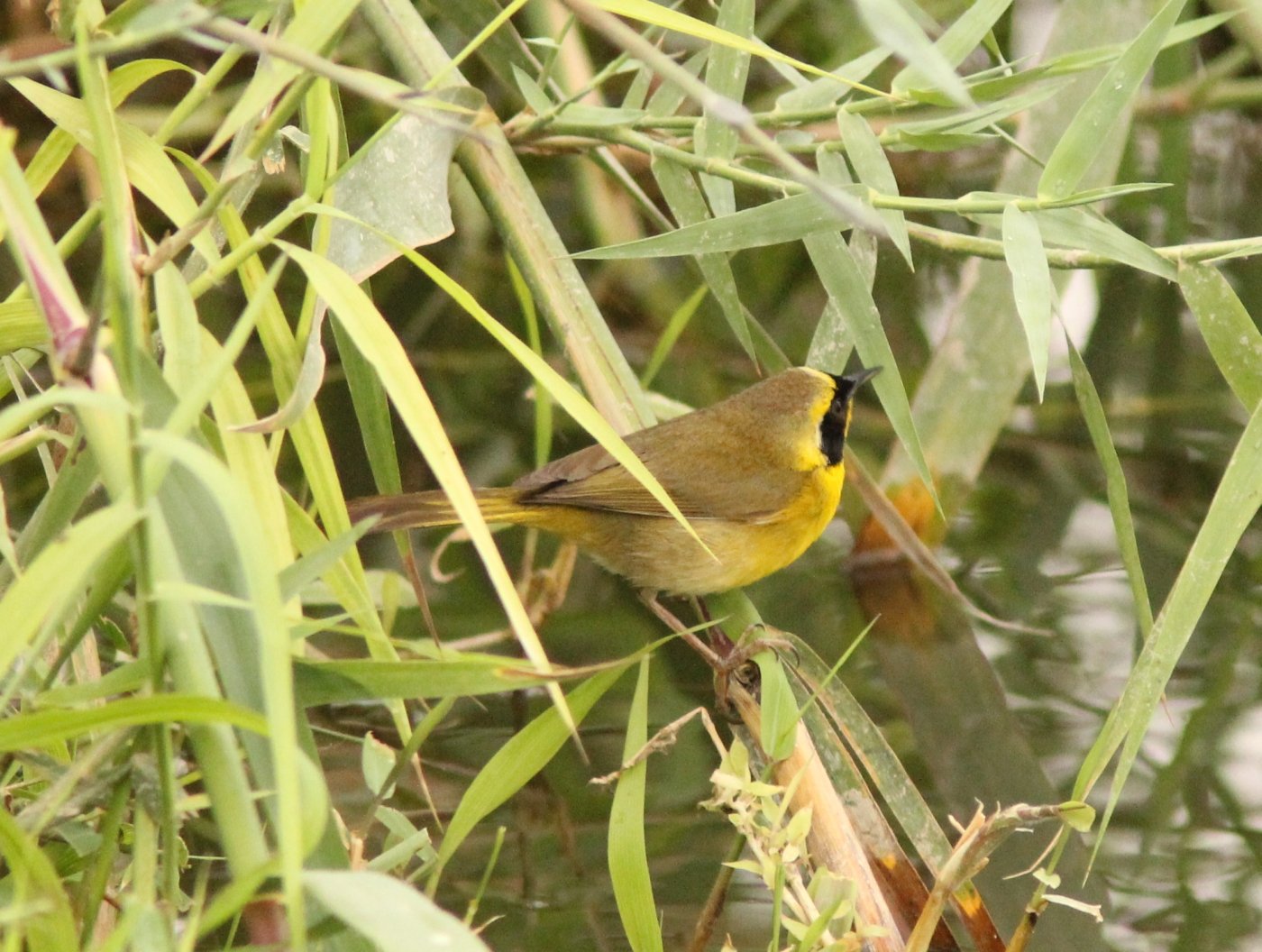
Belding's Yellowthroat is the largest yellowthroat in the guide area and occurs only in Baja California Sur. It lives in the small marshes of oases, river valleys and estuaries in an otherwise dry landscape. The male has a black mask topped by a yellow or pale yellow band.
Voice
The song is a full, low rolling phrase, slower and fuller than that of Common Yellowthroat. The call is a low, dry tchuk.
Recording: Isain Contreras Rodríguez — CC BY-NC-SA 4.0 · shortened to the first 60 s, mono · xeno-canto
Identification
13–15 cm. Large and sturdy for a yellowthroat, with a fairly heavy bill. Upperparts olive-green, underparts extensively yellow, only the flanks slightly olive. The male has a broad black mask bordered above by a yellow band; in birds in the north of the range this band is paler, almost whitish yellow. The female lacks the mask and has an olive head with a yellowish eyebrow and a yellow throat.
Confusion species
Common Yellowthroat Geothlypis trichas, which also occurs in Baja California Sur in winter, is smaller and finer-billed, has a whitish to grey border above the mask and a dull belly. Female Common Yellowthroats are much less yellow below.
Habitat
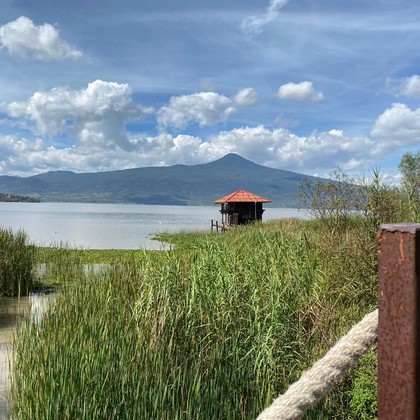
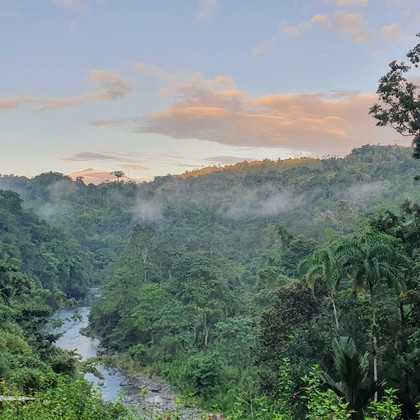
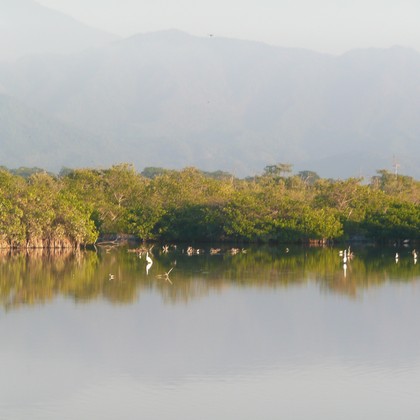
Marshes with cattail, reeds and sedges in oases, along streams and rivers and in brackish estuaries, from sea level to a few hundred metres. It forages low in dense vegetation for insects.
Where the bird is most at home, classified by the vegetation units of Mexico and Central America.
Range and movements
Endemic to Mexico: scattered marshes in Baja California Sur, from the oases of San Ignacio and Mulegé in the north to the Cape region in the south.
- Resident
- dark = core range, pale = thinly spread
How and when to look
Found at the oases of San Ignacio and Mulegé and at the estuary of San José del Cabo, where singing males show themselves on the reeds.
Conservation status
Vulnerable (VU). The world population is small and lives in a handful of isolated marshes. Water extraction, drainage, burning, urban growth and tourism threaten these sites.
Scientific name
Geothlypis beldingi | Ridgway, 1882
Ridgway described the species in 1882 and placed it straight away in the genus where it still stands. The genus Geothlypis was introduced in 1847 by Cabanis. Geothlypis is Greek, from gē 'ground' and thlupis, an unidentified small bird: 'ground warbler', after its life low in dense cover. beldingi honours the American bird collector Lyman Belding (1829–1917), who worked extensively in Baja California. The specimen the first description was based on came from San José del Cabo, Baja California Sur, Mexico.