All species › Bats › Vesper bats › Fairy Pipistrelle
Fairy Pipistrelle | Hypsugo ariel
Hypsugo ariel | Hypsugo ariel
Hypsugo ariel, the Fairy Pipistrelle, is a very small, pale bat of the deserts and rocky areas around the Red Sea: forearm 28 to 34 mm, weight 2.3 to 4.8 grams. Thomas described it in 1904 as Pipistrellus ariel from the eastern Egyptian desert, in present-day Sudan. In the literature it often appears under Pipistrellus, and bats from Israel were long described as Pipistrellus bodenheimeri; genetic and morphological studies place both in Hypsugo, close to H. savii and H. arabicus, and include bodenheimeri in this species. The guide area touches only the northern edge of the range: the Negev, the Arava and the Dead Sea rift, south-western Jordan and Sinai.
No photograph of a living wild animal of this species with a suitable Creative Commons licence exists. Do you have one that meets the rules? Send it in.
Tracks
The bats roost by day in cracks and crevices in rock faces; in Saudi Arabia a colony of 20 was seen leaving a castle ruin. No other signs of this species have been described. Where it occurs, activity in summer is up to twenty times higher than in winter, with peaks in the first and last hour of the night.
Identification
A small bat with thin, pale fur: the back is pale pinkish brown to pale greyish cream or off-white, with the dark hair bases showing through; the underparts are paler still, brownish cream to off-white. The bare face, ears, limbs and digits are pinkish to dark pinkish brown, the membranes pale brown and semi-translucent, the tail membrane lighter than the wings. The ears are fairly short with rounded tips; the tragus is almost as broad as long, with a rounded tip. The last two tail vertebrae project beyond the tail membrane. The bats forage low over the ground and are manoeuvrable. Search calls are steep frequency-modulated sweeps with a very short constant part (FM/QCF); in Israel the peak frequency was 42.8 to 53.7 kHz (mean 48.2 kHz), the end frequency averaged 46.1 kHz and call duration averaged 3.2 ms. Measurements in Jordan and Sinai gave peak frequencies of 43 to 49 kHz.
Similar species
Within the small range in the guide area the contrast between the pale fur and the pinkish skin is the first character. Savi's Pipistrelle (Hypsugo savii), which also occurs in the Levant, is larger (forearm 31 to 38 mm) and has a dark back with golden tips and very dark, almost black skin; its calls lie much lower at 30 to 35 kHz. Kuhl's Pipistrelle (Pipistrellus kuhlii) has brown fur, dark skin and usually a white wing border, and calls around 34 to 41 kHz. Rüppell's Bat (Vansonia rueppellii) has pure white underparts sharply contrasting with a grey or grey-brown back, and blackish ears and face. Pipistrellus deserti of North Africa is similar in colour but falls outside this part of the guide area. On a bat detector the calls of H. ariel overlap with those of Common Pipistrelle and other species around 45 to 50 kHz; a call alone is not sufficient for identification.
Habitat
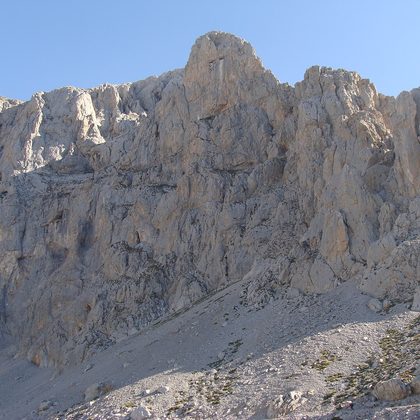
Rocky areas, desert and semi-desert, often around oases, springs and other water; in Jordan also near farms and irrigated areas. Foraging bats in Jordan were caught in a rocky canyon, at a small spring and in an old village garden; they forage mainly in open space, but also around trees. The handbook gives localities between 345 and 1224 m elevation.
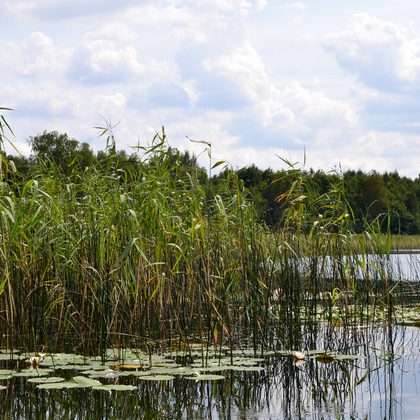
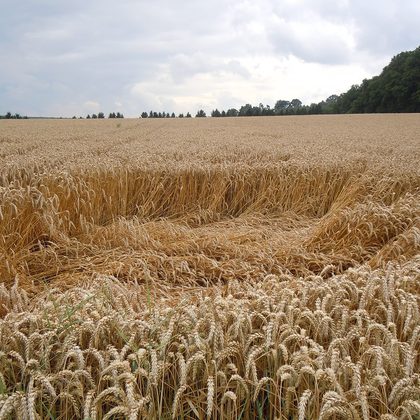
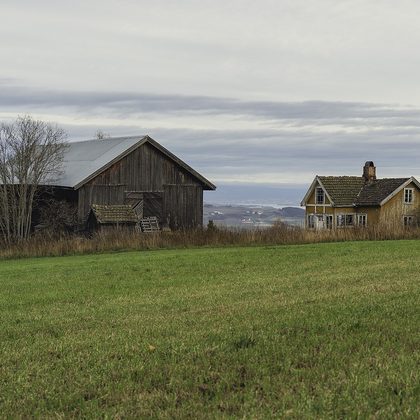
Where the animal is most at home, classified with EUNIS — the European standard for habitats.

Distribution
Palestine, southern Israel, south-western Jordan, north-eastern Egypt (Sinai), north-eastern and south-central Sudan, western Saudi Arabia, Yemen and south-western Oman; occurrence in south-eastern Egypt and a record from central Kenya are unconfirmed. Within the guide area lie only Israel, the Palestinian territories, south-western Jordan and Sinai, at the southern edge of the window. According to the handbook the full distribution is still uncertain. The species is monotypic.
- Native
- dark = core range, pale = thinly spread
Way of life
The diet is varied: 55 faecal pellets from Jordan contained beetles, moths, leafhoppers, true bugs, hymenopterans, midges, lacewings and caddisflies, with small moths dominating at one site and beetles at another. Stomach contents from Sinai were 80 per cent small beetles, mainly scarabs and darkling beetles. Remains of arachnids suggest that the species occasionally takes prey from surfaces. In Israel and Palestine the young are born in late April and May; pregnant females carried two embryos, and lactating females were caught from May to July. The first young appear in June, and in July and August they make up half of the catch. The species hibernates but arouses to forage; bats have been caught at temperatures as low as 11 °C.
Where and when to look
The Negev Highlands and the margins of the Arava rift are the places in the guide area with the most records. A spring or water trough in a rocky valley at sunset is the best place, especially in summer. Identification needs a bat in the hand or a sharp photograph showing the pale fur and pink skin; a detector recording around 48 kHz alone is not sufficient. Catching bats requires a licence in the countries concerned.
Conservation status
Data Deficient (DD, 2020). The full distribution is uncertain and little is known about threats; agricultural expansion and general habitat loss are cited as possible threats. The species is covered by the EUROBATS Agreement insofar as it occurs within the Agreement area.
Scientific name
Hypsugo ariel | (O. Thomas, 1904)
O. Thomas described the species in 1904 as Pipistrellus ariel; because it was later moved to another genus, the author and year stand in brackets. Hypsugo was coined by Kolenati without explanation; the first element points to Greek hypsi, 'high, aloft', while the second cannot be placed. ariel is the name of Ariel, the airy spirit of Shakespeare's The Tempest, presumably after the tiny size of this bat; Thomas gives no explanation, and ariel is also an Arabian name for the gazelle. The specimen the first description was based on came from Sudan.