All species › Bats › Vesper bats › Savi's pipistrelle
Savi's pipistrelle | Hypsugo savii
Savi's dwergvleermuis | Murciélago Montañero
Savi's Pipistrelle is a small bat of cliffs and mountain areas in southern Europe, North Africa and south-west Asia. Bonaparte described it in 1837 from Pisa as Vespertilio savii; for a long time it was placed in Pipistrellus, but genetically the genus Hypsugo belongs to the tribe Vespertilionini, outside the true pipistrelles. Forearm 31 to 38 mm, weight 5 to 9 grams. According to the handbook the species has been spreading into central Europe for about thirty years.
Tracks
Roosts are long, narrow rock crevices and vertical cracks in cliffs, also spaces under bark and crevices in buildings, bridges and walls; occasionally cave entrances or under stones on the ground. The bats emerge immediately after sunset, sometimes before, so that they can be seen along cliffs in the last daylight. Droppings lie below the crevice at the foot of the rock or on the ground below a wall, but are rarely found. On a bat detector the species sounds like a regular series of ticks around 32 kHz, lower than the pipistrelles and higher than the serotines.
Identification
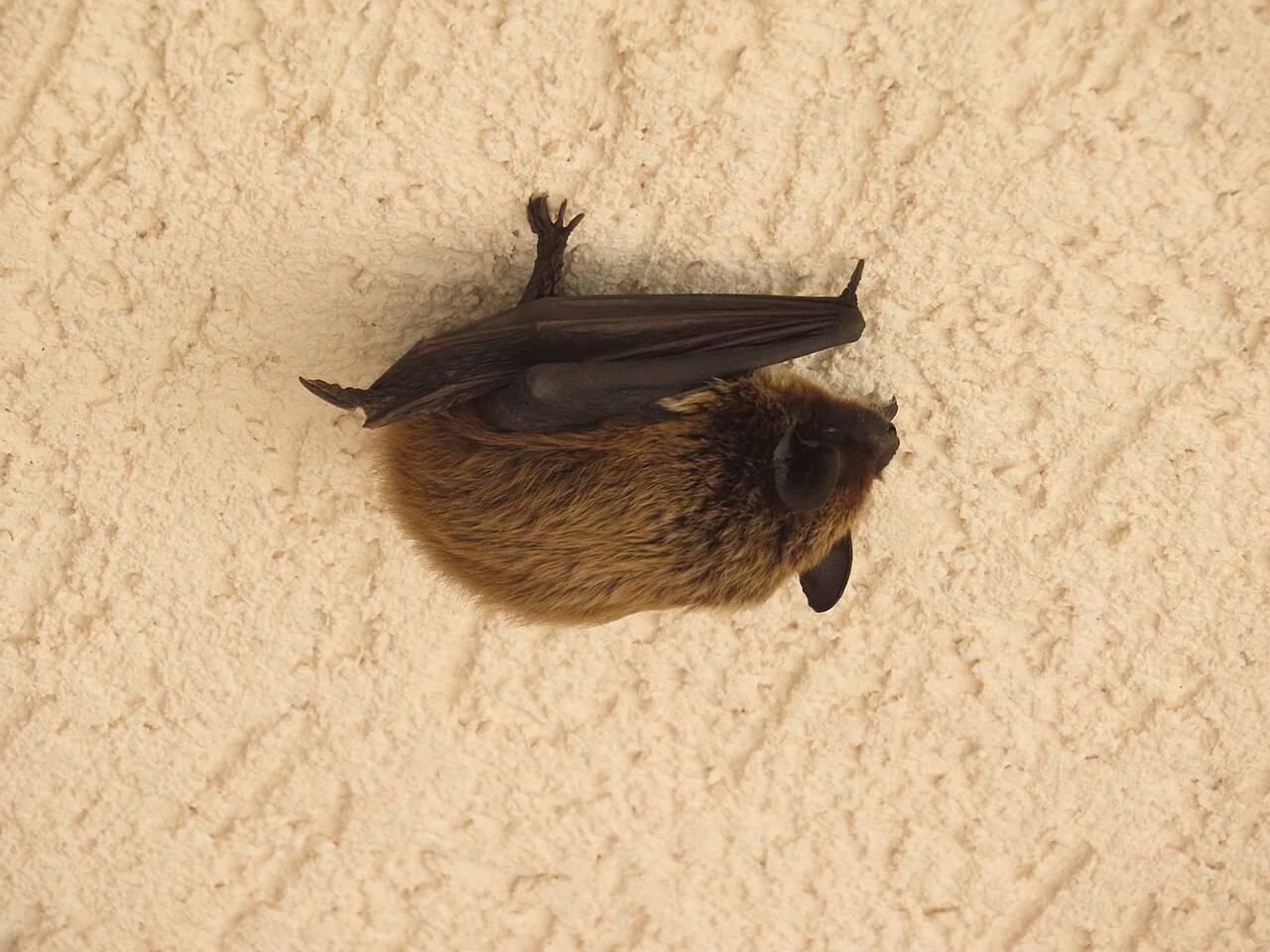
A small bat with dark dorsal fur with golden-yellow to yellowish hair tips, from blackish to pale brown, and distinctly paler, whitish-grey underparts with a fairly sharp border. Dark reddish spots may be present between the ears, at the corners of the mouth and on the shoulders. Skin, ears and membranes are very dark, almost black. The ears are short, the tragus comparatively broad. The last two tail vertebrae project beyond the tail membrane. Flight is straighter and more predictable than in Pipistrellus species, faster and with fewer changes of direction, at 2 to 100 m above ground. Search calls have a near-constant-frequency part (QCF) with maximum energy at 30 to 35 kHz, 7 to 8 calls per second while foraging and 3 to 4 while commuting.
Similar species
The Particoloured Bat (Vespertilio murinus) has the same colour pattern but is much bulkier (forearm 41 to 50 mm). Kuhl's Pipistrelle (Pipistrellus kuhlii, forearm 30 to 37 mm) is the same size, usually has a white border along the trailing edge of the wing and paler brown fur without golden tips; its calls lie at 34 to 41 kHz and overlap at the lower end with those of Savi's Pipistrelle. The Northern Serotine (Cnephaeus nilssonii) also has golden hair tips but is larger (forearm 37 to 44 mm) and calls lower, around 26 to 32 kHz. The Common Pipistrelle (P. pipistrellus) calls clearly higher at 42 to 51 kHz. In north-east Africa and the Levant the related Hypsugo ariel occurs, which is smaller and much paler. Social calls with rising frequency were formerly considered diagnostic, but the species uses a broad range of social calls, so identification on that basis is less reliable.
Habitat
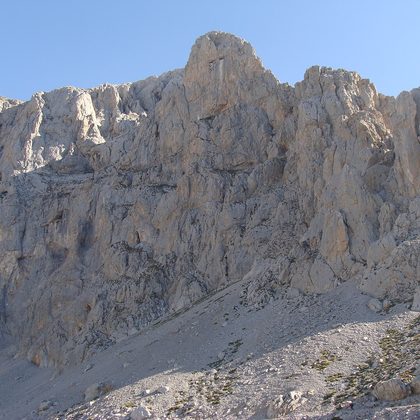
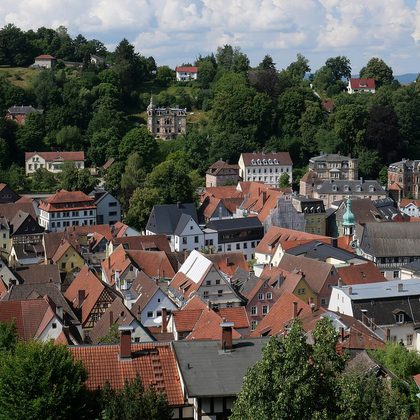
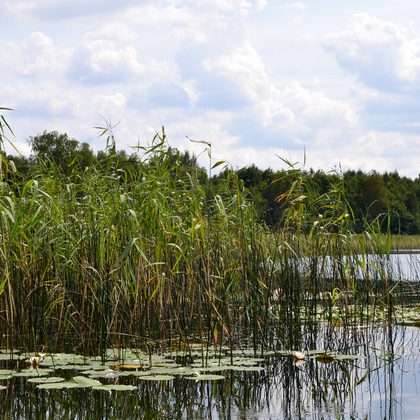
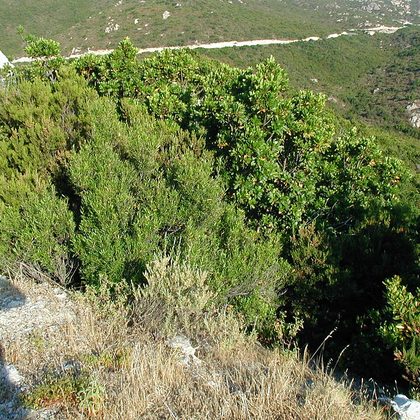
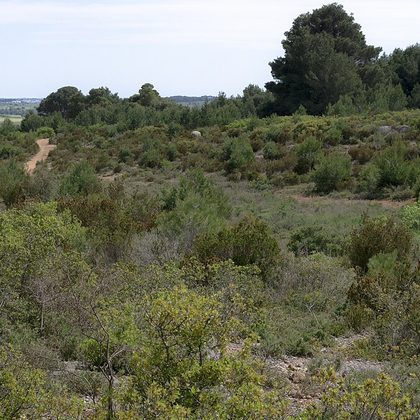
Typical of mountain areas in the Mediterranean part of the range, but present from sea level to 3000 m. The species forages in many habitats: woodland, grassland, coastal wetlands and built-up areas with gardens and parks. It is numerous over water and in riparian woodland, but rare inside dense forest, and appears to favour mosaics of cultivation, maquis and garrigue, karst and cliffs. Regular foraging sites are streetlamps, cliffs, meadows and ponds.
Where the animal is most at home, classified with EUNIS — the European standard for habitats.


Distribution
In the guide area the whole Mediterranean region. The subspecies H. s. savii lives in southern, central and eastern Europe from Italy to the Balkans, in Anatolia, on Rhodes, Crete and Cyprus and in the Levant; H. s. darwini from the Iberian Peninsula to Switzerland, on the Balearics, Corsica, Sardinia and Sicily and in North Africa from Morocco to Tunisia, and beyond on the Canary Islands and Cape Verde; H. s. caucasicus from Crimea and the Caucasus east to western China. The handbook distinguishes four strongly divergent genetic lineages – Moroccan, south-west European, Levantine and south-east European-Anatolian – that may be separate species; this has already been proposed for darwini.
- Native
- dark = core range, pale = thinly spread
Way of life
Savi's Pipistrelle hunts in flight, alone or in small groups, never close to the ground. The diet consists mainly of moths, hymenopterans (including swarming flying ants) and flies, supplemented with lacewings, beetles, caddisflies and leafhoppers. Activity is highest in the first and last parts of the night. Maternity colonies usually number a few tens of animals; the largest reported, in Croatia, held up to 70. The young are born from early June to late July, usually as twins. Mating takes place in August and September, during the swarming period. Hibernation is spent in underground sites and rock crevices. The handbook considers migration likely; the longest reported movement of about 250 km is of unknown origin.
Where and when to look
A cliff or gorge in a southern European mountain area around sunset is the best place: the bats emerge early and hunt along the rock face. In villages and towns in the south the species also hunts around streetlamps, often high up, among pipistrelles. On a detector tuned to 32 kHz it can be separated from Kuhl's Pipistrelle (around 38 kHz) and Common Pipistrelle (around 45 kHz), although an overlap between 34 and 36 kHz does not always give a definite answer.
Conservation status
Least Concern (LC, 2016). In Europe the species is fairly numerous, especially around the Mediterranean; at the eastern edge of the range densities are low. The handbook reports a spread into central Europe over the last thirty years, without figures. The handbook names no specific threats. The species is listed in Annex IV of the Habitats Directive and is covered by the Bern Convention and the EUROBATS Agreement.
Scientific name
Hypsugo savii | (Bonaparte, 1837)
Bonaparte described the species in 1837 as Vespertilio Savii; because it was later moved to another genus, the author and year stand in brackets. Hypsugo was coined by Kolenati without explanation; the first element points to Greek hypsi, 'high, aloft', while the second cannot be placed. savii honours the Italian naturalist Paolo Savi (1798–1871), professor at Pisa, where the type material came from. The specimen the first description was based on came from Italy, Pisa.