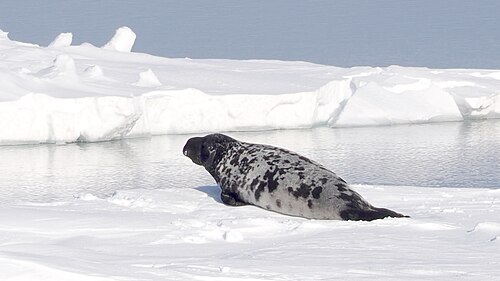
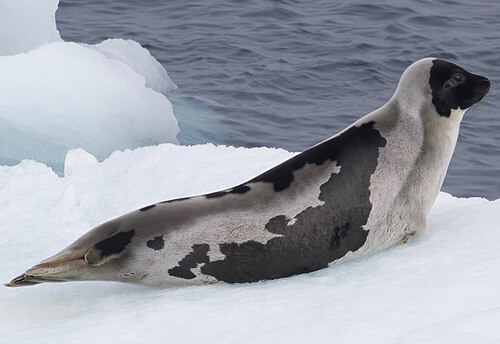
All species › Carnivores › True seals
True seals | Phocidae
Zeehonden | Focas
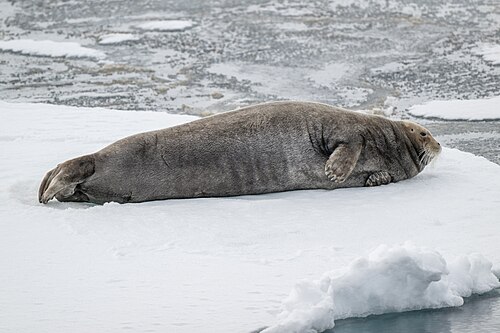
Carnivores that returned to the water and went so far that they can barely travel on land: the hind limbs are fixed pointing backwards and cannot be turned under the body, so a seal hitches along the beach on its belly. In the water those same hind feet are the engine, sweeping from side to side. There is no external ear — hence "earless seals" — and the nostrils close by themselves. A thick layer of blubber under the skin insulates, gives buoyancy and stores food; the coat matters little and is shed all at once each year. In a dive the heartbeat drops to a few beats a minute and blood is routed to heart and brain. The pup is born on land or on ice, drinks milk that is up to half fat, and is independent within days or weeks; the mother usually eats nothing meanwhile. The whiskers are not a detail but the hunting instrument: they read the wake a swimming fish leaves behind, long after it has passed.
Native species 8 species
Species that occur here by nature, including those released to bring back a population that had gone. They are arranged by genus, in the sequence of the list.
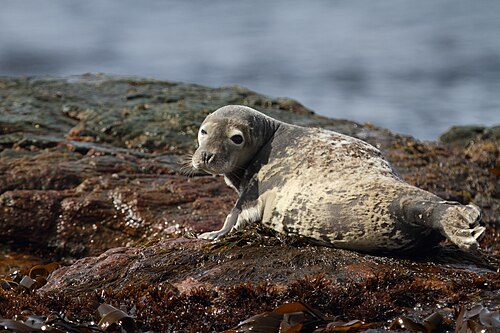
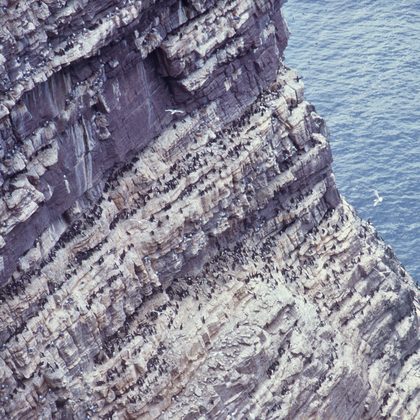
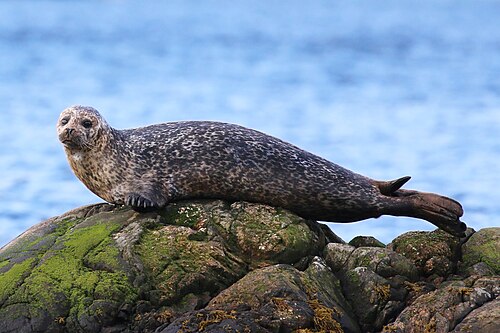
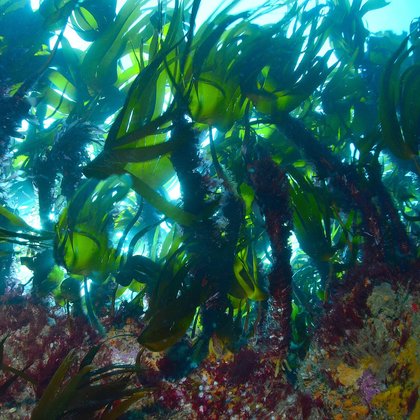
Pusa 2 species
-
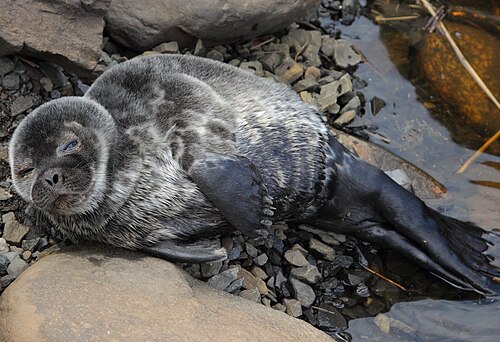
Ringed seal
Pusa hispida Littoral rock and other hard substrata
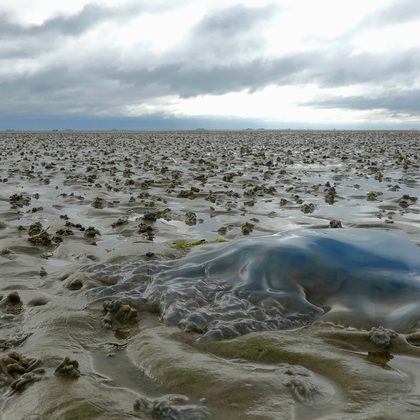 Littoral sediment
 Sublittoral sediment
 Pelagic water column
 Ice-associated marine habitats
 Coastal dunes and sandy shores
-
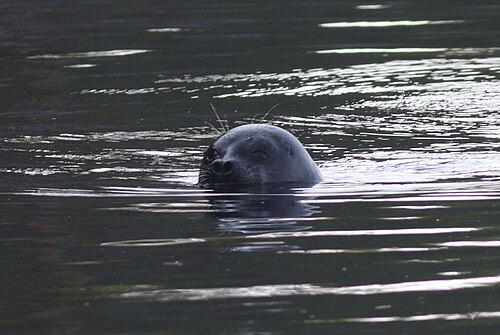
Saimaa ringed seal
Pusa saimensis Surface standing waters
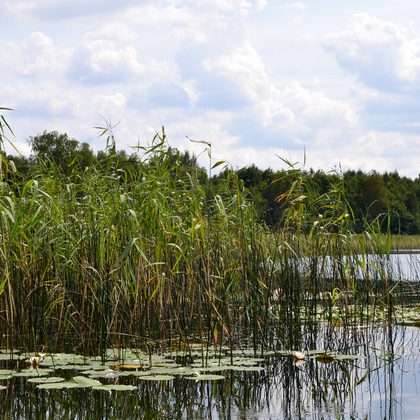 Littoral zone of inland surface waterbodies
 Snow or ice-dominated habitats
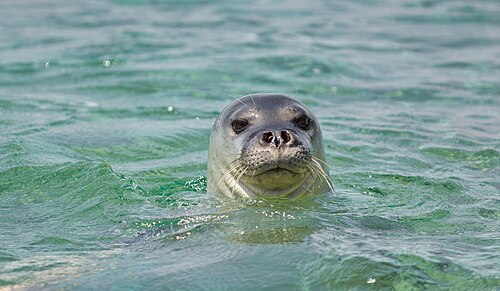
Erignathus 1 species
Cystophora 1 species