All species › Bustards › Bustards › Little Bustard
Little Bustard | Tetrax tetrax
Kleine trap | Sisón común
A pheasant-sized bustard that once bred on the cereal plains of the Maghreb and has almost disappeared from them. Today it is mainly a scarce winter visitor to the region, in the west from Iberia and in the east from the steppes of Russia and Kazakhstan.
Voice
Almost silent in winter, apart from a low tchuk when flushed. The most characteristic sound is the whirring, whistling sisisisi produced in flight by the male's narrowed primaries, heard all year round. In spring the male displays with a dry, snorting prrt every ten to twenty seconds.
Recording: Esperanza Poveda — CC BY-NC-SA 4.0 · shortened to the first 60 s, mono · xeno-canto
Identification
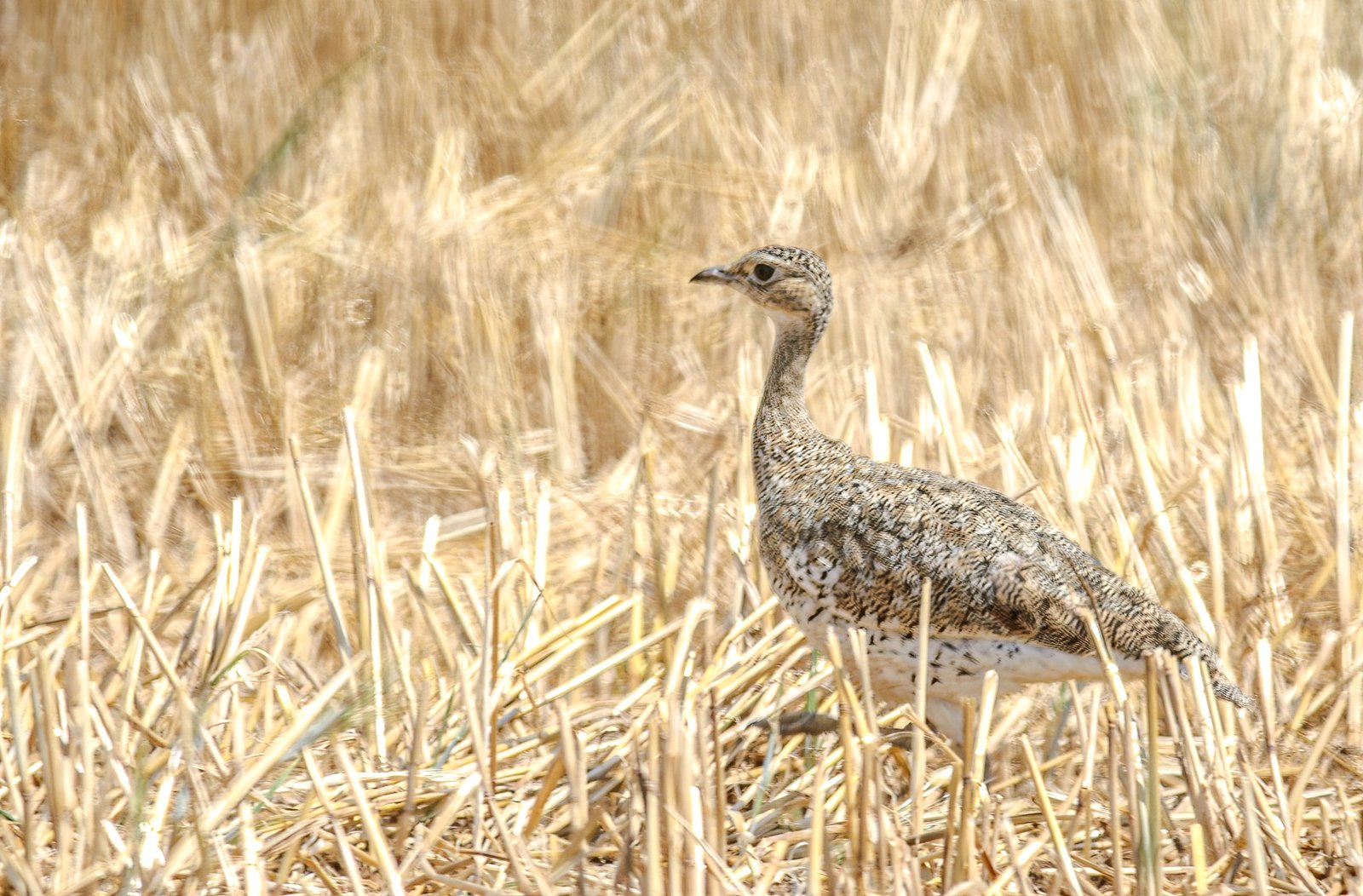
Compact, with a short neck and a small head. The breeding male has a slate-grey head and a black neck with two white bands, a narrow V below the throat and a broad collar lower down. Back and wing coverts ochre-brown with fine black vermiculation, underparts white. Females, juveniles and males in winter plumage lack the neck pattern and are entirely ochre-brown, streaked and spotted. In flight the wings are strikingly white with only black primary tips; it flies fast and low with stiff, shallow beats, in winter often in tight flocks.
Confusion species
Great Bustard (Otis tarda) is many times larger and heavier and flies with slow, goose-like beats. African Houbara (Chlamydotis undulata) is larger and longer-necked, with a black neck stripe and only a white patch at the base of the primaries, and lives in desert. A flushed flock in winter plumage may recall ducks or pigeons at a distance, but the extensive white in the wing and the whirring wing noise are distinctive.
Habitat
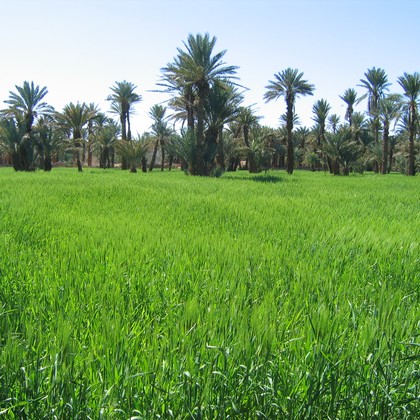
Open farmland with winter cereals, clover, lucerne and fallow, and lightly grazed grassland and herbaceous steppe; in winter mainly green crops, where flocks graze. Avoids trees and dense settlement.
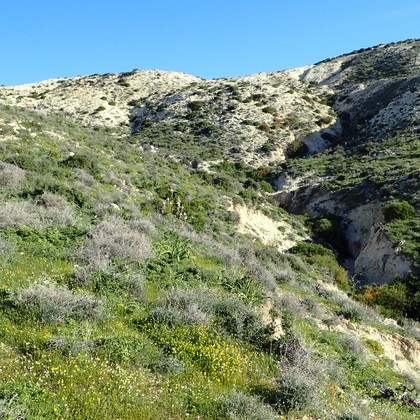
Where the bird is most at home, classified by the habitats of North Africa and the Middle East.
Range and movements
Morocco: formerly a breeding bird of the north-western plains such as the Gharb; breeding is now uncertain and at most sporadic. Small numbers in northern Morocco in winter. Algeria and Tunisia: formerly a breeding bird of the Tell and the High Plateaus, now a rare winter visitor. Libya and Egypt: vagrant. In the east a scarce winter visitor to northern Syria and northern Iraq, rare in Lebanon, Israel, Jordan and Kuwait, and a vagrant farther south on the Arabian Peninsula. Outside the region it breeds in Iberia, France and Sardinia and on the steppes of southern Russia and Kazakhstan; eastern birds winter mainly in Azerbaijan and Iran.
- Resident
- Winter visitor (c. Oct–Mar)
- Passage (Mar–Apr, Oct–Nov)
- dark = core range, pale = thinly spread
How and when to look
There is no regular site in the region. In winter check fields of clover, lucerne and young cereals in northern Morocco and in the Jazira of northern Syria and northern Iraq. A flushed flock gives itself away by its white wings and the whirring sound of the males; on the ground the brown birds are hard to see among the crop.
Conservation status
Near Threatened. The European population has declined steeply since the 1990s through agricultural intensification, the loss of fallow and collisions with power lines. In North Africa the breeding population has been almost lost, and as a winter visitor in the Middle East it is hunted.
Scientific name
Tetrax tetrax | (Linnaeus, 1758)
Linnaeus described the species in 1758 as Otis Tetrax; because it was later moved to another genus, the author and year stand in brackets. The genus Tetrax was introduced in 1817 by Forster. Tetrax is the Latin tetrax, the name of an unidentified gamebird. The specific name repeats the genus name. The specimen the first description was based on came from France.