All species › Falcons › Falcons and caracaras › Yellow-headed Caracara
Position in the tree Birds Aves › Birds with a flexible palate Neognathae › All other modern birds Neoaves › Landbirds Telluraves › Falcons, parrots and passerines Australaves › Falcons and passerines Eufalconimorphae
Yellow-headed Caracara | Daptrius chimachima
Geelkopcaracara | Caracara chimachima
The Yellow-headed Caracara is a medium-sized, slender caracara with a creamy yellow head and underparts and dark brown wings. It forages on the ground and on cattle, from which it picks ticks and other parasites, and also eats insects, carrion, small animals and fruit. In the guide area it is a resident of Panama and Costa Rica, where it has spread northwards since the 1970s as pastures were created.
Voice
A high, hoarse, drawn-out krreee or kreeeee, often repeated, and a harsh sheee; heard mainly when groups chase each other.
Recording: JAYRSON ARAUJO DE OLIVEIRA — CC BY-NC-SA 4.0 · converted to mono · xeno-canto
Identification
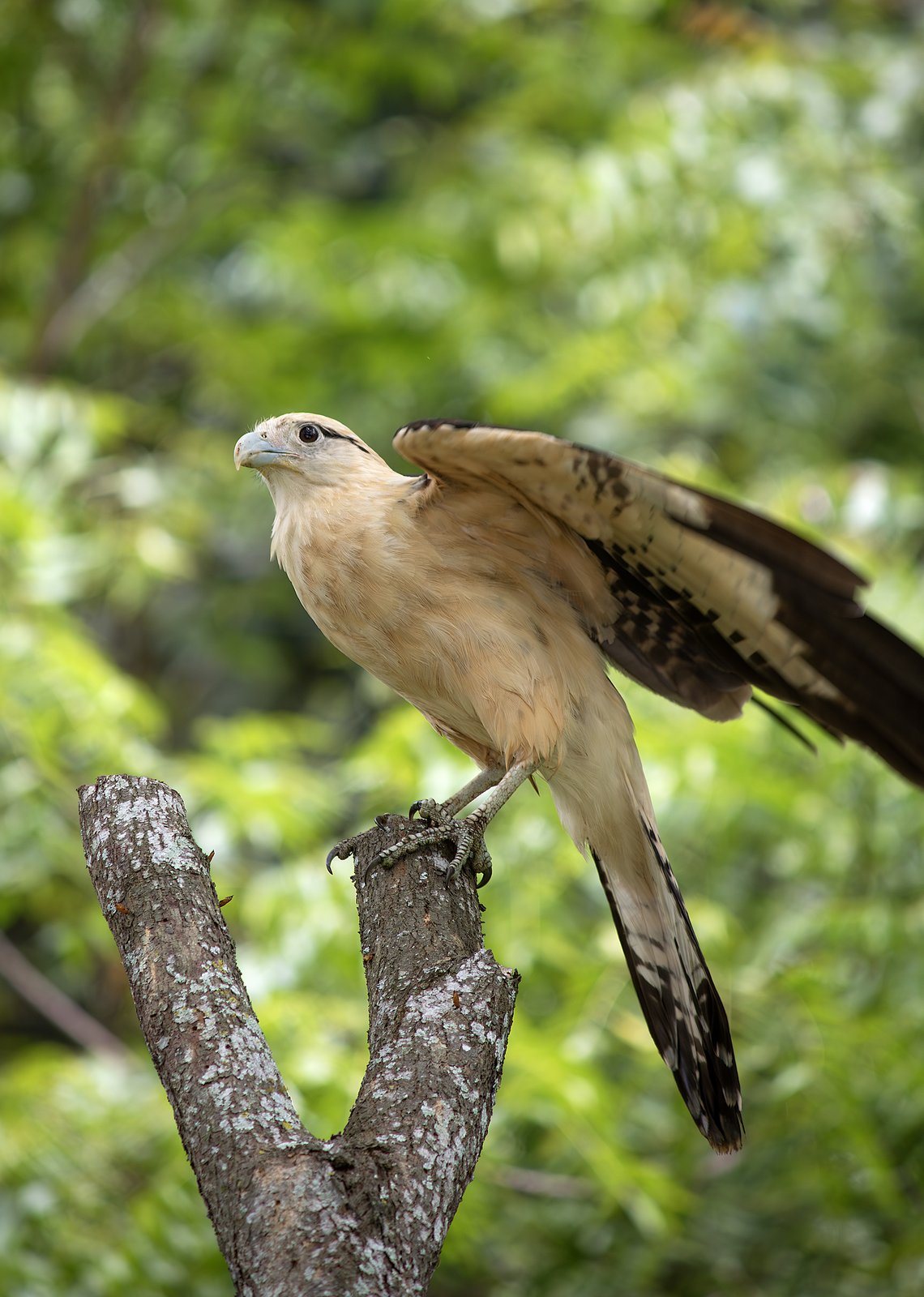
40–46 cm. Head, neck and underparts plain creamy yellow to pale buff, with a narrow black line behind the eye; bare skin round the eye yellow to orange. Back and wings dark brown. In flight a pale patch at the base of the primaries. The tail is buff with fine dark bars and a broad dark terminal band. Bill pale blue to greyish yellow, legs greyish green. Juveniles are brown with dense buff streaking on the head and underparts. Male and female are alike.
Confusion species
The Laughing Falcon Herpetotheres cachinnans has a broad black mask round the nape, a plain dark back and a black-and-white barred tail, and sits for long periods on a high perch. The juvenile Crested Caracara Caracara plancus is larger, with a dark cap and a heavy pale bill. The Savanna Hawk Buteogallus meridionalis is rufous, with long legs and a black tail with a white band.
Habitat
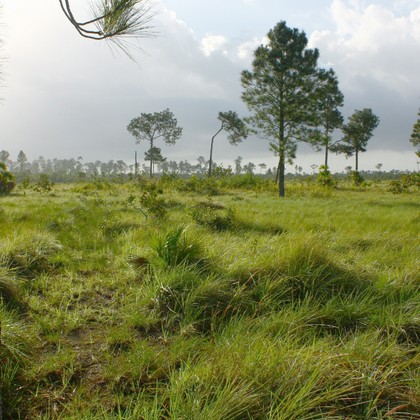
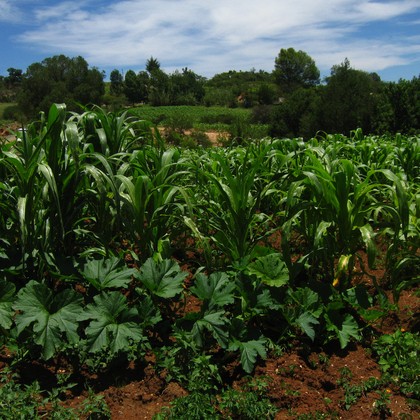
Pasture with scattered trees and palms, savanna, farmland, forest edges, margins of marshes and rivers and the edges of villages; mainly in the lowlands, up to about 1500 m. It perches on posts, fences and the backs of cattle and walks a lot on the ground.
Where the bird is most at home, classified by the vegetation units of Mexico and Central America.




Range and movements
Resident. In Panama on both slopes, mainly in the Pacific lowlands. In Costa Rica established in the southern Pacific lowlands since the 1970s and since then spreading north and into the Caribbean lowlands and the Central Valley. Further north only as a vagrant. Outside the guide area in South America to northern Argentina.
- Resident
- dark = core range, pale = thinly spread
How and when to look
Occurs regularly in the pastures along the Pan-American Highway in the Pacific lowlands of Panama and in southern Costa Rica, often sitting on a post or on the back of a cow.
Conservation status
Not threatened. Increasing and spreading as forest gives way to pasture.
Scientific name
Daptrius chimachima | (Vieillot, 1816)
Vieillot described the species in 1816 as Polyborus chimachima; because it was later moved to another genus, the author and year stand in brackets. The genus Daptrius was introduced in 1816 by Vieillot. Daptrius is Greek, from daptēs 'devourer, eater', from daptō 'to devour'. chimachima is an onomatopoeic local name from Paraguay and Argentina, recorded by Félix de Azara and adopted by Vieillot. The specimen the first description was based on came from Paraguay.