All species › Falcons › Falcons and caracaras › American Kestrel
Position in the tree Birds Aves › Birds with a flexible palate Neognathae › All other modern birds Neoaves › Landbirds Telluraves › Falcons, parrots and passerines Australaves › Falcons and passerines Eufalconimorphae
American Kestrel | Falco sparverius
Amerikaanse torenvalk | Cernícalo americano
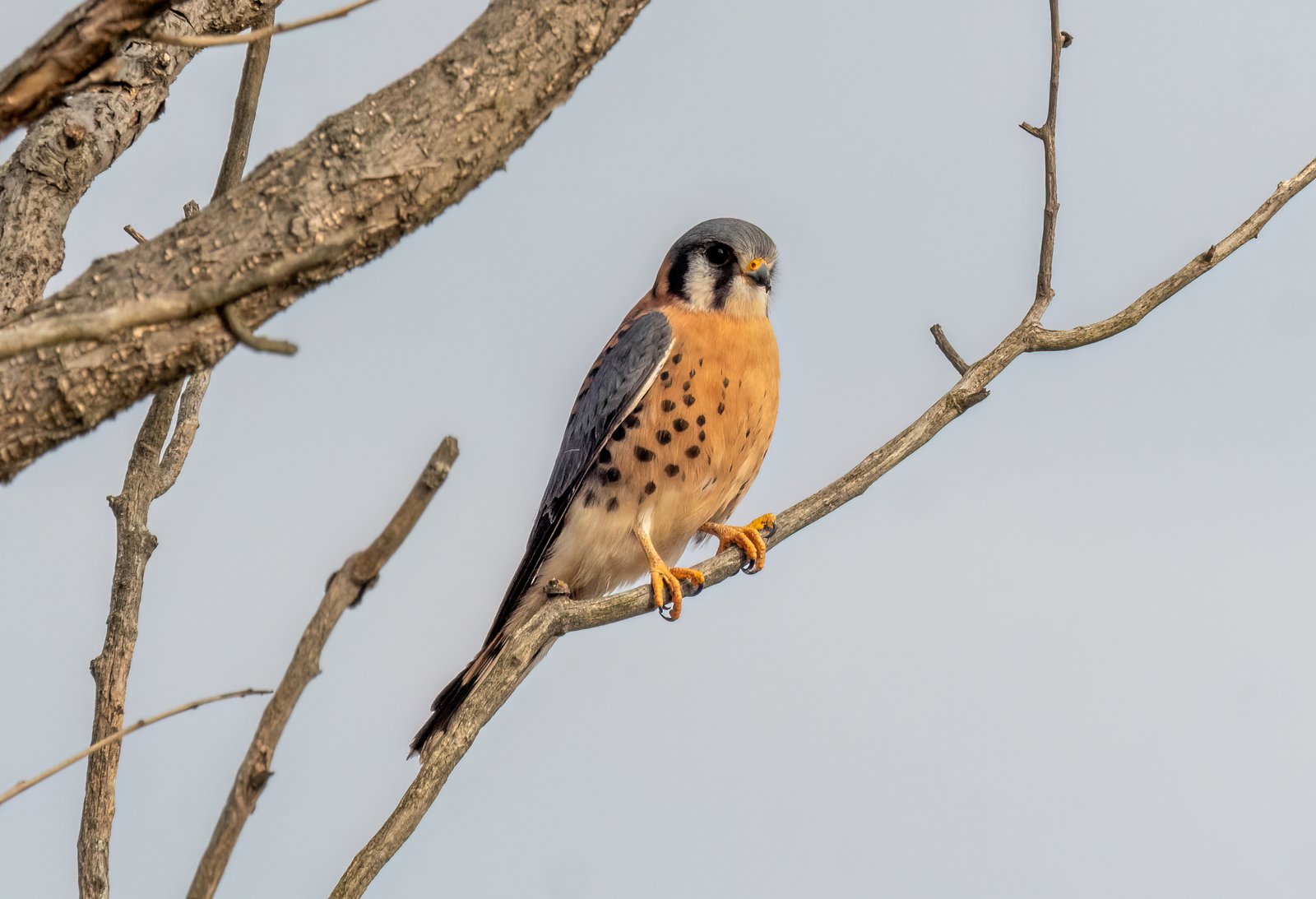
The American Kestrel is the smallest falcon in the guide area and one of the most frequently seen raptors in open country. It perches on wires, posts and dead branches along roads and fields or hovers over grass, catching mainly grasshoppers and other large insects, lizards and mice. Resident birds breed in northern and highland Mexico and in the pine savannas of Belize, Honduras and Nicaragua; from September to April winter visitors from North America join them.
Voice
A rapid, high klee-klee-klee or killy-killy-killy, mainly when alarmed and around the nest; usually silent in winter.
Recording: JAYRSON ARAUJO DE OLIVEIRA — CC BY-NC-SA 4.0 · converted to mono · xeno-canto
Identification
22–31 cm, slim, with long, pointed wings and a long tail. Both sexes have two black vertical marks on the white cheek, a blue-grey crown with a rufous patch and a rufous back barred with black. The male has blue-grey wings spotted black, a plain rufous tail with a broad black terminal band and white to salmon underparts with round black spots. The female is slightly larger, with rufous, black-barred wings and tail and brown streaks on the breast.
Confusion species
The Merlin Falco columbarius is stockier and darker, lacks the rufous tones and the double cheek mark, and does not hover. The Bat Falcon Falco rufigularis is dark slate with a black breast and rufous belly. The Sharp-shinned Hawk Accipiter striatus has short, rounded wings and a square, barred tail. The Aplomado Falcon Falco femoralis is larger, with a white eyebrow and a dark band across the belly.
Habitat
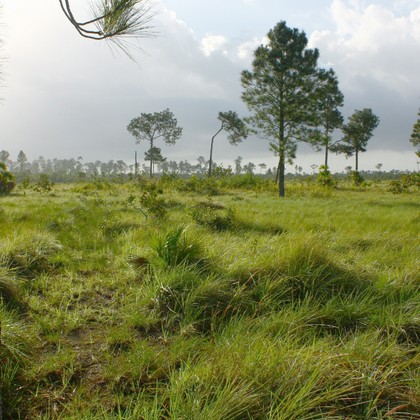
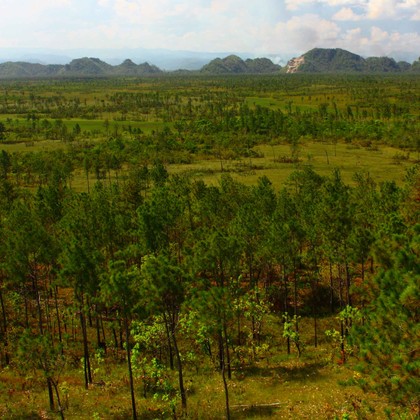
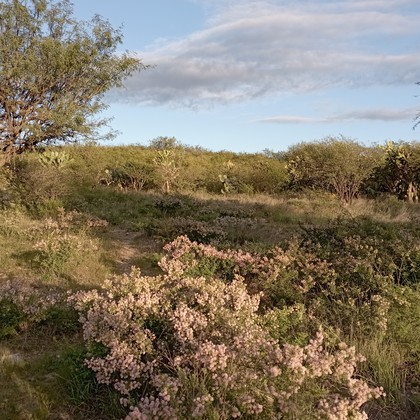
Open country with scattered trees or posts: grassland, savanna and pine savanna, semi-desert, fields, pasture and villages and towns, from sea level to above 2500 m. It nests in tree cavities, old woodpecker holes, rock crevices and holes in buildings. It hunts from a perch or by hovering over the ground.
Where the bird is most at home, classified by the vegetation units of Mexico and Central America.



Range and movements
Resident in Baja California, northern Mexico and the highlands of central and southern Mexico into Guatemala, and in the pine savannas of Belize, eastern Honduras and northeastern Nicaragua. Winter visitors from North America spread over almost all of Mexico and Central America from September–October to March–April; south of Nicaragua the species is then scarcer, in Costa Rica and Panama mainly in open country on the Pacific side. Outside the guide area from Alaska and Canada to Tierra del Fuego and in the Caribbean.
- Resident
- Summer visitor (c. Apr–Sep)
- Winter visitor (c. Oct–Mar)
- Passage (Mar–Apr, Oct–Nov)
- dark = core range, pale = thinly spread
How and when to look
In winter best looked for along roads through fields and pasture on the Mexican Plateau, where birds sit on a wire or post every few hundred metres. On landing the tail is briefly bobbed up and down.
Conservation status
Not threatened. In North America numbers have declined since the 1970s; in Mexico the species benefits from forest clearance and farming.
Scientific name
Falco sparverius | Linnaeus, 1758
Linnaeus described the species in 1758 and placed it straight away in the genus where it still stands. He introduced the genus Falco in that same work. Falco is Late Latin for 'falcon', from falx, falcis 'sickle', after the sickle-shaped claws of the bird. sparverius is Medieval Latin for 'sparrowhawk', a name that does not really fit this true falcon. The specimen the first description was based on came from South Carolina.