All species › Passerines › Longspurs and snow buntings › Thick-billed Longspur
Position in the tree Birds Aves › Birds with a flexible palate Neognathae › All other modern birds Neoaves › Landbirds Telluraves › Falcons, parrots and passerines Australaves › Falcons and passerines Eufalconimorphae › Parrots and passerines Psittacopasserae
Thick-billed Longspur | Rhynchophanes mccownii
McCowns ijsgors | Escribano de McCown
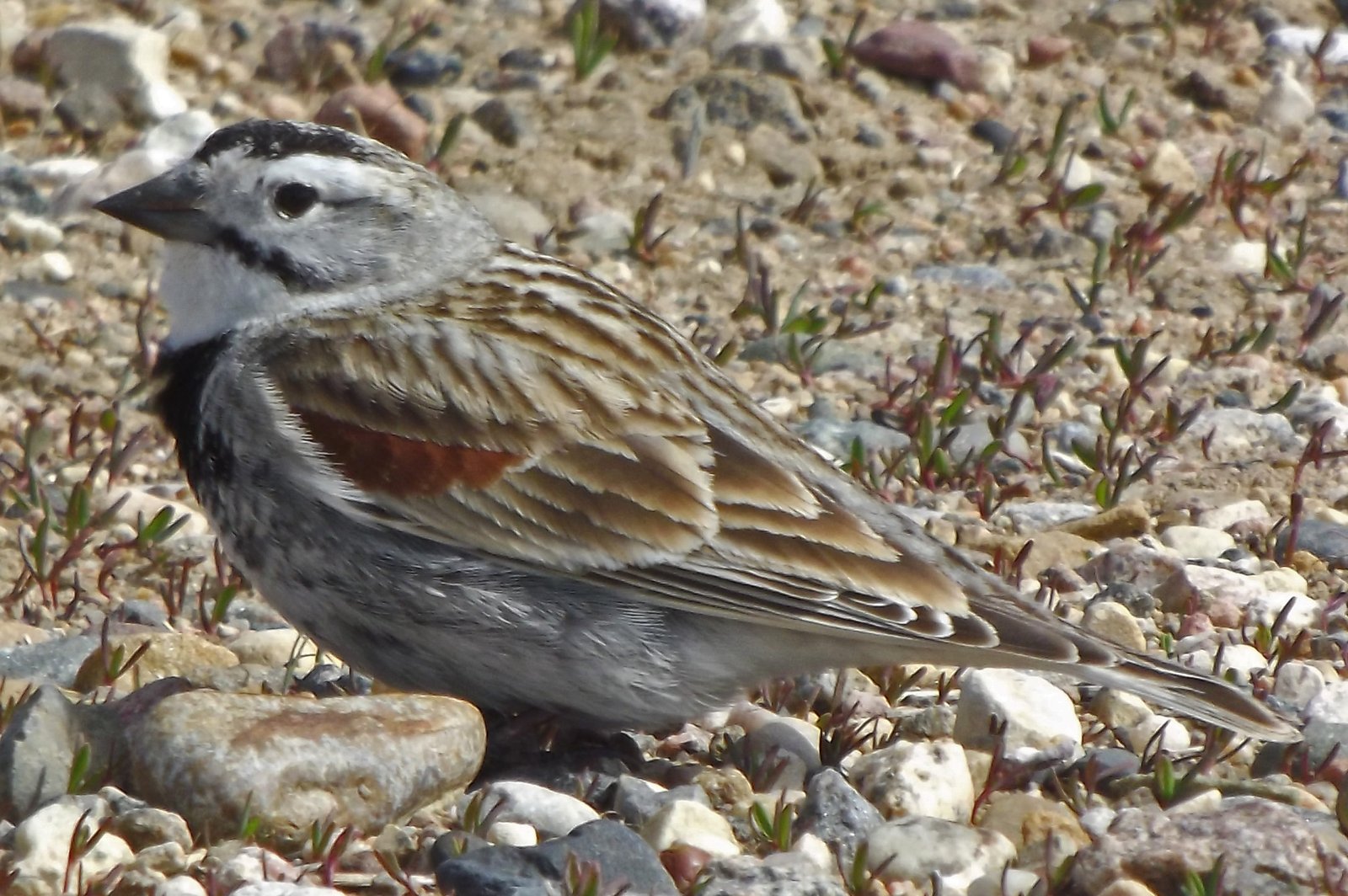
The Thick-billed Longspur is a stocky, thick-billed bunting that breeds on the shortgrass prairies of North America. In the guide area it is a winter visitor to the bare, closely grazed plains of northern Mexico. In flight the mainly white tail with a black inverted T stands out.
Voice
In flight a dry, rolling chirr or rattle and a short pit. The song, rarely heard in winter, is a clear, twittering series given in a song flight.
Recording: Paul Marvin — CC BY-NC-SA 3.0 · shortened to the first 60 s, mono · xeno-canto
Identification
14–15 cm. Stocky, with a conspicuously thick, pink to pale bill and a short tail. In winter plumage dull grey-brown with a pale, plain head, a faint breast band and a rufous patch on the lesser coverts; underparts pale. Tail white with a black central stripe and a broad black terminal band, together forming an inverted T. The breeding male, sometimes seen as early as March, has a black crown, black breast patch and rufous shoulder.
Confusion species
Chestnut-collared Longspur Calcarius ornatus is smaller, with a thinner bill and a white tail with a black triangle at the tip. Lapland Longspur Calcarius lapponicus has a dark tail with white on the outer feathers, a dark border to the cheek and rufous greater coverts. Horned Lark Eremophila alpestris has a thin bill, a black-and-yellow face pattern and a mainly black tail.
Habitat
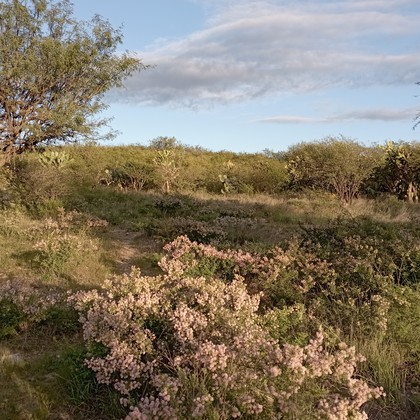
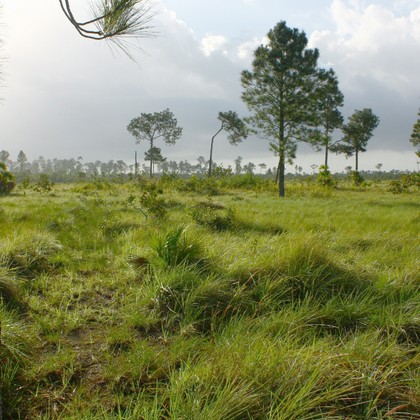
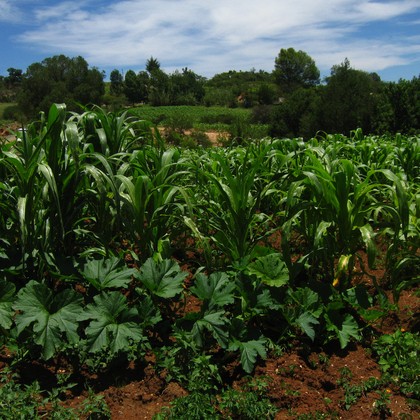
In winter bare and closely grazed grassland, very dry grassland with much bare ground, ploughed fields and stubble. It lives in flocks, often with Horned Larks and other longspurs. It eats seeds of grasses and herbs.
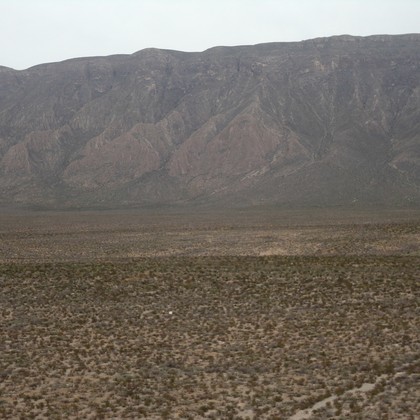
Where the bird is most at home, classified by the vegetation units of Mexico and Central America.
Range and movements
Breeds on the shortgrass prairies of southern Canada and the northern Great Plains of the United States. Winters in the south-western United States and northern Mexico, mainly on the plateaus of Chihuahua, Durango and Coahuila, more scarcely in Sonora and south to Zacatecas.
- Winter visitor (c. Oct–Mar)
- dark = core range, pale = thinly spread
How and when to look
Look for it on the extensive grasslands around Janos in north-western Chihuahua; with flushed flocks the tail pattern is decisive.
Conservation status
Not threatened (LC). Numbers have declined sharply since the mid-twentieth century through conversion of prairie to cropland. The loss of grasslands in northern Mexico also affects this species.
Scientific name
Rhynchophanes mccownii | (Lawrence, 1851)
Lawrence described the species in 1851 as Plectrophanes mccownii; because it was later moved to another genus, the author and year stand in brackets. The genus Rhynchophanes was introduced in 1858 by Baird. Rhynchophanes is Greek, from rhunkhos 'bill' and -phanēs 'showing', after the conspicuously thick bill. mccownii honours the American army officer and collector John Porter McCown (1815–1879), who collected the first specimen. The specimen the first description was based on came from high prairies of western Texas (USA).