All species › Passerines › Longspurs and snow buntings › Lapland Longspur
Position in the tree Birds Aves › Birds with a flexible palate Neognathae › All other modern birds Neoaves › Landbirds Telluraves › Falcons, parrots and passerines Australaves › Falcons and passerines Eufalconimorphae › Parrots and passerines Psittacopasserae
Lapland Longspur | Calcarius lapponicus
IJsgors | Escribano lapón
The Lapland Longspur breeds on the Arctic tundra around the whole North Pole and moves south in winter. The guide area lies at the southern edge of its American wintering range; in northern Mexico it is a scarce and irregular winter visitor. There it is usually found among flocks of Horned Larks and other longspurs.
Voice
A dry, rolling rattle tirrrik in flight, often alternating with a soft, descending chew. The song, on the breeding grounds, is a fast, twittering series.
Recording: Stanislas Wroza — CC BY-NC-SA 4.0 · converted to mono · xeno-canto
Identification
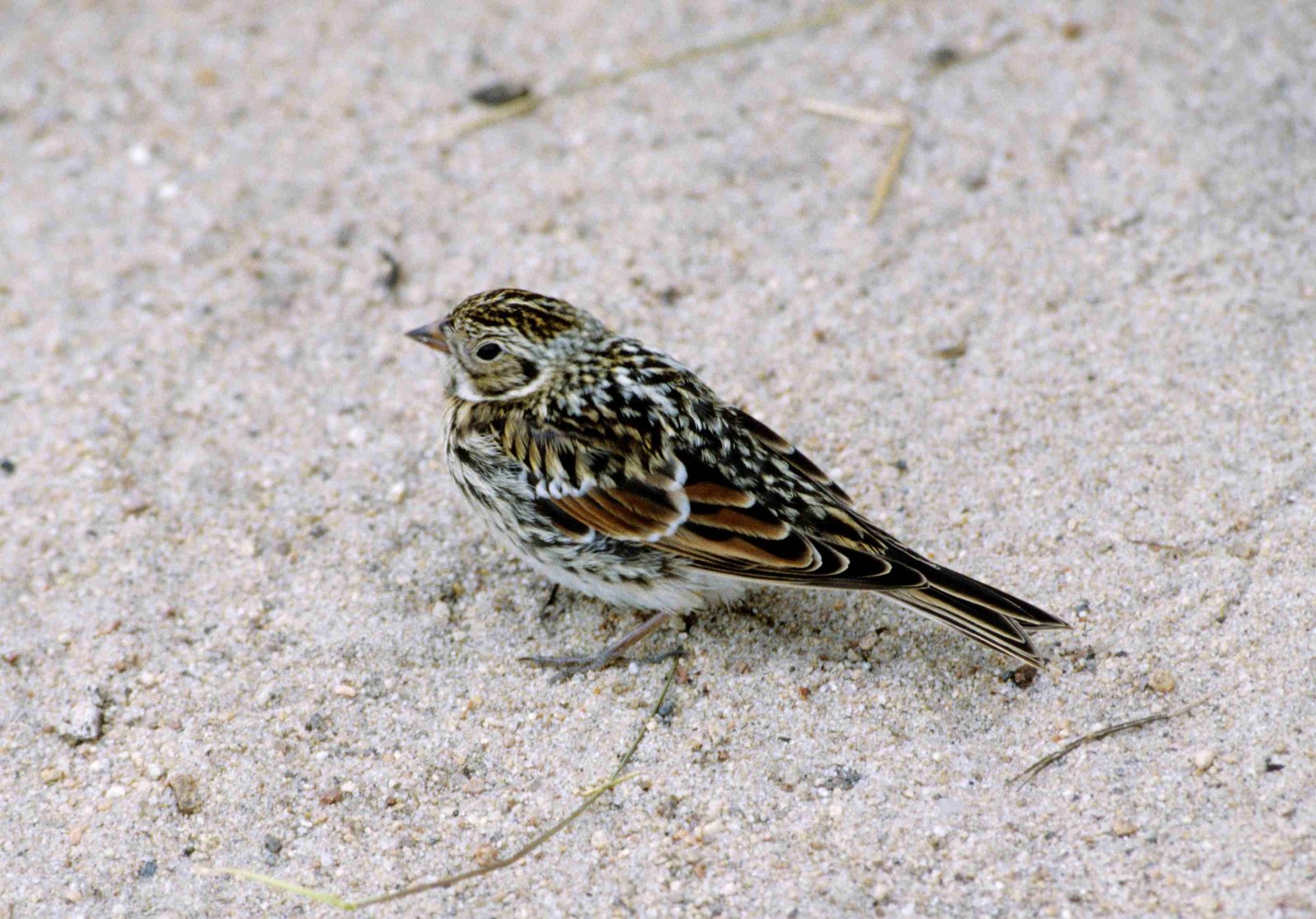
15–16 cm. Fairly long-winged, with a short, pale bill. In winter plumage brown with dark streaks on the back, a pale supercilium and a pale cheek with a dark border, often with a dark rear corner. The greater coverts are rufous and form a wing panel between two narrow white bars. Breast with a faint dark patch or band, flanks streaked, belly white. Tail dark with white on the outer feathers. In the male the nape is often already tinged rufous.
Confusion species
Thick-billed Longspur Rhynchophanes mccownii and Chestnut-collared Longspur Calcarius ornatus have much more white in the tail. Savannah Sparrow Passerculus sandwichensis and Vesper Sparrow Pooecetes gramineus lack the rufous wing panel and have different calls. Sprague's Pipit Anthus spragueii has a thin bill.
Habitat
In winter bare fields, stubble, closely grazed grassland and open plains. It walks on the ground searching for seeds. In the guide area almost always in the company of Horned Larks or other longspurs.
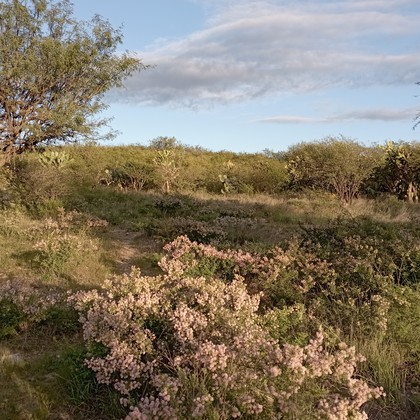
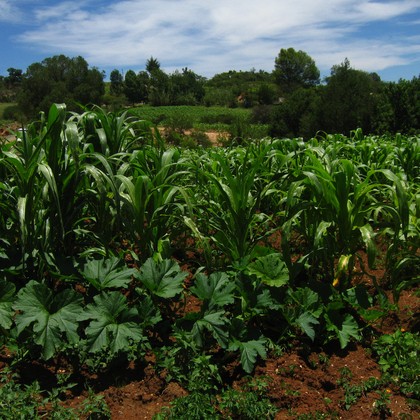
Where the bird is most at home, classified by the vegetation units of Mexico and Central America.

Range and movements
Breeds on the Arctic tundra of North America, Greenland, Europe and Asia. In the Americas it winters mainly in the Great Plains and the southern United States. In the guide area scarce and irregular in northern Mexico, mainly in Chihuahua, Coahuila, Nuevo León and Durango.
- Winter visitor (c. Oct–Mar)
- Passage (Mar–Apr, Oct–Nov)
- dark = core range, pale = thinly spread
How and when to look
Found by carefully scanning flocks of Horned Larks and longspurs on bare fields and grasslands in northern Mexico; the rattling call helps in locating it.
Conservation status
Not threatened (LC). Very numerous and widespread in the north; in the guide area a scarce winter visitor whose numbers vary greatly from winter to winter.
Scientific name
Calcarius lapponicus | (Linnaeus, 1758)
Linnaeus described the species in 1758 as Fringilla lapponica; because it was later moved to another genus, the author and year stand in brackets. The genus Calcarius was introduced in 1802 by Bechstein. Calcarius is from Latin calcaria 'spurs', after the long claw on the hind toe. lapponicus means 'of Lapland', after the breeding grounds in the far north. The specimen the first description was based on came from Lapland.