All species › Owls › Owls › Spotted Owl
Position in the tree Birds Aves › Birds with a flexible palate Neognathae › All other modern birds Neoaves › Landbirds Telluraves › Raptors, owls, kingfishers and woodpeckers Afroaves › Hawks and owls Hieraves
Spotted Owl | Strix occidentalis
Gevlekte bosuil | Búho manchado
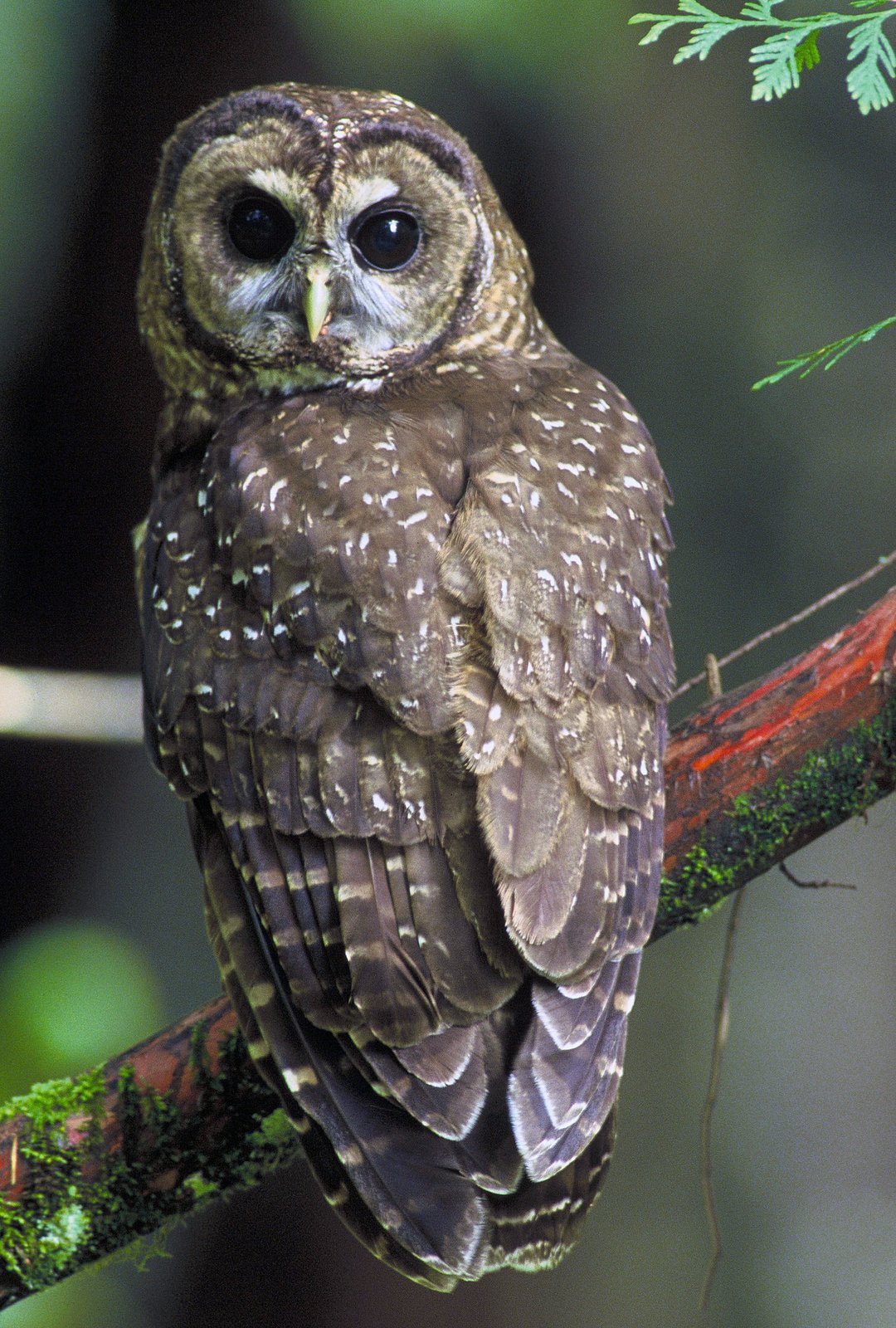
The Spotted Owl is a fairly large, dark brown owl with white spots, dark eyes and a round head without ear tufts. It lives in old conifer and oak forest in western North America; in the guide area only the subspecies lucida occurs, scattered across the mountains of northern and central Mexico. It is tied to cool, wooded ravines with old trees. It is active at night and hunts mainly woodrats, mice and other small mammals.
Voice
The song is a series of usually four hollow, deep notes, the middle two close together: hoo — hoo-hoo — hooo. The female calls higher than the male. Also a hollow, rising whistled kweeeep as a contact call. Heard mainly in spring and summer, in the first hours after sunset.
Recording: renevoss — CC BY-NC 4.0 · converted to mono · iNaturalist
Identification
41–48 cm, with a round head without ear tufts and dark brown to black eyes. The upperparts are chocolate brown with round and oval white spots on crown, mantle and wings. The facial disc is pale brown with dark concentric rings and a pale X between the eyes. Breast and belly are brown with white spots and irregular pale bars, not streaked. The bill is yellowish green. Mexican birds are somewhat paler and more coarsely spotted than those in the north of the range. The female is larger than the male.
Confusion species
The Cinereous Owl Strix sartorii is greyer, with bars on the neck and upper breast and streaks on the belly instead of round spots. The Great Horned Owl Bubo virginianus is larger, with ear tufts and yellow eyes. The Stygian Owl Asio stygius has ear tufts and yellow eyes and is darker.
Habitat
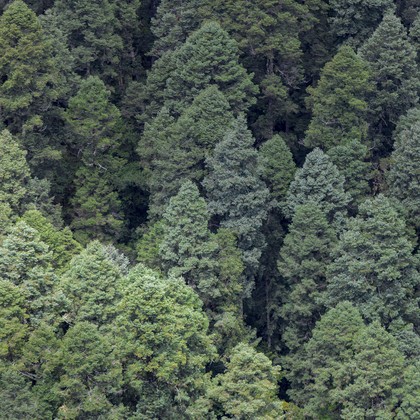
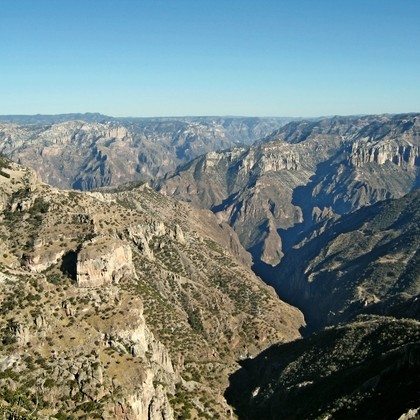
Old, closed pine-oak forest, mixed conifer forest and oak woodland in the mountains, especially in cool, shady ravines and canyons with rock walls and old trees; also along stream valleys with riparian woodland. In Mexico it occurs from about 1,500 to over 3,000 metres. By day it roosts in dense trees or rock crevices, and it nests in tree cavities, on rock ledges or in old nests of other birds.
Where the bird is most at home, classified by the vegetation units of Mexico and Central America.



Range and movements
Resident in the mountains of northern and central Mexico: in the Sierra Madre Occidental from Sonora and Chihuahua through Durango to Zacatecas, Aguascalientes and Jalisco, and in the Sierra Madre Oriental in Coahuila, Nuevo León and San Luis Potosí. Scattered sites farther south in Guanajuato, Michoacán, Guerrero and the mountains near Mexico City. The populations are small and widely separated. Outside the guide area in the western United States and southwestern Canada.
- Summer visitor (c. Apr–Sep)
- dark = core range, pale = thinly spread
How and when to look
The best chance is in cool, wooded canyons of the Sierra Madre Occidental in Durango and Chihuahua, in spring and summer after sunset, when the birds call. By day it roosts low in the shade of a dense tree, often in the same spot for weeks; white droppings and pellets under a tree can give the site away.
Conservation status
Near Threatened. The species is declining through logging of old forest, wildfires and, in the north of the range, competition with the spreading Barred Owl. In Mexico the population is small, fragmented and little studied; there it is legally protected as threatened.
Scientific name
Strix occidentalis | (Xántus, 1860)
Xántus described the species in 1860 as Syrnium occidentale; because it was later moved to another genus, the author and year stand in brackets. The genus Strix was introduced in 1758 by Linnaeus. Strix is the Latin word for 'owl'; in classical lore the strix was a night bird said to suck the blood of infants. occidentalis is Latin for 'western', after the range in western North America. The specimen the first description was based on came from Fort Tejon, California.