All species › Passerines › New World sparrows › Sierra Madre Sparrow
Position in the tree Birds Aves › Birds with a flexible palate Neognathae › All other modern birds Neoaves › Landbirds Telluraves › Falcons, parrots and passerines Australaves › Falcons and passerines Eufalconimorphae › Parrots and passerines Psittacopasserae
Sierra Madre Sparrow | Xenospiza baileyi
Sierra-Madregors | Gorrión serrano
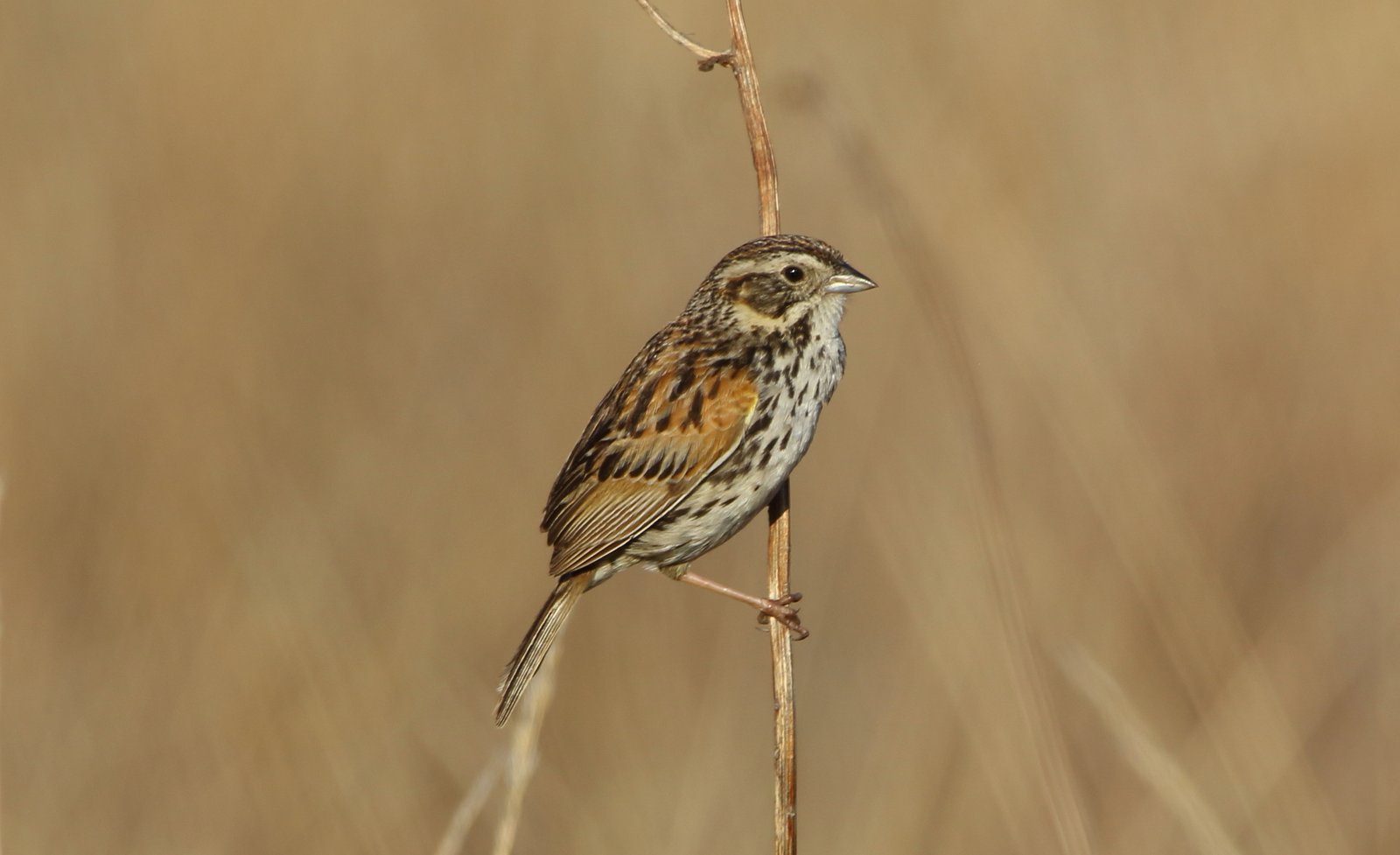
The Sierra Madre Sparrow is a streaked, rufous-brown sparrow of dense bunchgrass in open conifer forest high in the mountains. It occurs only in Mexico, in a few small and fragmented areas. It is one of the most threatened sparrows of the guide area.
Voice
The song is a short series of high, thin notes running into a dry trill. The call is a soft, high tsip.
Recording: Manuel Grosselet — CC BY-NC-SA 4.0 · converted to mono · xeno-canto
Identification
14–15 cm. Upperparts warm rufous-brown with black streaks; crown dark with a narrow grey central stripe. Face and supercilium grey, with a dark eye-stripe and a distinct black malar stripe. Throat white; breast and flanks white to dull buff with dense, sharp black streaks, belly white. Tail fairly long with rusty edges. The sexes are alike.
Confusion species
Savannah Sparrow Passerculus sandwichensis is less rufous, often has yellow lores and a shorter, notched tail, and lives in lower, open grassland. Lincoln's Sparrow Melospiza lincolnii, a winter visitor to the same area, has finer streaks on a buff breast band and an unstreaked white belly. Striped Sparrow Oriturus superciliosus, which lives in the same grasslands, is larger, with a black cheek patch, a white supercilium and unstreaked grey underparts.
Habitat
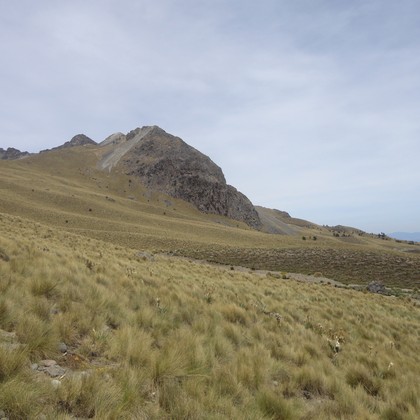
Dense, tall bunchgrass (zacatonal) with scattered pines, often in open pine forest or in broad mountain valleys, at about 2300 to 3100 m. It sings from grass stems or low shrubs but otherwise usually stays low among the tussocks. It eats seeds and insects.
Where the bird is most at home, classified by the vegetation units of Mexico and Central America.

Range and movements
Endemic to Mexico. The main populations are in the mountains south of Mexico City, around Ajusco, Topilejo and Milpa Alta, and at the Lagunas de Zempoala on the border with Morelos. A small population is known from the southern Sierra Madre Occidental in Durango.
- Resident
- dark = core range, pale = thinly spread
How and when to look
The best-known site is Parres (El Guarda) along the old road from Mexico City to Cuernavaca. Early in the breeding season males sing from the tussocks and can be located by their song.
Conservation status
Endangered (EN). Its habitat is small and fragmented and is shrinking through conversion to farmland, afforestation, overgrazing, burning of grassland and the expansion of Mexico City.
Scientific name
Xenospiza baileyi | Bangs, 1931
Bangs described the species in 1931 and placed it straight away in the genus where it still stands. He introduced the genus Xenospiza in that same work. Xenospiza is Greek, from xenos 'stranger' and spiza 'finch': a 'strange finch', after its distinctive position in the family. baileyi honours the American ornithologist and collector Alfred Marshall Bailey (1894–1978), later director of the Denver Museum of Natural History. The specimen the first description was based on came from Bolaños, Jalisco, Mexico.