All species › Passerines › New World blackbirds, troupials and allies › Red-breasted Meadowlark
Position in the tree Birds Aves › Birds with a flexible palate Neognathae › All other modern birds Neoaves › Landbirds Telluraves › Falcons, parrots and passerines Australaves › Falcons and passerines Eufalconimorphae › Parrots and passerines Psittacopasserae
Red-breasted Meadowlark | Leistes militaris
Zwartkopsoldatenspreeuw | Pastorero pechirrojo
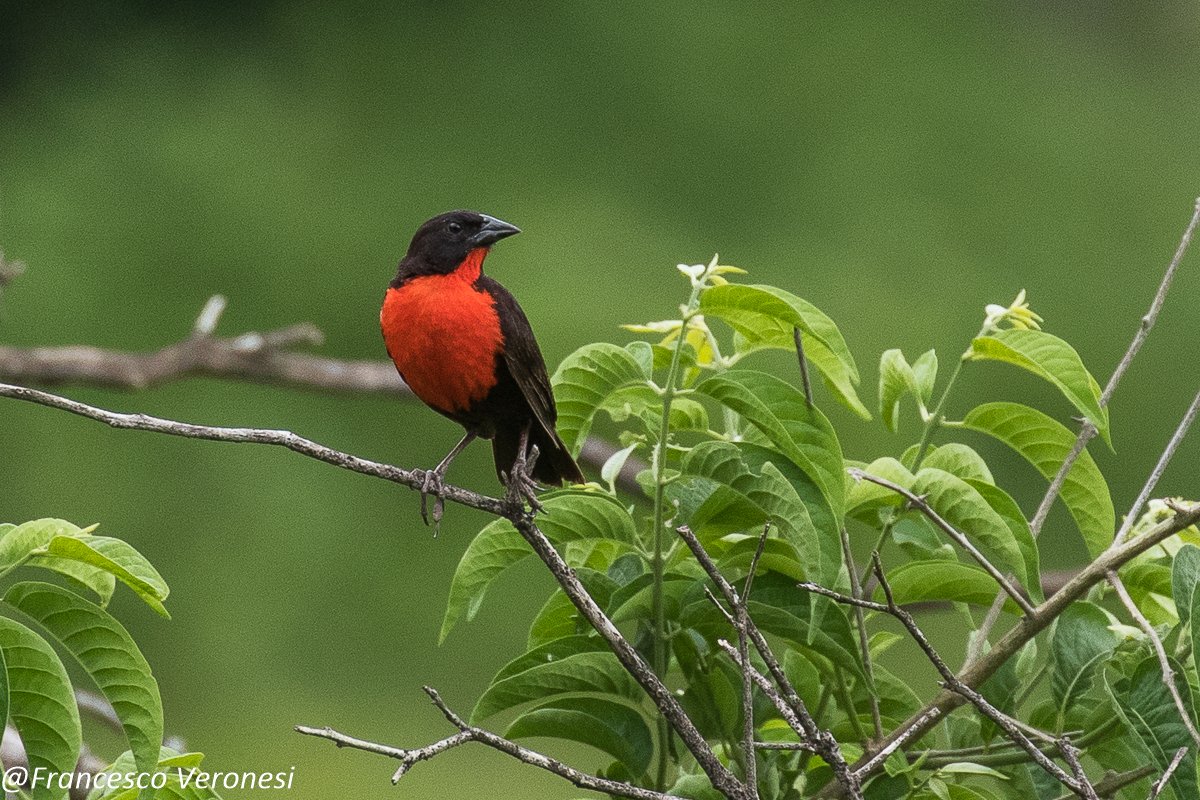
The Red-breasted Meadowlark is a small, short-tailed blackbird of wet grassland and pastures. The male is black with a red throat and breast. The species is widespread in South America and in the second half of the 20th century spread north from Panama into Costa Rica, helped by forest clearance for pasture.
Voice
The male sings from a post or tall grass tussock or in a short song flight, rising and then gliding back down on spread wings: a few short clicks followed by a long, hoarse, buzzy note. The call is a dry chik.
Recording: Mauricio Cuéllar-Ramírez — CC BY-NC-SA 4.0 · converted to mono · xeno-canto
Identification
17–19 cm. Stocky, with a pointed, conical bill and a short tail. Breeding male black with bright red throat, breast and upper belly and sometimes a small red spot at the bend of the wing. Outside the breeding season the black feathers have broad brown edges and the red is partly hidden. Female brown with dark streaks on the head and back, a pale buff supercilium and a pinkish-red wash on the breast and belly. Young birds resemble the female, without red.
Confusion species
The male Red-winged Blackbird Agelaius phoeniceus is larger and entirely black, with red and yellow only on the shoulder. Eastern Meadowlark Sturnella magna is larger, has a yellow breast with a black V and white in the tail; young meadowlarks can resemble females, but have yellow instead of a pinkish-red wash on the underparts. Females may also recall a female Bobolink Dolichonyx oryzivorus, which is yellower, with pointed tail feathers and no red.
Habitat
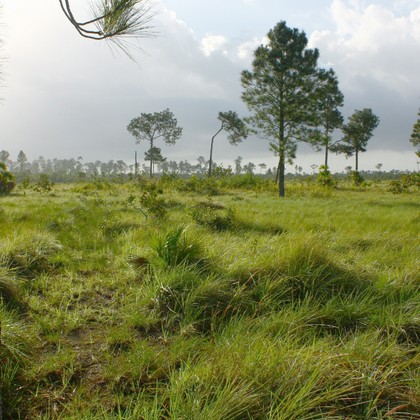
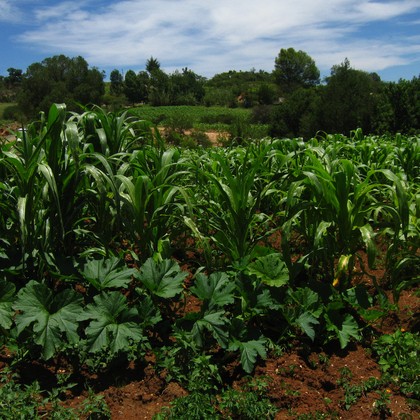
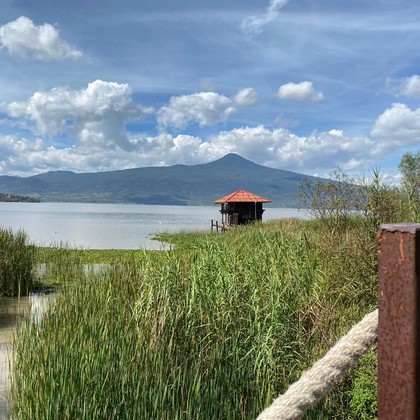
Wet and dry grassland, pastures, rice fields, rank field margins and grassy marsh edges in the lowlands. Avoids forest. It forages walking on the ground, mainly for insects and seeds.
Where the bird is most at home, classified by the vegetation units of Mexico and Central America.

Range and movements
Occurs from southern Central America through much of northern and central South America east of the Andes, south to Bolivia and central Brazil, and on Trinidad. In the guide area in Panama and Costa Rica, where the species has spread from the south since the 1970s and now occurs in large parts of the open lowlands; there are occasional records from southern Nicaragua.
- Resident
- dark = core range, pale = thinly spread
How and when to look
Best found in damp pastures and rice fields in the lowlands of Panama and Costa Rica, where singing males can be seen from far away on posts and in their song flight.
Conservation status
Not threatened (LC). Widespread and common; in the guide area expanding through the conversion of forest to pasture.
Scientific name
Leistes militaris | (Linnaeus, 1758) (GBIF: Sturnella militaris)
Linnaeus described the species in 1758 as E[mberiza] militaris; because it was later moved to another genus, the author and year stand in brackets. The genus Leistes was introduced in 1825 by Vigors. Leistes is Greek lēistēs 'robber, plunderer', probably after the habit of raiding grain fields. militaris is Latin for 'military, of a soldier', after the red breast recalling a soldier's red tunic. The specimen the first description was based on came from Suriname.