All species › Passerines › New World warblers › Pink-headed Warbler
Position in the tree Birds Aves › Birds with a flexible palate Neognathae › All other modern birds Neoaves › Landbirds Telluraves › Falcons, parrots and passerines Australaves › Falcons and passerines Eufalconimorphae › Parrots and passerines Psittacopasserae
Pink-headed Warbler | Cardellina versicolor
Rozekopzanger | Chipe rosado
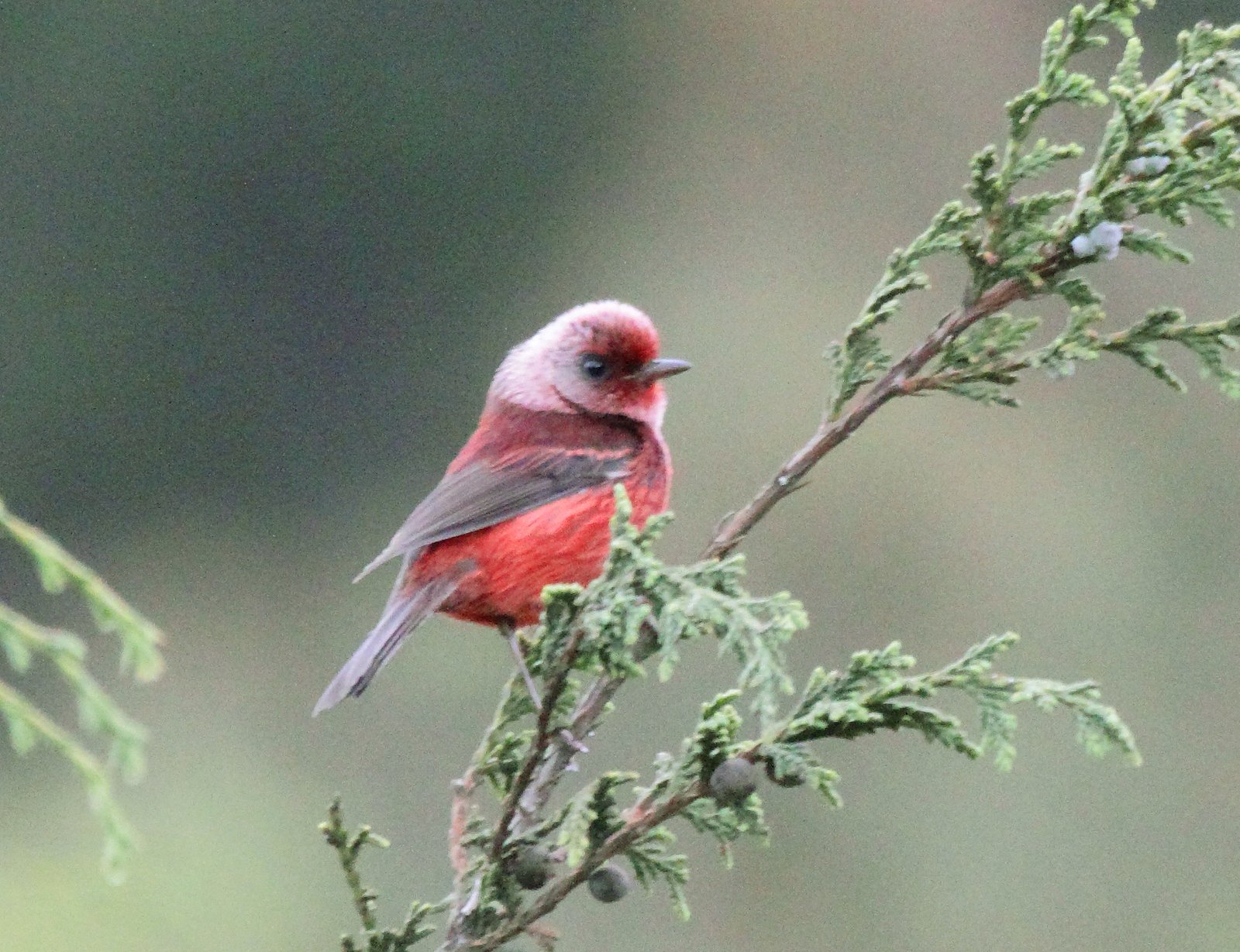
The Pink-headed Warbler is a red warbler with a silvery-pink head, found only in the mountains of Chiapas and Guatemala. It lives in the dense understorey of humid pine-oak and cloud forest. With the Red Warbler of Mexico it forms a pair of closely related species that replace each other geographically.
Voice
The song is a fairly short, clear, twittering phrase of rapid notes. The call is a thin, high tseep.
Recording: Andrew Spencer — CC BY-NC-SA 4.0 · shortened to the first 60 s, mono · xeno-canto
Identification
13–14 cm. Body deep wine-red, wings and tail darker and browner red. Head, throat and breast washed silvery pink, giving a frosted look in good light; the border with the red of the rest of the body is diffuse. Bill short and fine, dark. The sexes are alike. Young birds are brown with pale wing bars.
Confusion species
Red Warbler Cardellina rubra lacks the silvery-pink head, but lives only in Mexico west of Chiapas, so not alongside Pink-headed Warbler. Flame-colored Tanager Piranga bidentata and Hepatic Tanager Piranga flava are larger, with a heavy bill and no pink on the head. Slate-throated Whitestart Myioborus miniatus has a red belly but a slate-grey head and upperparts.
Habitat
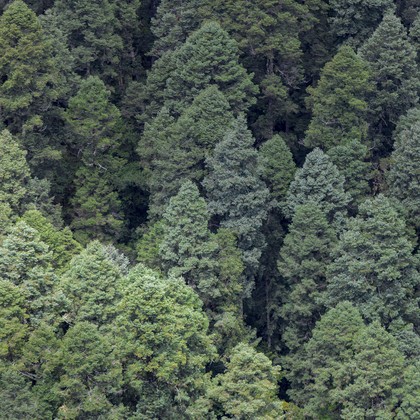
Humid pine-oak forest, cloud forest and high coniferous forest with a dense understorey of shrubs and bamboo, also forest edges and clearings with scrub; mostly between 1800 and 3500 m. It searches for insects low in the vegetation, alone, in pairs or in mixed flocks. The nest is a domed structure on the ground.
Where the bird is most at home, classified by the vegetation units of Mexico and Central America.


Range and movements
Only in the guide area: the highlands of Chiapas in southern Mexico and the highlands of western and central Guatemala.
- Resident
- dark = core range, pale = thinly spread
How and when to look
Regularly seen in the forests around San Cristóbal de las Casas in Chiapas, for example in the Cerro Huitepec reserve, and in the mountain forest of the western highlands of Guatemala. It often stays low in dense undergrowth.
Conservation status
Not threatened (LC). The range is small and the mountain forest it lives in is being logged or turned into fields in many places, so the species is declining locally.
Scientific name
Cardellina versicolor | Salvin, 1863
Salvin described the species in 1863 and placed it straight away in the genus where it still stands. The genus Cardellina was introduced in 1850 by Bonaparte. Cardellina is a diminutive of the Italian dialect word cardella 'goldfinch'. versicolor is Latin for 'variegated, changing in colour', after the silvery-pink head on the red plumage. The specimen the first description was based on came from Chilasco, Baja Verapaz, Guatemala.