All species › Passerines › Silky-flycatchers › Phainopepla
Position in the tree Birds Aves › Birds with a flexible palate Neognathae › All other modern birds Neoaves › Landbirds Telluraves › Falcons, parrots and passerines Australaves › Falcons and passerines Eufalconimorphae › Parrots and passerines Psittacopasserae
Phainopepla | Phainopepla nitens
Zwarte zijdevliegenvanger | Capulinero negro
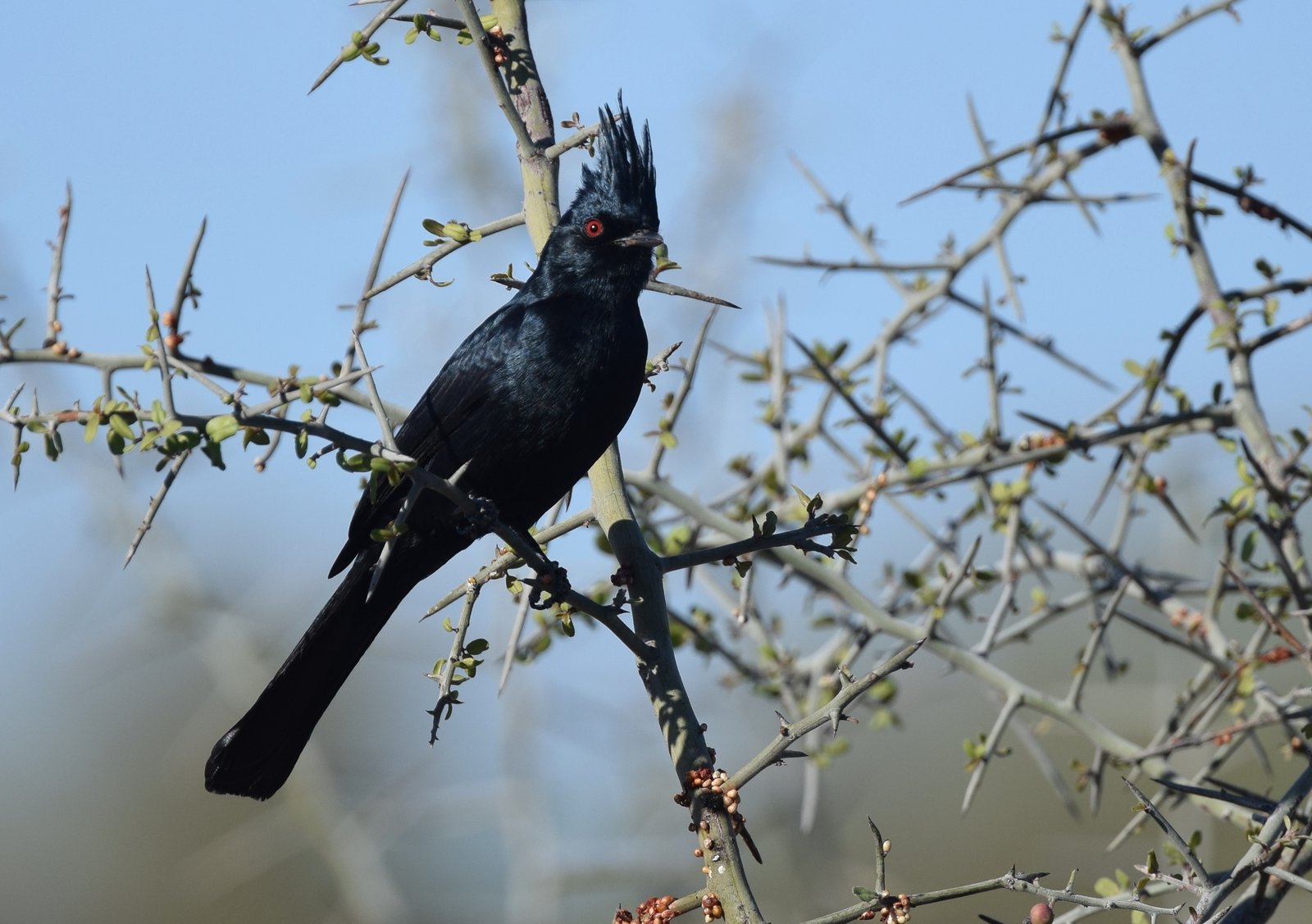
The Phainopepla is a slim bird with a thin, upright crest and a red eye, living in deserts and dry scrub. It likes to perch at the top of a bush and feeds largely on mistletoe berries. In the guide area it occurs in Baja California and northern and central Mexico.
Voice
The usual call is a soft, upslurred wurp. The song is soft and disjointed, with short whistled and gurgling phrases. It also imitates the calls of other birds.
Recording: Richard E. Webster — CC BY-NC-SA 4.0 · shortened to the first 60 s, mono · xeno-canto
Identification
18–21 cm, with a fairly long tail. The male is entirely glossy black, with large white patches at the base of the primaries that are clearly visible only in flight. Females and young birds are plain dark grey, with pale grey wing patches and pale edges to the wing feathers. Both sexes have a red iris (brown in young birds) and a thin, upright crest.
Confusion species
Bronzed Cowbird Molothrus aeneus also has a red eye but is stockier, with a thick, conical bill, no crest and no white wing patches. Grey Silky-flycatcher Ptiliogonys cinereus lives in montane forest and is blue-grey with yellow undertail coverts and a white band in the tail. Cedar Waxwing Bombycilla cedrorum is brown-grey with a black mask and a yellow tail tip.
Habitat
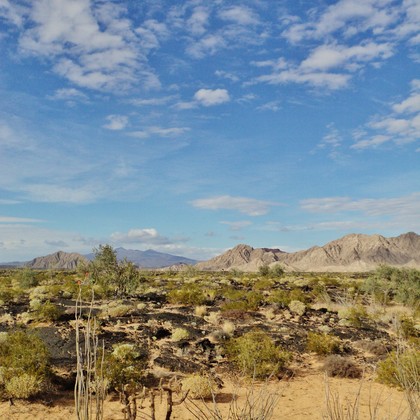
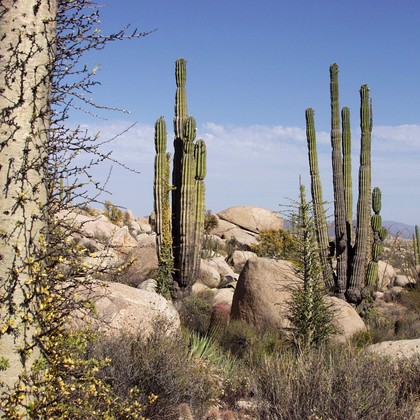
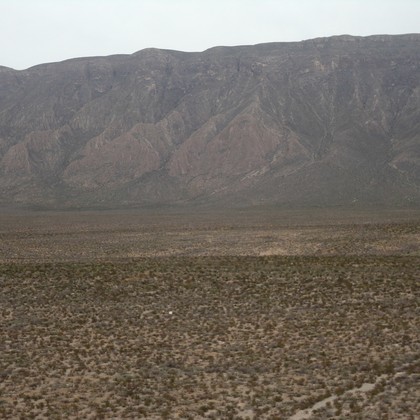
Desert and semi-desert with shrubs and trees carrying mistletoe, dry washes with mesquite, thorn scrub, chaparral and riparian woodland in dry regions. It eats mainly berries of mistletoe and other shrubs and also catches insects in flight from a perch.
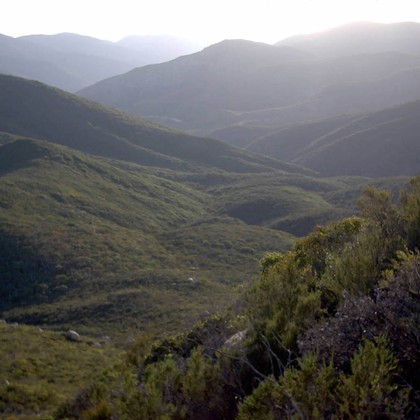
Where the bird is most at home, classified by the vegetation units of Mexico and Central America.


Range and movements
In the guide area in Baja California and Sonora and further across the deserts and plateaus of northern Mexico south to central Mexico. Outside the breeding season birds wander to places with berries. Outside the guide area in the south-western United States.
- Resident
- dark = core range, pale = thinly spread
How and when to look
Best looked for in dry washes with mesquite and mistletoe; males often sit upright at the top of a bush and stand out in flight by their white wing patches.
Conservation status
Not threatened. Widespread and locally common in dry scrub.
Scientific name
Phainopepla nitens | (Swainson, 1838)
Swainson described the species in 1838 as Ptilogonys nitens; because it was later moved to another genus, the author and year stand in brackets. The genus Phainopepla was introduced in 1858 by Baird. Phainopepla is Greek, from phaeinos 'shining' and peplos 'robe, cloak', after the glossy black plumage of the male. nitens is Latin for 'shining, glittering', after the glossy black plumage of the male. The specimen the first description was based on came from Mexico (not specified further).