All species › Passerines › Silky-flycatchers
Silky-flycatchers | Ptiliogonatidae
Zijdevliegenvangers | Capulineros
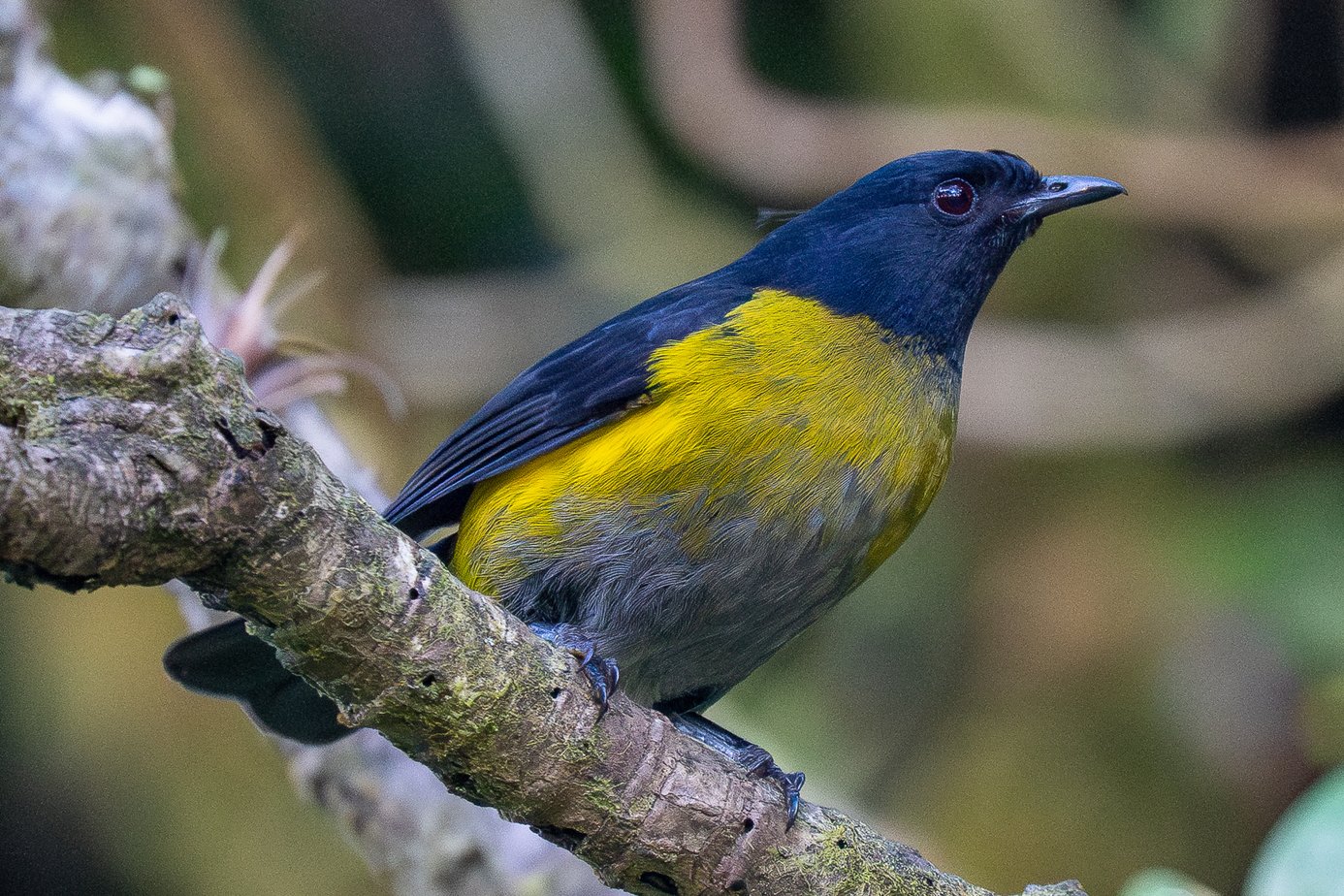
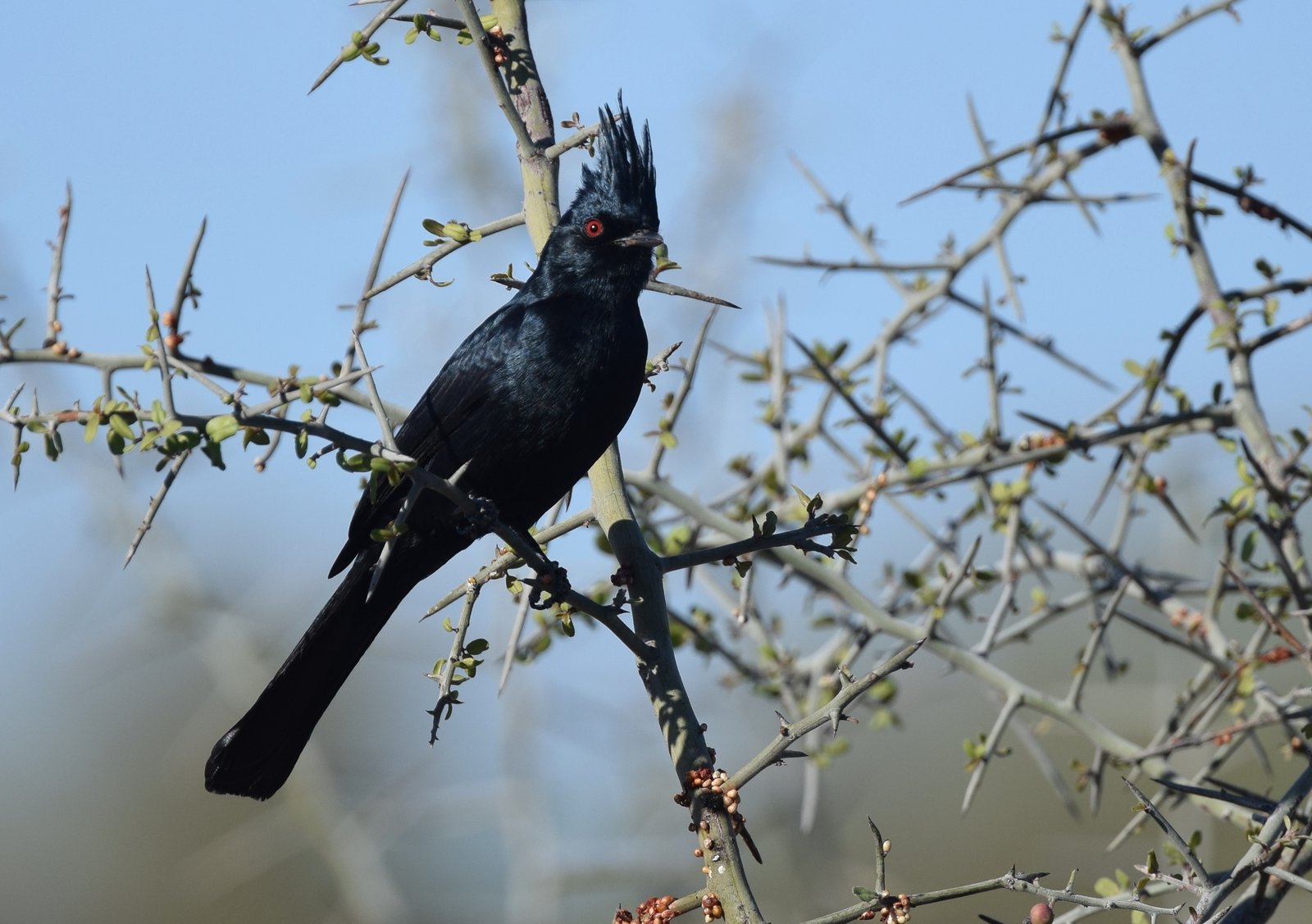
This small family is found only in North and Central America, and all four species in three genera are covered by the guide. The Grey Silky-flycatcher lives in the mountains of Mexico and Guatemala, the Long-tailed Silky-flycatcher and the Black-and-yellow Phainoptila are confined to the highlands of Costa Rica and western Panama, and the glossy black Phainopepla inhabits dry scrub and desert in northern and central Mexico. The name refers to the soft, smooth plumage, and their closest relatives are the waxwings. They are slender, often crested and fairly long-tailed, and like to perch upright on a prominent branch from which they sally for insects. Yet for much of the year they live on berries, above all mistletoe: the fruit passes quickly through the gut and the seeds end up on branches, making these birds important dispersers of those semi-parasites. Outside the breeding season they often wander in small, loose groups. The nest is a cup of plant fibres and lichen in a tree, with two or three eggs, and in the Phainopepla the male shares incubation.
Native species 4 species
Species that occur here by nature: breeding birds, winter visitors and passage migrants. They are arranged by genus, in the sequence of the list.
Phainoptila 1 species




Ptiliogonys 2 species
-
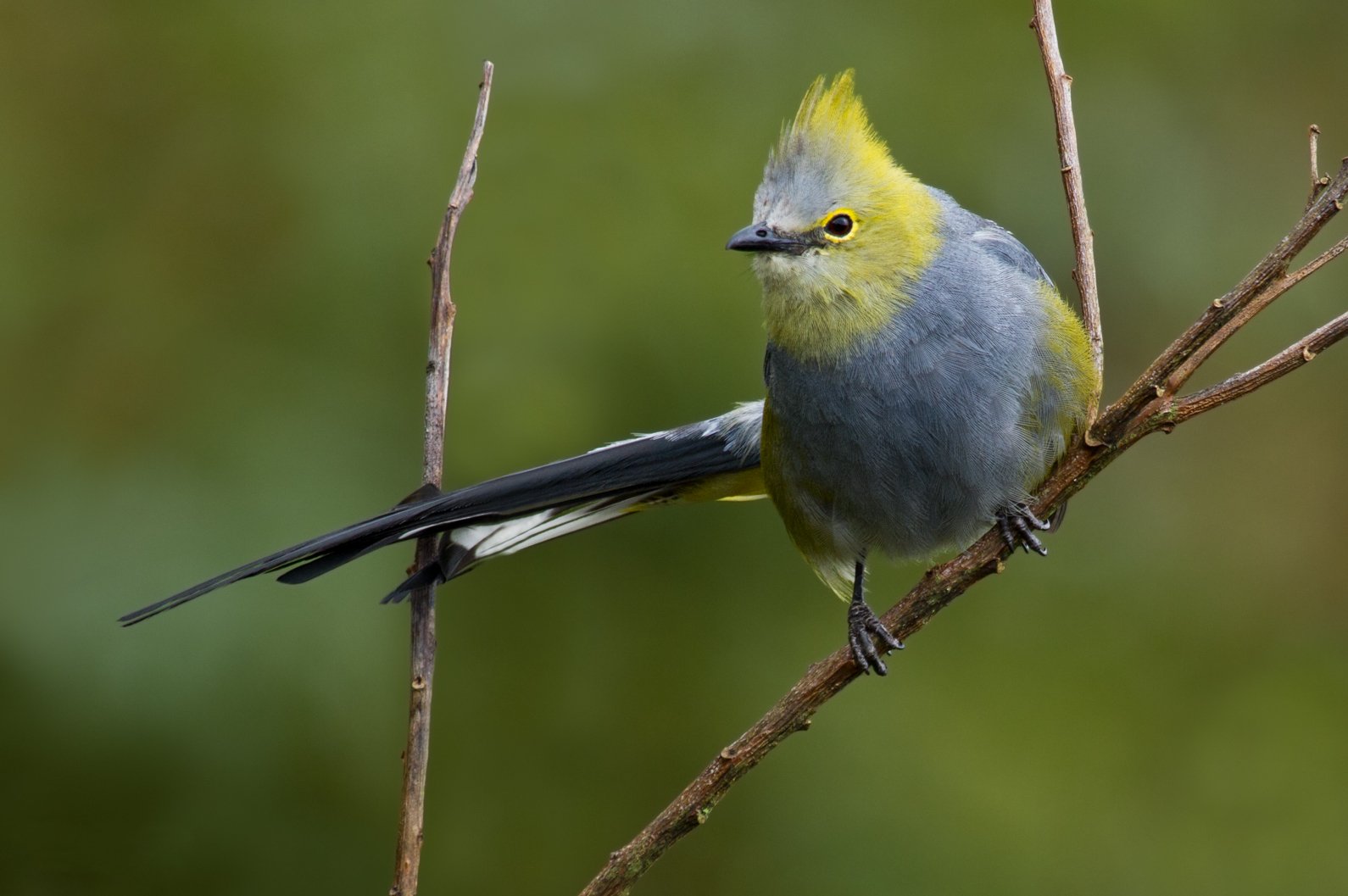
Long-tailed Silky-flycatcher
Ptiliogonys caudatus Costa Rica-Panama highland forest
 Secondary forest and forest edge
 Pasture and grazing land with trees
-
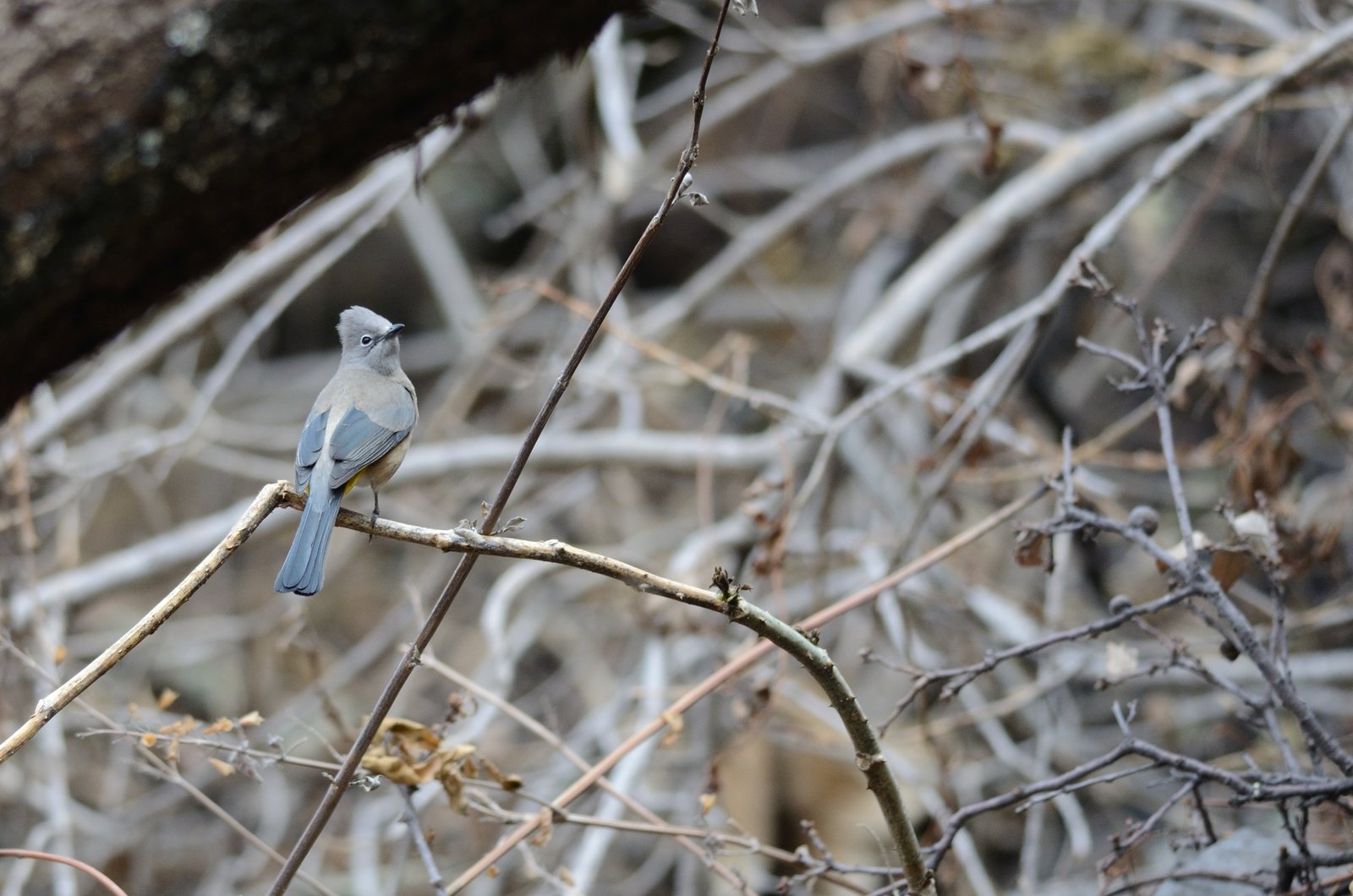
Grey Silky-flycatcher
Ptiliogonys cinereus Tropical highland pine-oak forest
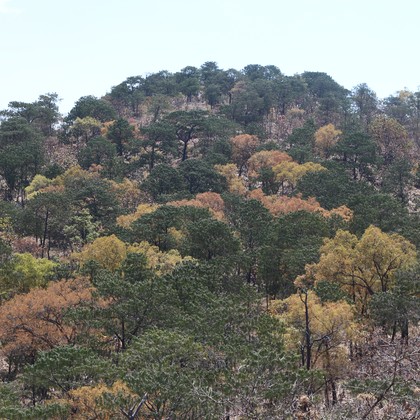 Madrean oak and pine-oak woodland
 Northern Middle American cloud forest
 High montane conifer forest
 Villages, towns, gardens and parks