All species › Falcons › Falcons and caracaras › Peregrine Falcon
Position in the tree Birds Aves › Birds with a flexible palate Neognathae › All other modern birds Neoaves › Landbirds Telluraves › Falcons, parrots and passerines Australaves › Falcons and passerines Eufalconimorphae
Peregrine Falcon | Falco peregrinus
Slechtvalk | Halcón peregrino
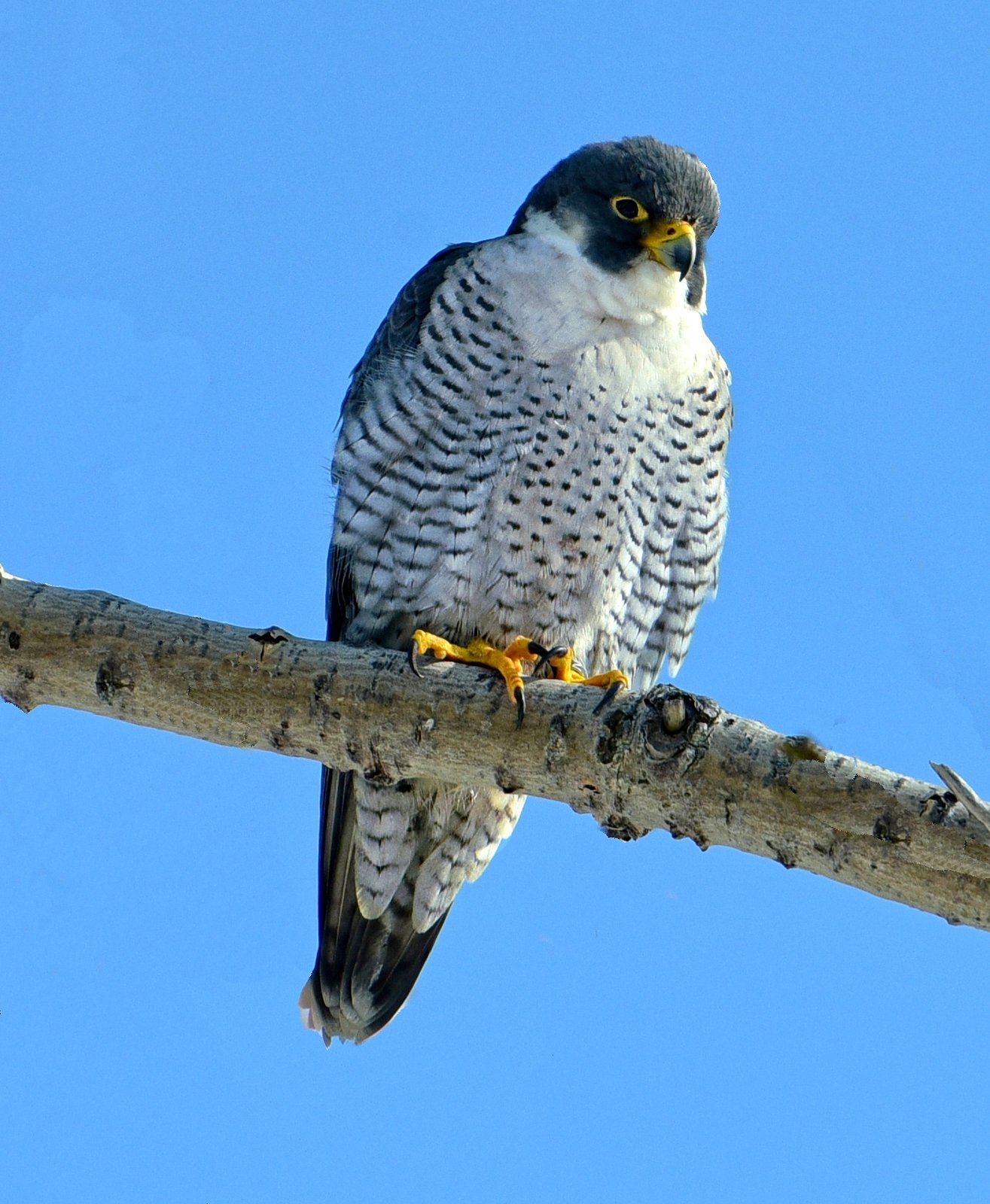
The Peregrine Falcon is the largest and heaviest falcon that occurs regularly in the guide area. It hunts medium-sized birds such as pigeons, shorebirds and ducks, which it strikes from the air in a steep stoop. A small breeding population lives all year on cliffs and islands in northwestern Mexico; elsewhere it is a winter visitor and passage migrant from North America that reaches Panama.
Voice
Usually silent in the guide area; when alarmed and at the nest a rasping, repeated kek-kek-kek or rek-rek-rek.
Recording: Frantz Barrault — CC BY-NC-SA 4.0 · converted to mono · xeno-canto
Identification
36–49 cm, powerfully built, with broad-based wings, pointed wingtips and a fairly short tail. Adults are slate grey above, with a dark cap and a broad black moustache on the white cheek. The underparts are white to salmon, finely barred black on the breast and belly. Immatures are brown above and buff below with dark streaks; birds from the Arctic have a pale forehead and a narrower moustache. The female is clearly larger than the male.
Confusion species
The Prairie Falcon Falco mexicanus is sandy brown above, with a narrow moustache and dark axillaries. The Merlin Falco columbarius is much smaller, with a weak moustache. The Aplomado Falcon Falco femoralis is slimmer, with a long tail, a white eyebrow and a black belly band. The Orange-breasted Falcon Falco deiroleucus is smaller, blue-black above, with a black hood extending onto the cheek and a rufous belly.
Habitat
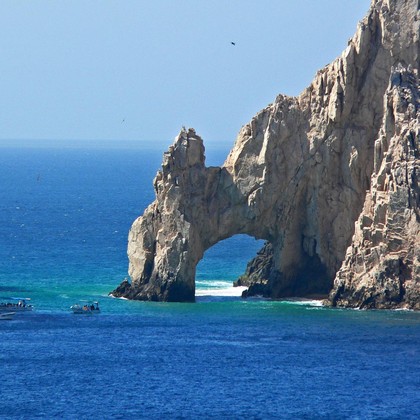
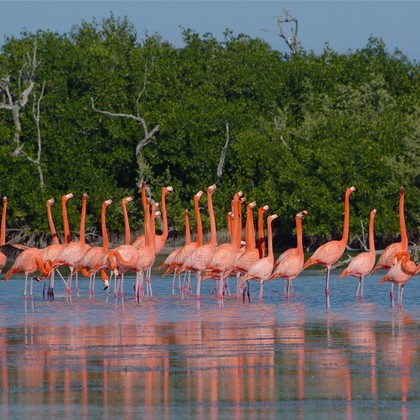
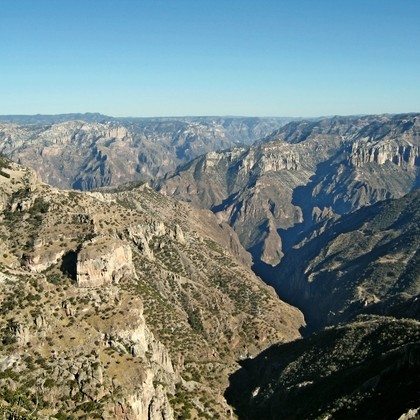
Coasts, tidal flats, lagoons and salt pans with many shorebirds and seabirds, rocky coasts and cliffs, marshes, and cities, harbours and airfields, where birds sit on tall buildings, church towers and masts. It nests on ledges of cliffs and rock faces, mainly on the coast and on islands. It hunts in a steep stoop or by chasing in the air.
Where the bird is most at home, classified by the vegetation units of Mexico and Central America.



Range and movements
Breeds in Baja California, on the islands and coasts of the Gulf of California and locally in the mountains of northern Mexico. Winter visitors and passage migrants from North America spread over the whole guide area to Panama from September to April, mainly along the coasts and in cities. Passage is heaviest along the Gulf coast of Veracruz, peaking in October, and along the Pacific coast of Central America; birds return in March–April. Outside the guide area almost worldwide.
- Resident
- Winter visitor (c. Oct–Mar)
- Passage (Mar–Apr, Oct–Nov)
- dark = core range, pale = thinly spread
How and when to look
In early October dozens of Peregrines pass low along the beach on the coast of Veracruz on some days. In cities such as Mexico City, Guatemala City and Panama City wintering birds often sit on the same tall buildings for days.
Conservation status
Not threatened. North American populations recovered strongly after the DDT ban.
Scientific name
Falco peregrinus | Tunstall, 1771
Tunstall described the species in 1771 and placed it straight away in the genus where it still stands. The genus Falco was introduced in 1758 by Linnaeus. Falco is Late Latin for 'falcon', from falx, falcis 'sickle', after the sickle-shaped claws of the bird. peregrinus is Latin for 'wanderer, one from abroad'; young birds were taken on migration for falconry rather than from the nest. The specimen the first description was based on came from Northamptonshire, England.