All species › Passerines › Tyrant flycatchers and allies › Panama Flycatcher
Position in the tree Birds Aves › Birds with a flexible palate Neognathae › All other modern birds Neoaves › Landbirds Telluraves › Falcons, parrots and passerines Australaves › Falcons and passerines Eufalconimorphae › Parrots and passerines Psittacopasserae
Panama Flycatcher | Myiarchus panamensis
Panamese tiran | Copetón panameño
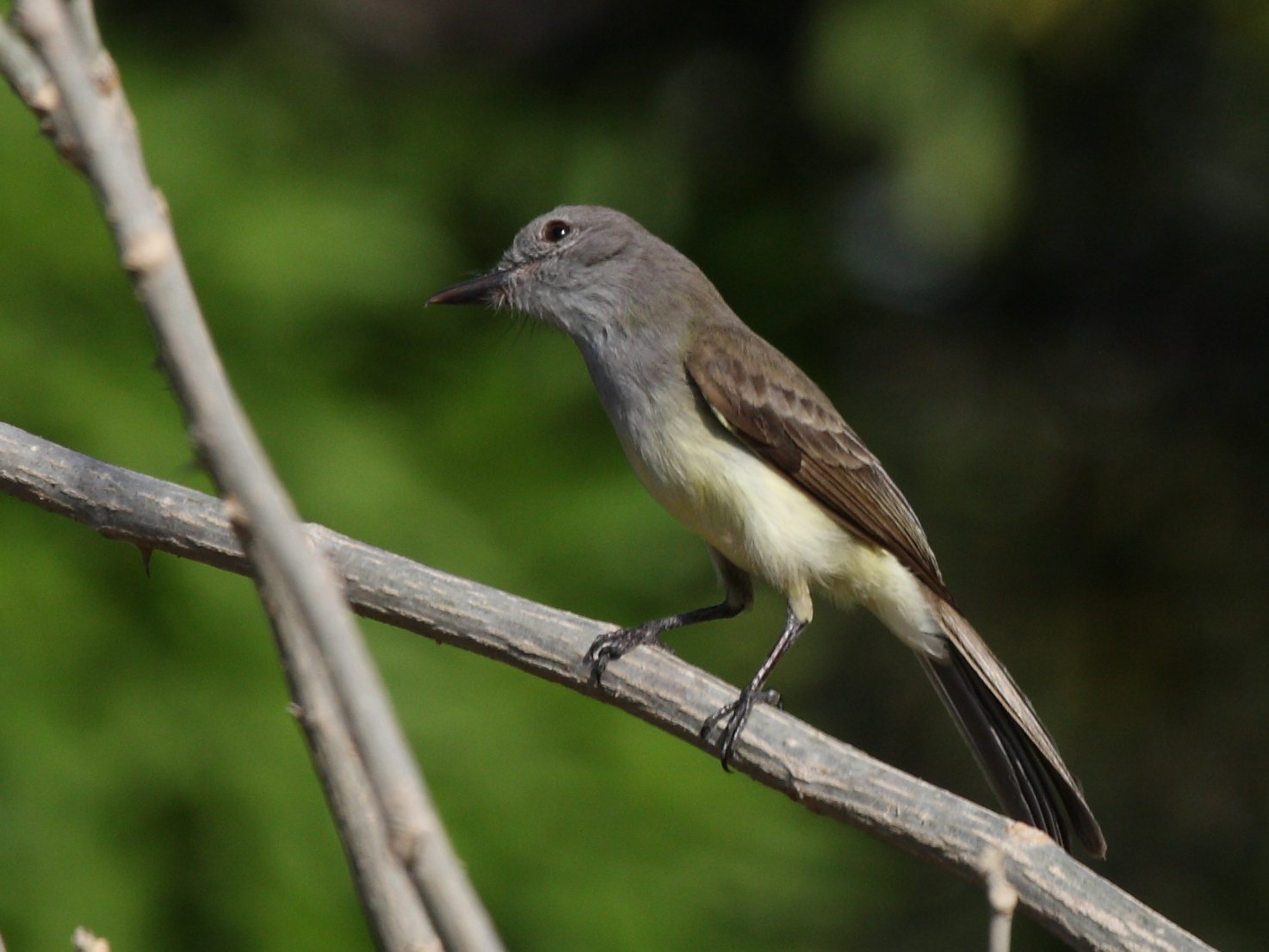
The Panama Flycatcher is a fairly large, pale Myiarchus flycatcher of open woodland, mangroves and semi-open country, with little rufous in wings and tail. In the guide area it is almost confined to Panama, where it replaces the related Brown-crested Flycatcher.
Voice
A clear, whistled series of notes and a short, sharp whit, often repeated in the morning.
Recording: José María Loaiza B. — CC BY-NC-SA 4.0 · converted to mono · xeno-canto
Identification
18–20 cm. Upperparts greyish olive-brown, crown slightly darker and browner. Wings dark with pale edges to the coverts and tertials; rufous in wings and tail is largely absent or limited to narrow edges. Throat and breast pale grey, belly pale yellow. Bill fairly heavy and black. Male and female are alike.
Confusion species
Great Crested Flycatcher Myiarchus crinitus (winter visitor) has a darker grey throat and breast, a brighter yellow belly, a pale base to the lower mandible and much rufous in the tail. Dusky-capped Flycatcher Myiarchus tuberculifer is smaller, with a dark cap. Brown-crested Flycatcher Myiarchus tyrannulus, which in the guide area lives mainly further north, has clearly more rufous in wings and tail.
Habitat
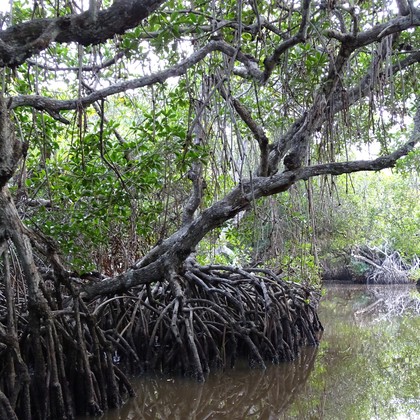
Mangroves, dry and semi-humid forest, forest edges, gallery forest, open country and pasture with scattered trees; also gardens and parks. It sallies for insects from a perch and also eats small fruits. It nests in a tree cavity.
Where the bird is most at home, classified by the vegetation units of Mexico and Central America.




Range and movements
In Panama on both slopes, mainly in the Pacific lowlands and on offshore islands; there are a few records from adjacent southern Costa Rica. Outside the guide area in northern Colombia and north-western Venezuela.
- Resident
- dark = core range, pale = thinly spread
How and when to look
In mangroves and open, dry country along the Pacific coast of Panama it is often the commonest Myiarchus. The lack of obvious rufous in wings and tail helps with identification.
Conservation status
Not threatened. Common within its range and tolerant of semi-open, human-modified country.
Scientific name
Myiarchus panamensis | Lawrence, 1861
Lawrence described the species in 1861 and placed it straight away in the genus where it still stands. The genus Myiarchus was introduced in 1844 by Cabanis. Myiarchus is Greek, from muia 'fly' and arkhos 'ruler': 'fly-ruler'. panamensis refers to Panama, where the type was collected. The specimen the first description was based on came from Isthmus of Panama.