All species › Passerines › New World blackbirds, troupials and allies › Orchard Oriole
Position in the tree Birds Aves › Birds with a flexible palate Neognathae › All other modern birds Neoaves › Landbirds Telluraves › Falcons, parrots and passerines Australaves › Falcons and passerines Eufalconimorphae › Parrots and passerines Psittacopasserae
Orchard Oriole | Icterus spurius
Tuintroepiaal | Bolsero castaño
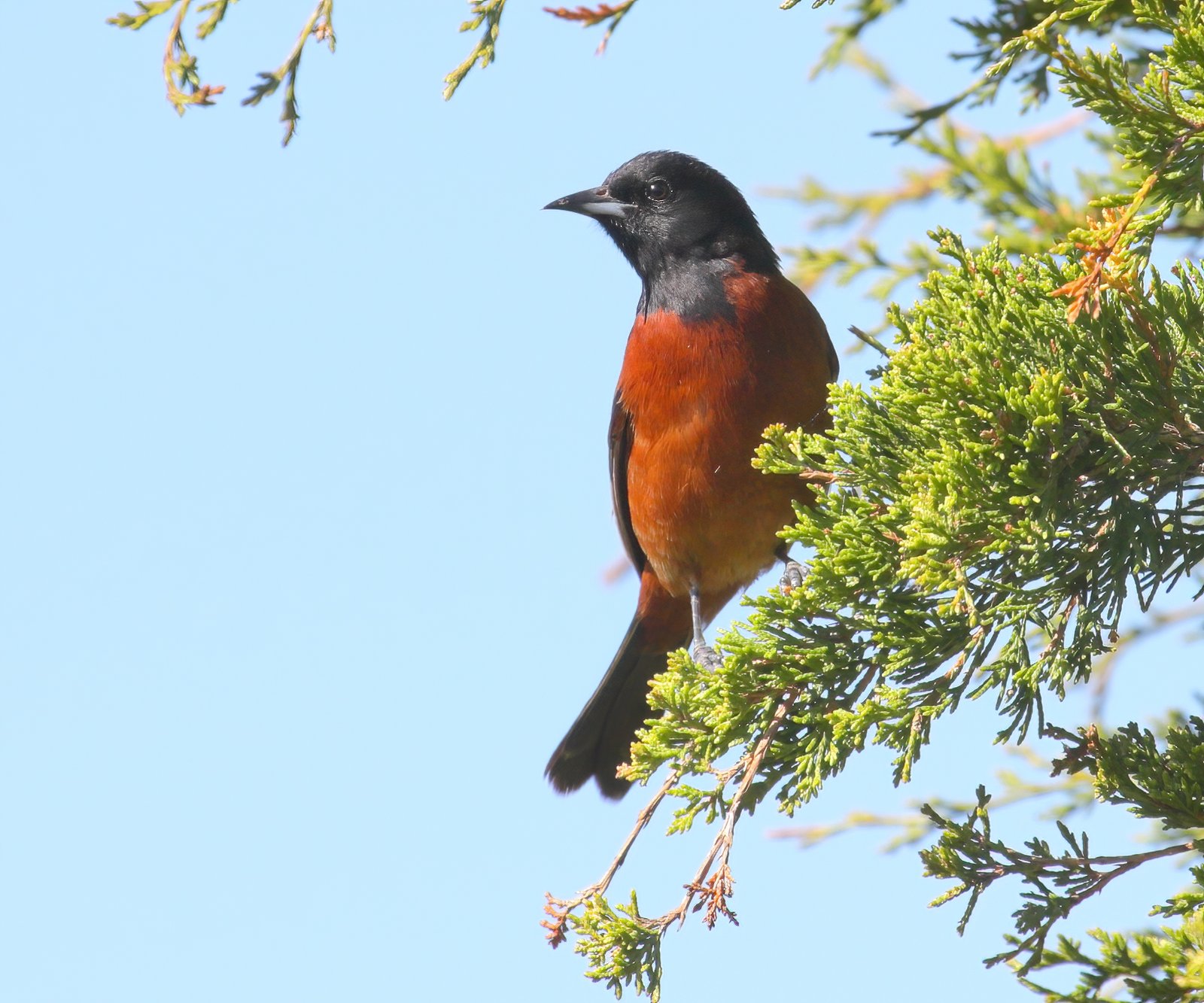
The Orchard Oriole is the smallest oriole in the guide area. The adult male is black with chestnut underparts and rump; females and young birds are olive-yellow. It breeds in eastern North America and northern Mexico and winters from western Mexico to northern South America. Migration starts early: the first birds arrive in the wintering area as early as July.
Voice
The song is a fast, varied series of whistled and chattering notes, often ending in a falling wheer. Calls include a soft chuk and a dry chatter. In winter mainly the call.
Recording: Étienne Leroy — CC BY-NC-SA 4.0 · converted to mono · xeno-canto
Identification
16–18 cm. Small and slim, with a short, slightly decurved, pointed bill. Adult male: head, throat, back, wings and tail black; breast, belly, shoulder and rump deep chestnut; a white wing bar and white edges to the flight feathers. Female: olive-green above and greenish yellow below, with two white wing bars. The first-year male resembles the female but has a black throat and black around the bill. Southern Tamaulipas and northern Veracruz hold the breeding form fuertesi, in which the male is ochre-orange instead of chestnut.
Confusion species
The female Hooded Oriole Icterus cucullatus is larger, with a longer tail and a longer, more decurved bill. Females of Baltimore Oriole Icterus galbula and Bullock's Oriole Icterus bullockiorum are larger and more orange, with a thicker, straight bill. The female Black-cowled Oriole Icterus prosthemelas has a black face and no white wing bars.
Habitat
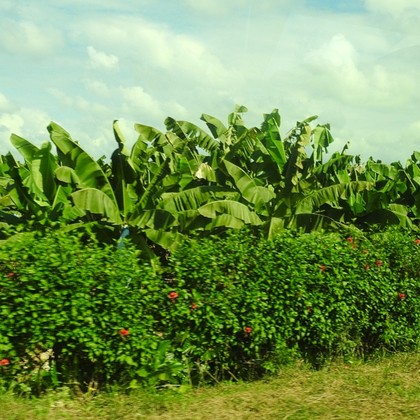
Breeds in open woodland, riparian woodland, orchards and villages with scattered trees. In winter in semi-open country with trees, forest edges, dry forest, plantations, gardens and parks, often in flowering trees such as coral trees (Erythrina) and bananas, where it drinks nectar. It also eats insects and fruit; in winter often in loose groups.
Where the bird is most at home, classified by the vegetation units of Mexico and Central America.





Range and movements
Breeds in southern Canada and the eastern and central United States, and in Mexico on the northern plateau and in the north-east to northern Veracruz. Winters from western and southern Mexico (Pacific slope from Sinaloa) through all of Central America to Panama and north-western Colombia and Venezuela. Numerous on passage along the Gulf coast and on the Yucatán Peninsula.
- Summer visitor (c. Apr–Sep)
- dark = core range, pale = thinly spread
How and when to look
In winter best found at flowering trees in gardens, parks and plantations, where several Orchard Orioles often feed together with other orioles and warblers.
Conservation status
Not threatened (LC). Common and widespread; in the north of the breeding range numbers have declined locally.
Scientific name
Icterus spurius | (Linnaeus, 1766)
Linnaeus described the species in 1766 as O[riolus] spurius; because it was later moved to another genus, the author and year stand in brackets. The genus Icterus was introduced in 1760 by Brisson. Icterus is from Ancient Greek ikteros, a yellow bird usually taken to be the golden oriole, the sight of which was thought to cure jaundice. spurius is Latin for 'false, bastard'; the bird was first thought to be an aberrant form of the Baltimore Oriole. The specimen the first description was based on came from South Carolina.