All species › Passerines › Cardinals and allies › Northern Cardinal
Position in the tree Birds Aves › Birds with a flexible palate Neognathae › All other modern birds Neoaves › Landbirds Telluraves › Falcons, parrots and passerines Australaves › Falcons and passerines Eufalconimorphae › Parrots and passerines Psittacopasserae
Northern Cardinal | Cardinalis cardinalis
Rode kardinaal | Cardenal rojo
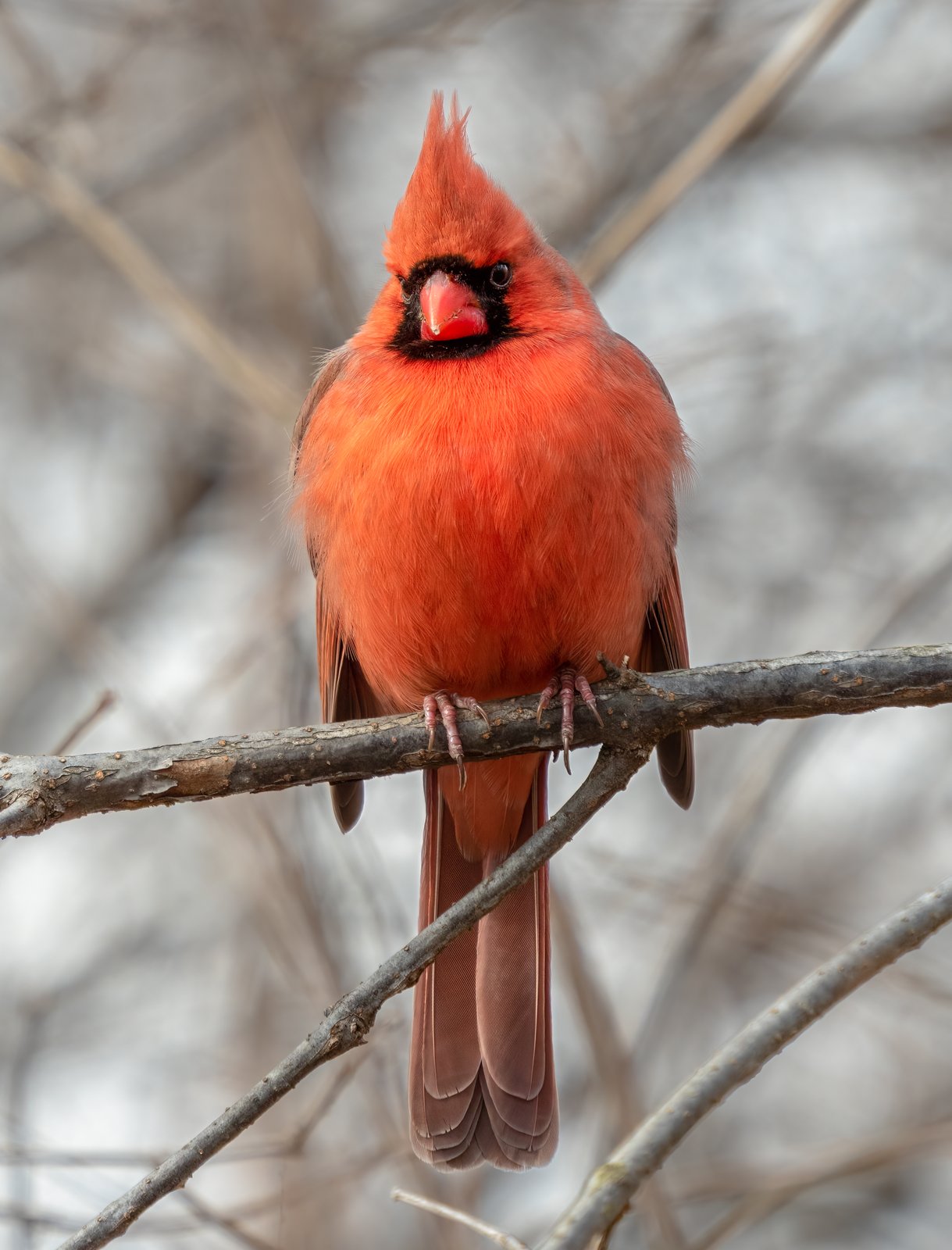
The Northern Cardinal is a medium-sized songbird with a pointed crest, a thick red bill and a black face; the male is entirely red, the female largely brown. In the guide area it lives in scrub, dry forest and gardens across much of Mexico and northern Central America.
Voice
The song is a loud series of clear whistled notes, often in accelerating or falling series, such as chew-chew-chew-chee chee chee or wheet wheet wheet. Both sexes sing. The call is a sharp, metallic chip.
Recording: Rory Nefdt — CC BY-NC-SA 4.0 · converted to mono · xeno-canto
Identification
21–23 cm. A long-tailed songbird with a pointed crest and a thick, conical red to orange-red bill. The male is bright red, duller on the back and wings, with a black mask around the base of the bill extending onto the chin. The female is warm greyish-brown with a red tinge on the crest, wings and tail, a dark face and the same red bill. Young birds resemble the female but have a dark bill.
Confusion species
Pyrrhuloxia Cardinalis sinuatus is grey with red on the face, crest and belly and has a short, strongly curved yellow bill. Summer Tanager Piranga rubra and Flame-colored Tanager Piranga bidentata have no crest and no black on the face, and a slimmer bill.
Habitat
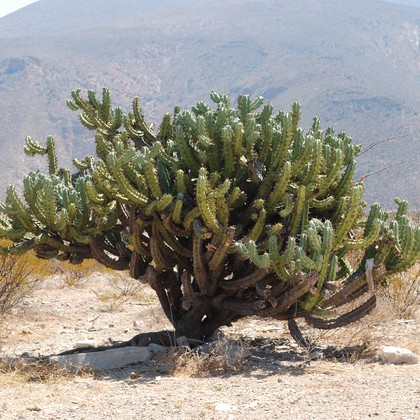
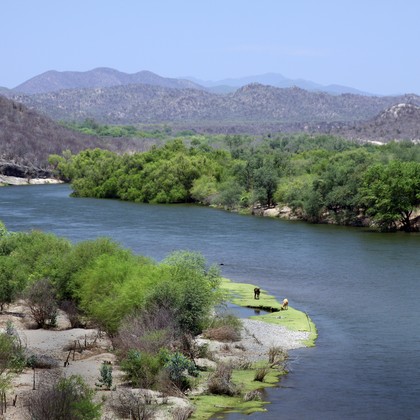
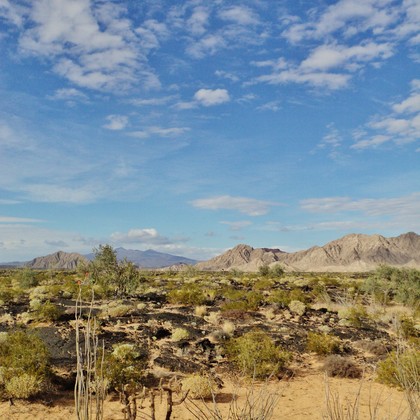
Dense thickets, thorn scrub, dry and semi-evergreen seasonal forest, riparian woodland, forest edges and vegetated desert washes, also gardens, parks and villages; from sea level to about 2000 m. It feeds on the ground and low in bushes on seeds, fruit and insects.
Where the bird is most at home, classified by the vegetation units of Mexico and Central America.



Range and movements
In Mexico in the southern part of the Baja California Peninsula, in Sonora and Sinaloa, and in the east from Coahuila, Nuevo León and Tamaulipas south through Veracruz and Tabasco to the Yucatán Peninsula; also in northern Belize and northern Guatemala. Outside the guide area in the eastern and central United States and south-eastern Canada.
- Resident
- dark = core range, pale = thinly spread
How and when to look
Seen almost everywhere in scrub and gardens in the northern Yucatán Peninsula, for example around Mérida and at Río Lagartos. The loud, whistled song often gives the bird away from a distance.
Conservation status
Not threatened (LC). Common and widespread; locally benefits from gardens and semi-open farmland. Birds are sometimes trapped for the cage-bird trade.
Scientific name
Cardinalis cardinalis | (Linnaeus, 1758)
Linnaeus described the species in 1758 as Loxia cardinalis; because it was later moved to another genus, the author and year stand in brackets. The genus Cardinalis was introduced in 1838 by Bonaparte. Cardinalis is Latin for 'cardinal', after the red plumage recalling a cardinal's scarlet robes. cardinalis is Latin for 'cardinal', after the red plumage recalling a cardinal's robes. The specimen the first description was based on came from South Carolina, United States.