All species › Gannets and cormorants › Cormorants and shags › Neotropic Cormorant
Position in the tree Birds Aves › Birds with a flexible palate Neognathae › All other modern birds Neoaves › Birds of the elements Elementaves › Tropicbirds and waterbirds Phaethoquornithes › Core waterbirds Aequornithes
Neotropic Cormorant | Nannopterum brasilianum
Bigua-aalscholver | Cormorán neotropical
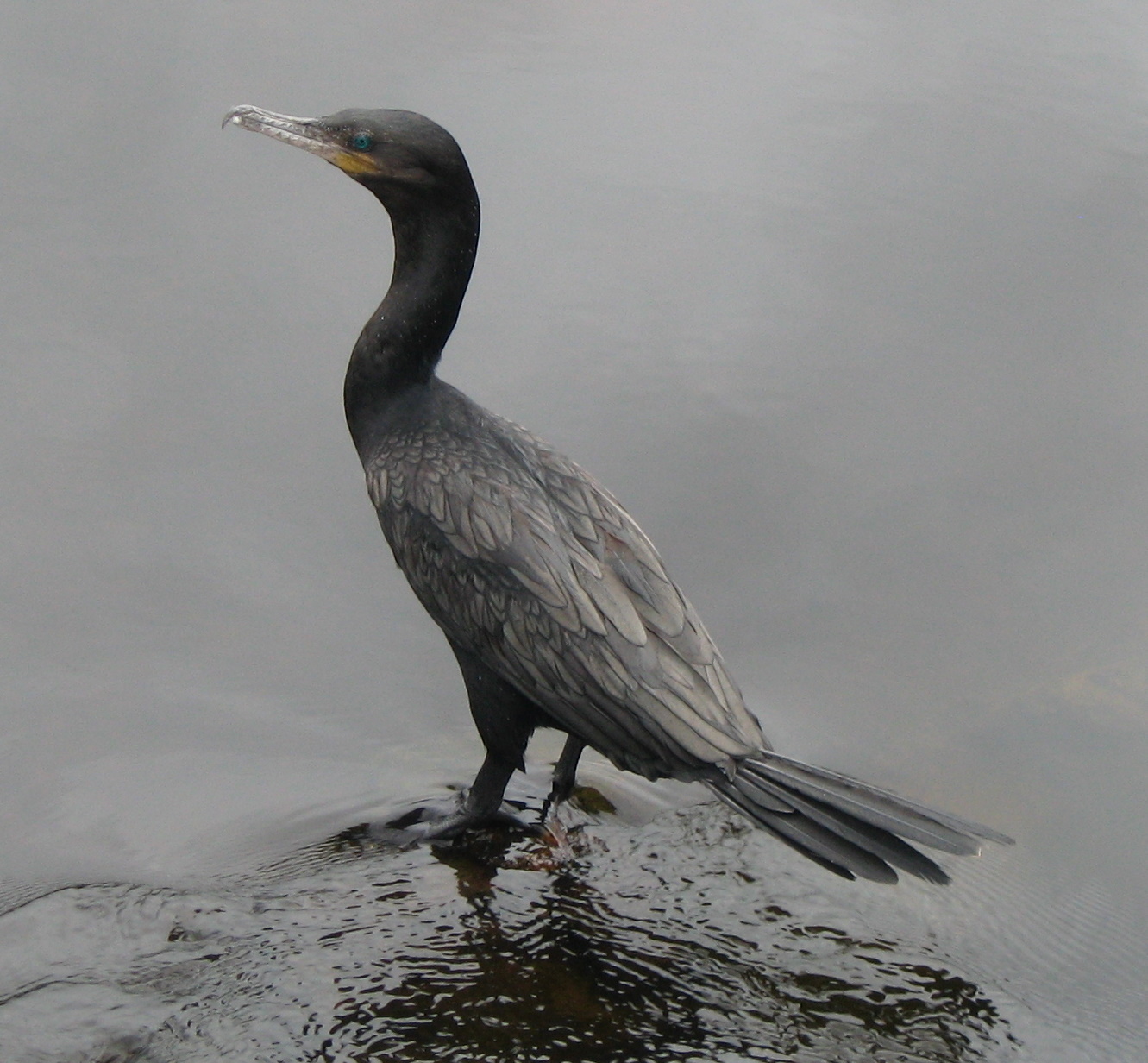
The Neotropic Cormorant is a medium-sized, black cormorant with a fairly long tail. It is the commonest and most widespread cormorant in the guide area, on fresh, brackish and salt water, from the coast to lakes high in the mountains. The birds often sit in groups on posts, dead trees and banks, with their wings spread to dry.
Voice
Usually silent. At colonies and roosts a low, pig-like grunting and croaking, such as oink-oink.
Recording: Guillermo Treboux — CC BY-NC-SA 4.0 · converted to mono · xeno-canto
Identification
58–73 cm. A slim cormorant with a thin neck, a fairly small head and a long tail. Adults are black with a greenish to bronze gloss and grey-brown, black-edged feathers on the mantle and wing coverts. The bare gular skin is dull yellow to brownish yellow and comes to a point at the rear; in breeding plumage it is bordered by a thin white edge, and fine white plumes appear on the head and neck. The eye is blue-green. Juveniles are brown, paler below, sometimes almost whitish on the neck and breast. It flies with the neck outstretched on quick beats, often in lines or V-formations low over the water.
Confusion species
Double-crested Cormorant Nannopterum auritum is larger and heavier, with a shorter tail, a thicker bill and orange-yellow gular skin that is rounded at the rear, without a white border; in flight the neck is kinked. Anhinga Anhinga anhinga has a dagger-shaped, pointed bill, a much thinner neck, silvery-white spots on the wings and a long, fan-shaped tail; it often swims with only the head and neck above water and soars high on thermals.
Habitat
Almost any open water: lakes, reservoirs, rivers, lagoons, estuaries, mangroves, salt pans and coastal waters, but also fish ponds, rice fields and urban parks with water; from sea level to above 2500 m. It fishes by diving, often in groups that drive a shoal of fish together. It breeds in colonies in trees and shrubs over or near water, often together with herons and ibises.
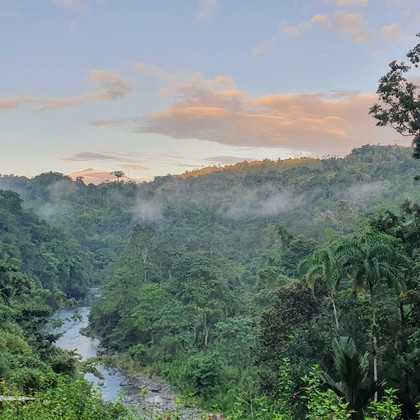
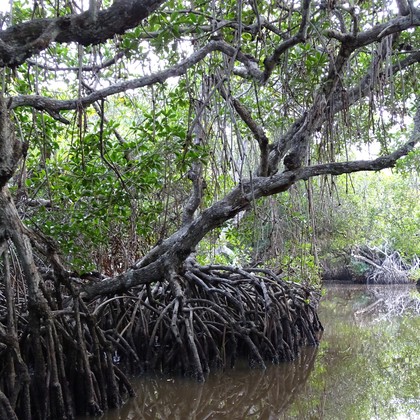
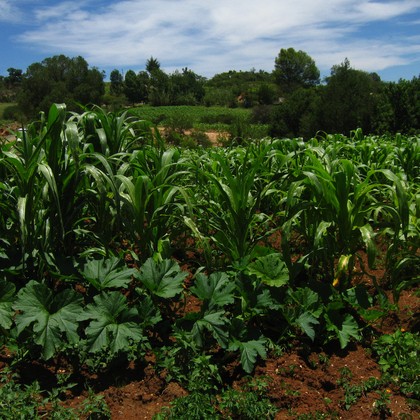
Where the bird is most at home, classified by the vegetation units of Mexico and Central America.



Range and movements
Throughout the guide area: in Mexico from Sonora, Chihuahua and Tamaulipas southwards, except for most of Baja California and the driest plateaus, and further throughout Central America to Panama, on both coasts and inland. Birds in the guide area belong to the subspecies N. b. mexicanum. Outside the guide area in the southern United States, on Cuba and the Bahamas and throughout South America to Tierra del Fuego.
- Resident
- dark = core range, pale = thinly spread
How and when to look
The species can be found on almost every lake and coastal lagoon; groups like to sit on mooring posts, jetties and bare branches above the water. In a row of cormorants, check tail length and the shape and colour of the gular skin to tell them from Double-crested Cormorants.
Conservation status
Not threatened. In the guide area common and locally abundant; the species benefits from reservoirs and fish ponds. Fishermen sometimes see the birds as competitors, and colonies are sensitive to disturbance and the clearing of riverside forest.
Scientific name
Nannopterum brasilianum | (Gmelin, 1789) (GBIF: Phalacrocorax brasilianus)
Gmelin described the species in 1789 as Procellaria brasiliana; because it was later moved to another genus, the author and year stand in brackets. The genus Nannopterum was introduced in 1899 by Sharpe. Nannopterum is Greek, from nannos 'dwarf' and pteron 'wing', after the stubby wings of the flightless Galápagos cormorant for which the genus was erected. brasilianum means 'Brazilian', after Brazil, where Willem Piso described the bird on which Gmelin based the name. The specimen the first description was based on came from Brazil (not specified).