All species › Parrots › African and New World parrots › Mexican Parrotlet
Position in the tree Birds Aves › Birds with a flexible palate Neognathae › All other modern birds Neoaves › Landbirds Telluraves › Falcons, parrots and passerines Australaves › Falcons and passerines Eufalconimorphae › Parrots and passerines Psittacopasserae
Mexican Parrotlet | Forpus cyanopygius
Mexicaanse muspapegaai | Perico catarina
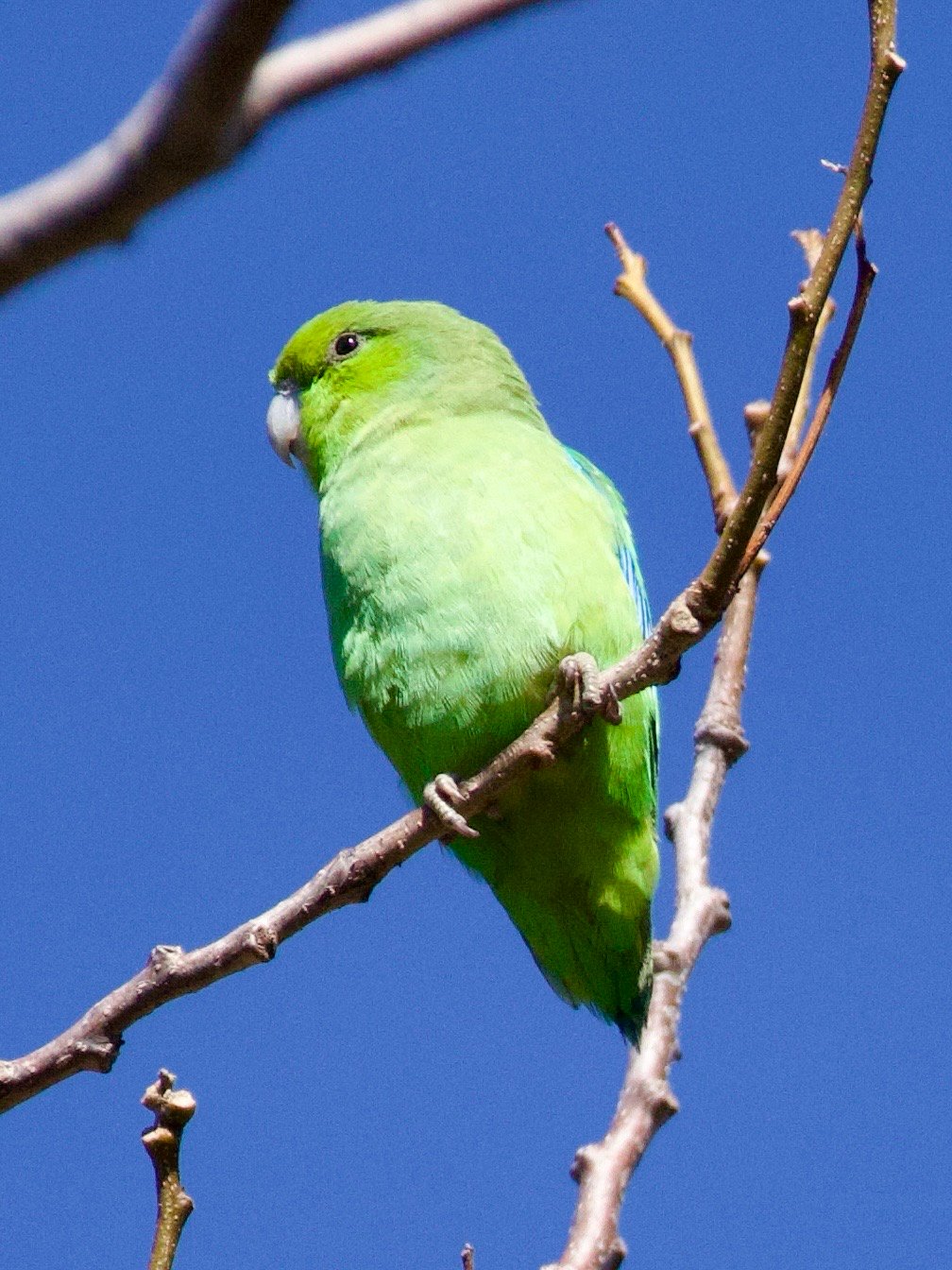
The Mexican Parrotlet is one of the smallest parrots in the guide area: a green parrotlet with a short, pointed tail that occurs only in western Mexico. It lives in dry forest, thorn scrub and gallery forest of the Pacific lowlands and foothills, outside the breeding season in flocks that fly fast and low between the trees.
Voice
A high, shrill and rapidly repeated tseet-tseet or chip-chip; in flight and in perched groups also a continuous chatter.
Recording: Richard E. Webster — CC BY-NC-SA 4.0 · converted to mono · xeno-canto
Identification
13–14 cm. Small and compact, with a short, wedge-shaped tail and a thick, pale horn bill. The male is green, yellower on the head and underparts, with a turquoise-blue rump and lower back and blue greater coverts, secondaries and underwing coverts, clearly visible in flight. The female lacks the blue: the rump is bright yellowish green. Birds from the Islas Marías are slightly larger and duller green, with less contrast between head and body.
Confusion species
No other parrotlet occurs in western Mexico. Orange-fronted Parakeet Eupsittula canicularis and Green Parakeet Psittacara holochlorus are much larger, with a long, pointed tail; Orange-fronted Parakeet has an orange forehead. Monk Parakeet Myiopsitta monachus, locally in towns, is larger and has a grey face and breast.
Habitat
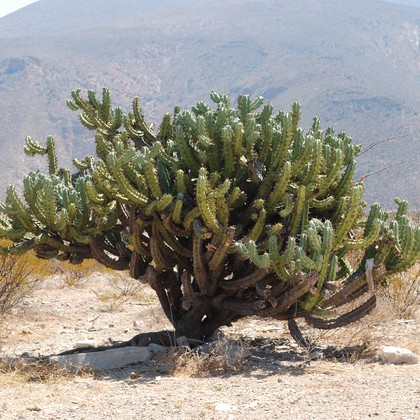
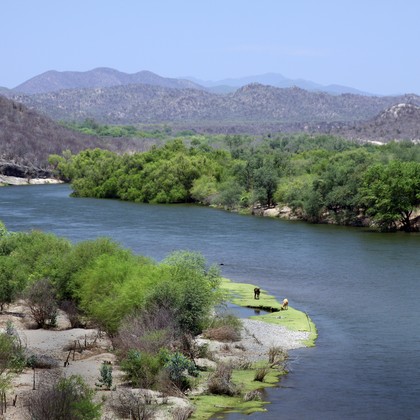
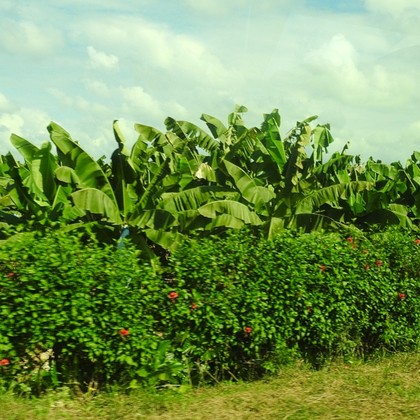
Tropical dry forest, thorn scrub, gallery forest along rivers and semi-open country with scattered trees, also orchards and plantations; from sea level to about 1300 m. It eats seeds, berries and fruit, often figs and grasses. It nests in a tree cavity, such as an old woodpecker hole or a hollow in a termite nest.
Where the bird is most at home, classified by the vegetation units of Mexico and Central America.



Range and movements
Only in western Mexico: the Pacific lowlands and foothills from southern Sonora and southwestern Chihuahua through Sinaloa, western Durango, Nayarit, southern Zacatecas and Jalisco to Colima, and on the Islas Marías off the coast of Nayarit (subspecies F. c. insularis, treated by some authors as a separate species).
- Resident
- Summer visitor (c. Apr–Sep)
- Winter visitor (c. Oct–Mar)
- Passage (Mar–Apr, Oct–Nov)
- dark = core range, pale = thinly spread
How and when to look
Flocks fly low and chattering over the dry forest and gallery forest of Sinaloa and Nayarit, for example around San Blas and in the foothills east of Mazatlán, often in the early morning. Perched birds blend into the green foliage; the shrill chatter gives away their position.
Conservation status
Near Threatened. Declining through trapping for the cage-bird trade and the loss of dry forest to agriculture and tourism along the Pacific coast.
Scientific name
Forpus cyanopygius | (de Souancé, 1856)
De Souancé described the species in 1856 as Psittacula cyanopygia; because it was later moved to another genus, the author and year stand in brackets. The genus Forpus was introduced in 1858 by Boie. The derivation of Forpus is unknown. cyanopygius is Greek, from kuanos 'dark blue' and pugē 'rump', after the male's turquoise rump. The specimen the first description was based on came from northwestern Mexico (not specified).