All species › Passerines › New World warblers › Lucy's Warbler
Position in the tree Birds Aves › Birds with a flexible palate Neognathae › All other modern birds Neoaves › Landbirds Telluraves › Falcons, parrots and passerines Australaves › Falcons and passerines Eufalconimorphae › Parrots and passerines Psittacopasserae
Lucy's Warbler | Leiothlypis luciae
Lucy's zanger | Chipe rabadilla rufa
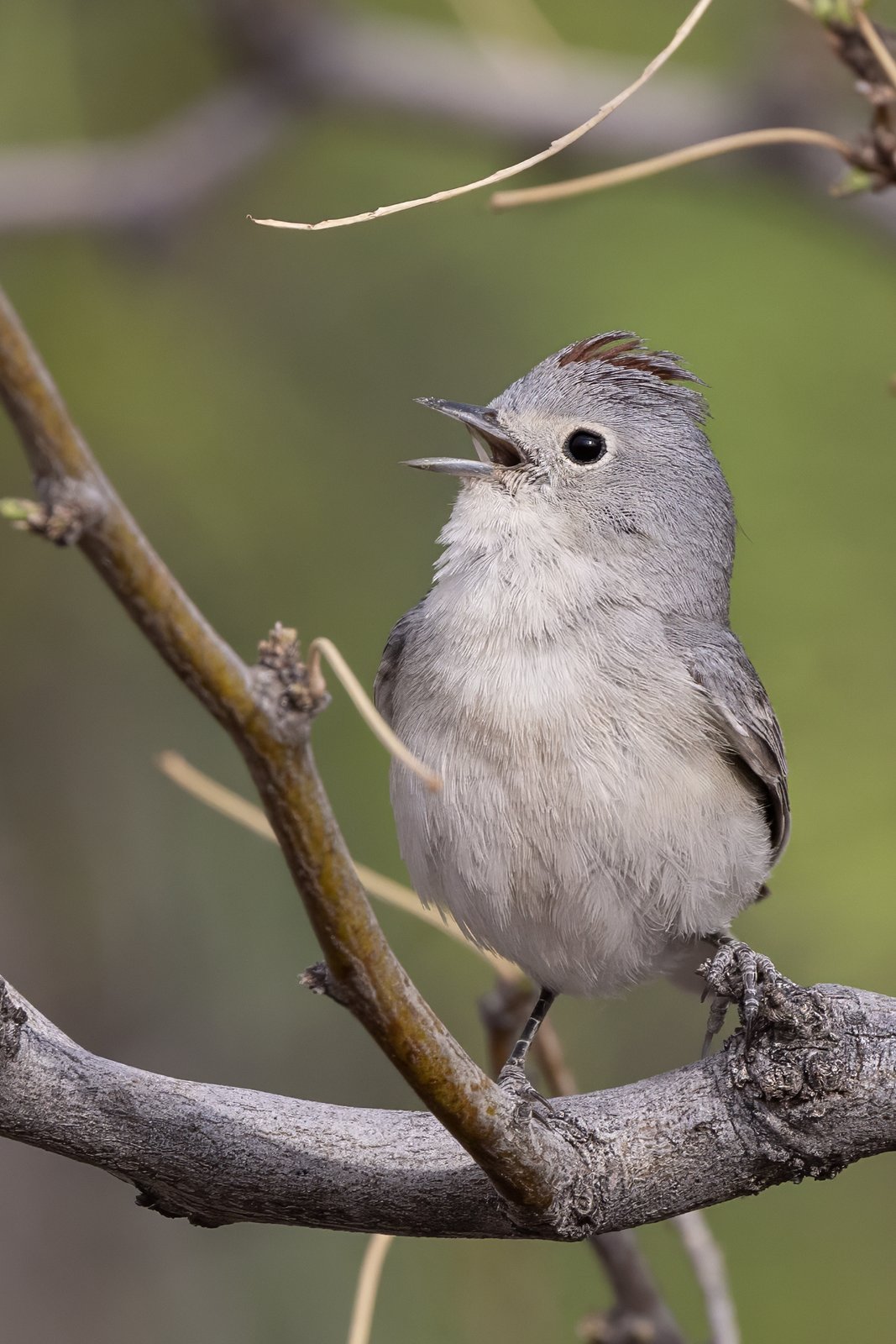
Lucy's Warbler is the smallest warbler of North America: pale grey, with a rufous rump and crown patch. It breeds in mesquite and riparian woodland in the deserts of the south-western United States and north-western Mexico and winters in the dry forest of western Mexico. It is the only western warbler that nests in cavities.
Voice
The song is a lively, rather flat series of clear notes that changes in speed or pitch, weeta-weeta-weeta che-che-che. The call is a soft chip or a fine tsit.
Recording: Bill Pyle — CC BY-NC-SA 4.0 · converted to mono · xeno-canto
Identification
10–11 cm. Upperparts pale grey, underparts whitish with a faint buffy-grey tinge. Rump rufous; the male has a rufous crown patch, smaller or absent in the female. Face pale, with a dark eye in a narrow white eye-ring. Undertail coverts white. No wingbars. Young birds are plain grey with a dull buffy rump.
Confusion species
Virginia's Warbler Leiothlypis virginiae has a yellow-green rump, yellow undertail coverts and often a yellow patch on the breast. The female American Yellow Warbler Setophaga aestiva can be dull grey in worn plumage, but has yellow edges to the wing and tail feathers and no rufous rump.
Habitat
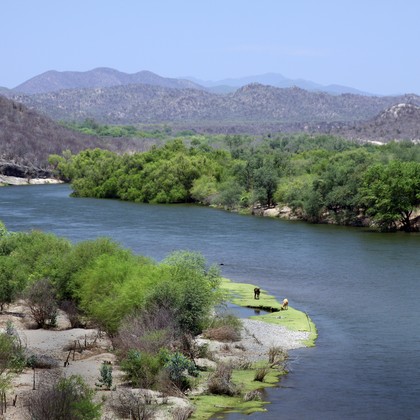
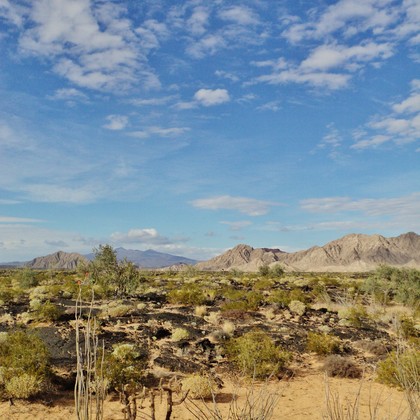
Breeds in mesquite woodland, riparian woodland with cottonwoods and willows and dry washes along rivers in desert country, mostly below 1500 m. It nests in tree cavities, old woodpecker holes or behind loose bark. It winters in tropical dry forest, thornscrub and mesquite scrub. It searches foliage and flowers for insects.
Where the bird is most at home, classified by the vegetation units of Mexico and Central America.


Range and movements
Breeds in the south-western United States and in north-western Mexico: north-eastern Baja California (the Colorado delta and valley), Sonora and north-western Chihuahua. Winters on the Pacific slope of Mexico, from southern Sonora and Sinaloa to Jalisco, Colima, Michoacán, Guerrero and Oaxaca.
- Summer visitor (c. Apr–Sep)
- dark = core range, pale = thinly spread
How and when to look
In spring it sings freely in the mesquite and riparian woodlands along rivers in Sonora. In winter often in mixed flocks in dry forest along the Pacific coast.
Conservation status
Not threatened (LC). The breeding range is shrinking locally through the loss of mesquite and riparian woodland, but the population is still fairly large.
Scientific name
Leiothlypis luciae | (Cooper, 1861)
Cooper described the species in 1861 as Helminthophaga luciae; because it was later moved to another genus, the author and year stand in brackets. The genus Leiothlypis was introduced in 2008 by Sangster. Leiothlypis is Ancient Greek, from leios 'plain, smooth' and thlypis, an unidentified small bird mentioned by Aristotle. luciae honours Lucy Hunter Baird (1848–1913), daughter of the American ornithologist Spencer Fullerton Baird. The specimen the first description was based on came from Fort Mojave, Colorado Valley, Arizona.