All species › Passerines › New World warblers › Colima Warbler
Position in the tree Birds Aves › Birds with a flexible palate Neognathae › All other modern birds Neoaves › Landbirds Telluraves › Falcons, parrots and passerines Australaves › Falcons and passerines Eufalconimorphae › Parrots and passerines Psittacopasserae
Colima Warbler | Leiothlypis crissalis
Colimazanger | Chipe de Colima
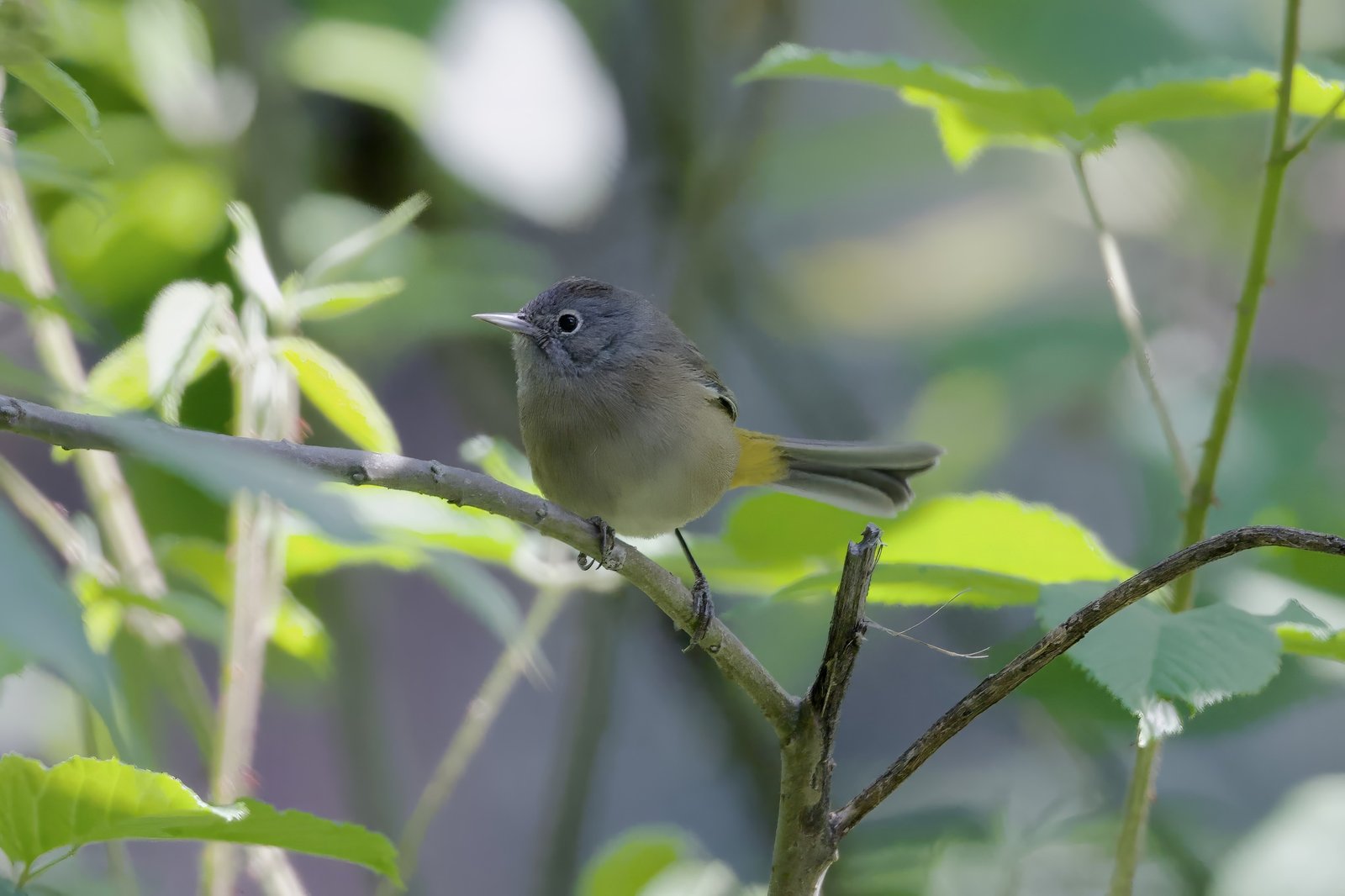
The Colima Warbler is the largest Leiothlypis warbler, grey-brown with a white eye-ring and ochre-yellow undertail coverts. It breeds in montane oak woodland in north-eastern Mexico and, outside the guide area, in the Chisos Mountains of Texas, and winters in south-western Mexico. Almost the entire world population therefore lives in the guide area.
Voice
The song is a simple, flat trill ending in two or three lower notes. The call is a sharp pseet or chip.
Recording: Richard E. Webster — CC BY-NC-SA 4.0 · shortened to the first 60 s, mono · xeno-canto
Identification
13–14 cm. Upperparts grey-brown tinged olive, rump yellow-green. Head grey with a clear white eye-ring; a rufous crown patch is usually hidden. Underparts pale grey to grey-brown, flanks brownish. Undertail coverts ochre-yellow to orange-yellow. Tail fairly long, without white spots. No wingbars. The sexes are alike.
Confusion species
Virginia's Warbler Leiothlypis virginiae is smaller and purer grey, has a yellow-green rump and often a yellow patch on the breast, and pumps its tail more often. Nashville Warbler Leiothlypis ruficapilla has a grey head with a white eye-ring, but a yellow throat and breast and an olive-green back.
Habitat
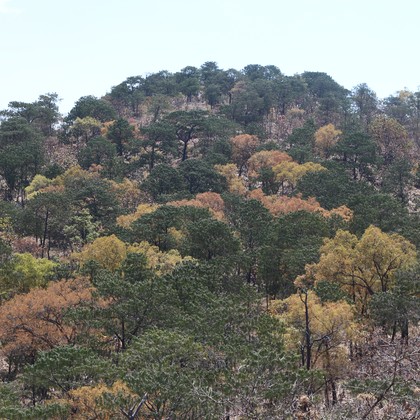
Breeds in open oak woodland and dense oak scrub, locally mixed with pines and maples, on mountain slopes between about 1500 and 3000 m. It nests on the ground under shrubs or in leaf litter. In winter in pine-oak and oak forest, also dense forest edges and mountain ravines. It searches the foliage of the lower and middle levels for insects.
Where the bird is most at home, classified by the vegetation units of Mexico and Central America.

Range and movements
Breeds in the Sierra Madre Oriental in south-eastern Coahuila, Nuevo León, south-western Tamaulipas and adjacent mountains, and outside the guide area in the Chisos Mountains of Texas. Winters in the mountains of the Pacific slope of Mexico, from southern Sinaloa and Durango through Jalisco, Colima and Michoacán to Guerrero and Oaxaca. Migrants are seldom reported.
- Summer visitor (c. Apr–Sep)
- dark = core range, pale = thinly spread
How and when to look
In summer found in oak scrub on the mountain slopes south and east of Saltillo and Monterrey. In winter silent; it then keeps to the foliage and often joins mixed flocks in oak forest.
Conservation status
Not threatened (LC). The breeding range is small and fragmented; fire and overgrazing of oak scrub are a local risk.
Scientific name
Leiothlypis crissalis | (Salvin & Godman, 1889)
Salvin & Godman described the species in 1889 as Helminthophila crissalis; because it was later moved to another genus, the author and year stand in brackets. The genus Leiothlypis was introduced in 2008 by Sangster. Leiothlypis is Ancient Greek, from leios 'plain, smooth' and thlypis, an unidentified small bird mentioned by Aristotle. crissalis is Modern Latin for 'of the vent', from crissum 'vent, undertail coverts', after the orange-yellow undertail coverts. The specimen the first description was based on came from Sierra Nevada de Colima, Mexico.