All species › New World vultures › New World vultures › Lesser Yellow-headed Vulture
Position in the tree Birds Aves › Birds with a flexible palate Neognathae › All other modern birds Neoaves › Landbirds Telluraves › Raptors, owls, kingfishers and woodpeckers Afroaves › Hawks and owls Hieraves
Lesser Yellow-headed Vulture | Cathartes burrovianus
Kleine geelkopgier | Zopilote sabanero
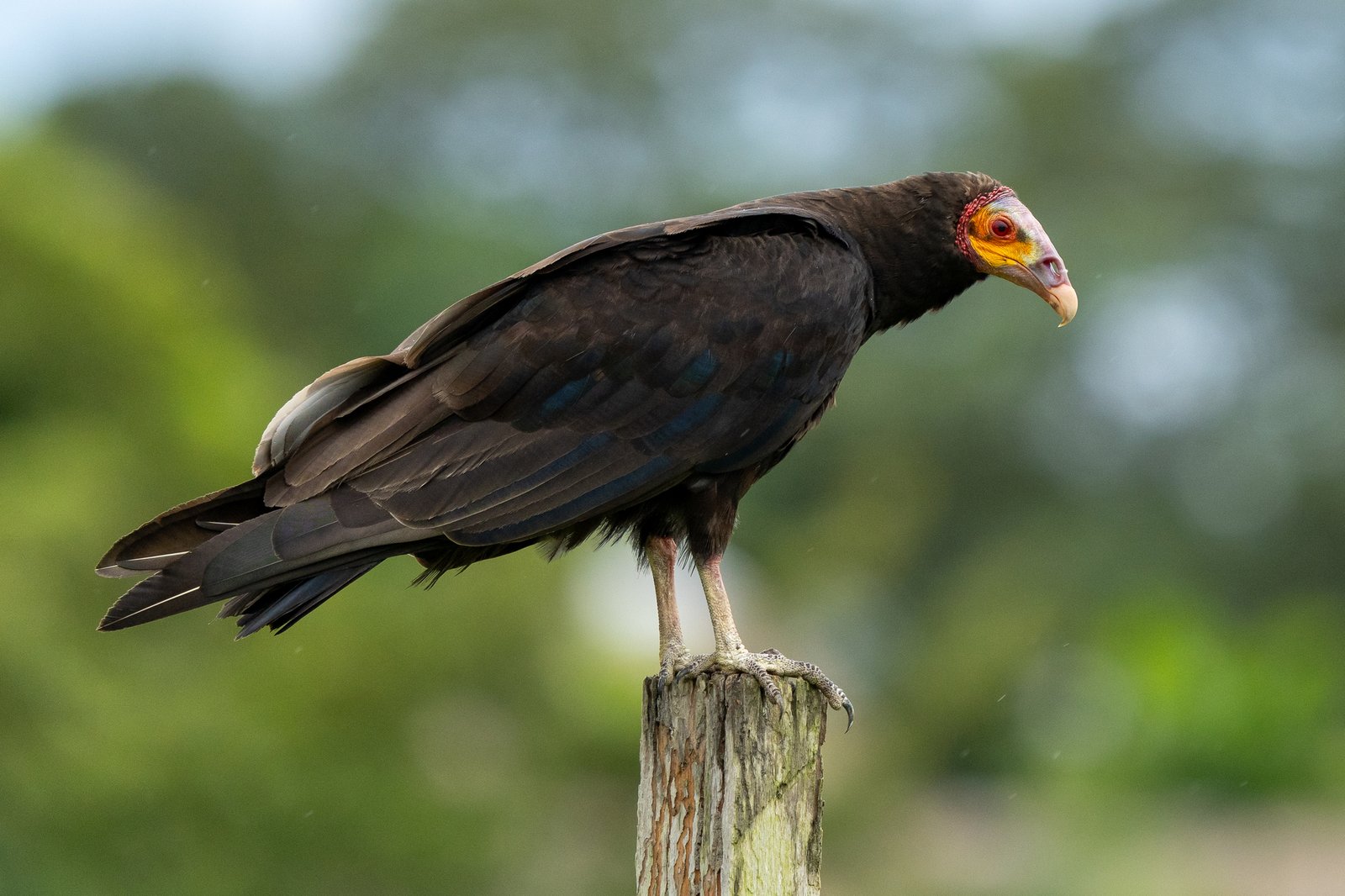
The Lesser Yellow-headed Vulture is a slender vulture of wet savanna and marshes in the lowlands. It glides low over grass and water and, like the Turkey Vulture, finds much of its carrion by smell. In the guide area it lives locally in the Gulf and Caribbean lowlands, from southern Mexico to Panama.
Voice
Lacks a syrinx; almost silent.
Recording: Luiz C. Silva — CC BY-NC-SA 4.0 · converted to mono · xeno-canto
Identification
53–66 cm, slightly smaller and slimmer than the Turkey Vulture, with long, narrow wings and a rather short, rounded tail. The plumage is black with a slight greenish gloss. The bare head is yellow to orange, with red on the forehead and nape and a blue-grey crown. From below the wings are two-toned, with a black forewing and grey flight feathers; from above, the white shafts of the outer primaries form a pale patch near the wingtip. Glides low with wings in a V and rocks from side to side. Juveniles have a greyish head with a pale nape.
Confusion species
The Turkey Vulture Cathartes aura is larger and browner, has a red head in adults and lacks the pale patch on the upperwing; it usually soars higher and also over dry land. The Black Vulture Coragyps atratus has a grey head, a short tail, white patches at the wingtip and flat wings. The Greater Yellow-headed Vulture Cathartes melambrotus occurs only outside the guide area, in the Amazon basin.
Habitat
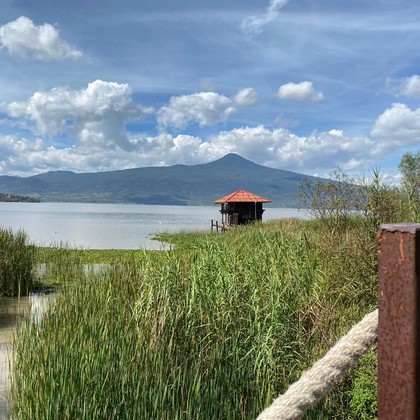
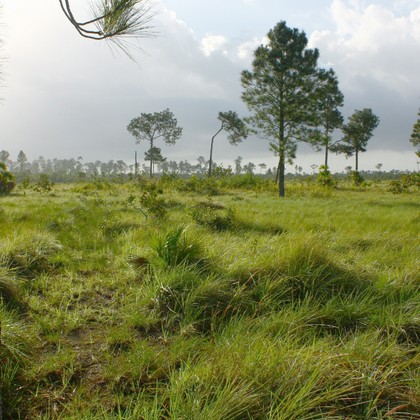
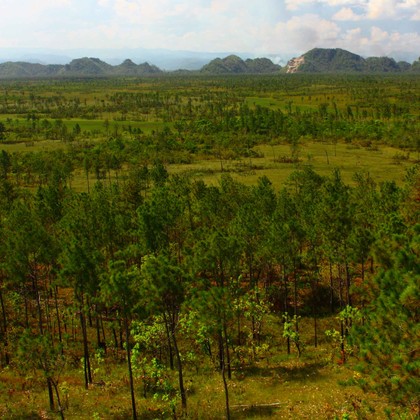
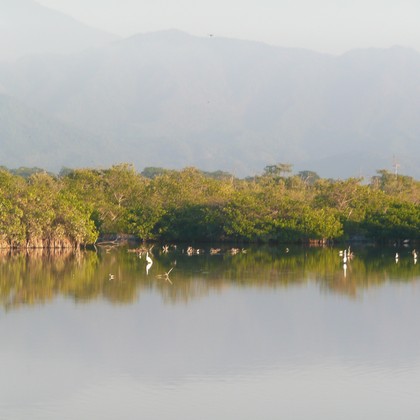
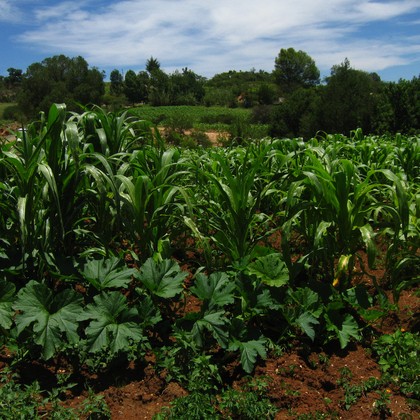
Seasonally flooded savanna, freshwater marshes, wet grassland, pine savanna, edges of mangroves and salt marsh, rice fields and wet pastures; in the lowlands, mostly below 500 m. Often perches on posts and low trees. Feeds on carrion, but also on fish, amphibians and other animals stranded in drying pools. Nests in a cavity or on the ground.
Where the bird is most at home, classified by the vegetation units of Mexico and Central America.

Range and movements
Locally in the Gulf lowlands of Mexico, from southern Veracruz through Tabasco to Campeche and southern Quintana Roo; further in Belize, the savannas of Petén in Guatemala, the pine savannas of the Mosquitia in Honduras and Nicaragua, the northern lowlands of Costa Rica and in Panama, mainly in the savannas and rice fields on the Pacific side. Outside the guide area in South America to northern Argentina.
- Resident
- dark = core range, pale = thinly spread
How and when to look
In Mexico the marshes of Pantanos de Centla in Tabasco are a good site. In Belize it flies over the savannas and marshes around Crooked Tree, in Costa Rica at Caño Negro and in Panama over the rice fields and savannas around Aguadulce. It often flies lower than the Turkey Vulture and then passes at close range.
Conservation status
Not threatened. Locally common in suitable habitat; numbers appear stable. Drainage of marshes and savanna reduces its habitat, while wet pastures and rice fields locally offer new habitat.
Scientific name
Cathartes burrovianus | Cassin, 1845
Cassin described the species in 1845 and placed it straight away in the genus where it still stands. The genus Cathartes was introduced in 1811 by Illiger. Cathartes is Greek kathartēs 'purifier', after its clearing away of carcasses. burrovianus honours the American physician Marmaduke Burrough (1798–1844), consul at Veracruz. The specimen the first description was based on came from near Veracruz city, Mexico.