All species › Birds of prey › Ospreys › Osprey
Position in the tree Birds Aves › Birds with a flexible palate Neognathae › All other modern birds Neoaves › Landbirds Telluraves › Raptors, owls, kingfishers and woodpeckers Afroaves › Hawks and owls Hieraves
Osprey | Pandion haliaetus
Visarend | Águila pescadora
The Osprey is a raptor that lives almost entirely on fish and occurs on nearly every continent. In the guide area it breeds along the coasts of Baja California and the Gulf of California, and on the Yucatán Peninsula and in Belize. Birds from North America migrate through the whole area and winter along coasts, lakes and rivers south to Panama.
Voice
A series of short, whistled chip-chip-chip calls, especially at the nest and during interactions; the alarm is a higher, more urgent kyee-kyee.
Recording: David Darrell-Lambert — CC BY-NC-SA 4.0 · converted to mono · xeno-canto
Identification
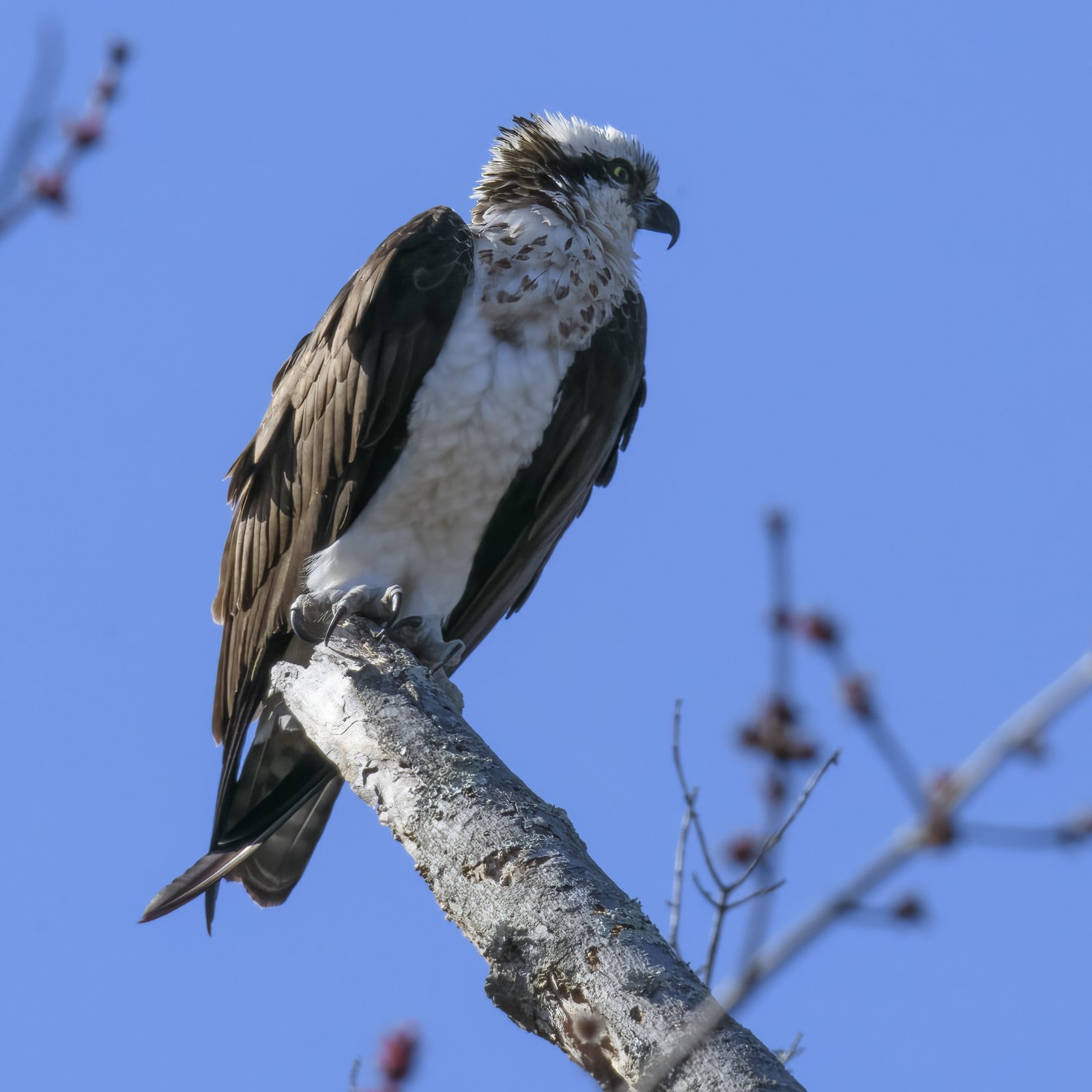
50–66 cm, with long, narrow wings that show a bend at the wrist in flight, giving a silhouette like a large gull. The upperparts are dark brown, the underparts white. The head is white with a dark eye-stripe running to the nape; the eye is yellow. From below the wings are white with a black carpal patch and barred flight feathers. Females usually have a more distinct brown breast band than males. Birds from Yucatán and Belize have a whiter head and a narrower eye-stripe than North American birds. Juveniles have pale fringes to the upperparts. Hovers over water and plunges feet first.
Confusion species
Large gulls such as the Western Gull Larus occidentalis also have bent wings, but lack the dark eye-stripe, black carpal patch and brown upperparts. The Bald Eagle Haliaeetus leucocephalus, rare in the north of the guide area, is larger and has broader, plank-like wings; juveniles are mottled brown and white, without clean white underparts. The Magnificent Frigatebird Fregata magnificens has much longer, narrow wings and a deeply forked tail.
Habitat
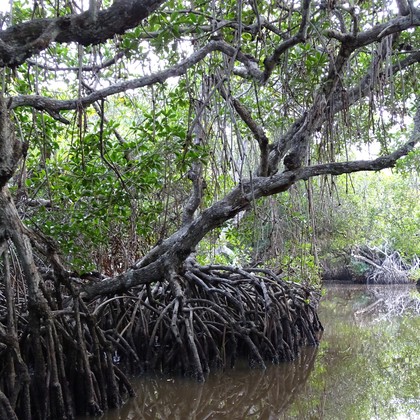
Coasts, lagoons, estuaries, mangroves, islets, lakes, reservoirs and rivers with clear water and enough fish. Builds a large stick nest on a rock, a columnar cactus, a tree, a pole or a channel marker, on islets often on the ground. Catches fish of up to about 2 kg by plunging feet first into the water.
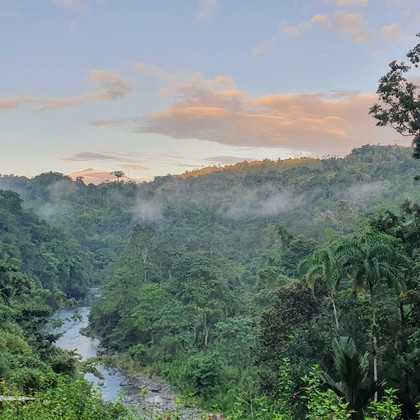
Where the bird is most at home, classified by the vegetation units of Mexico and Central America.




Range and movements
Breeds along the coasts and on the islands of Baja California and the Gulf of California, from the northern Gulf to Sinaloa, and along the coasts of the Yucatán Peninsula and the cays of Belize. From about September to April a winter visitor along all coasts of the guide area and at inland lakes, reservoirs and rivers, south to Panama; young birds often stay through the summer. On passage in September and October and in March and April also over land, among other places along the flyway on the Gulf coast of Veracruz. Outside the guide area worldwide except Antarctica.
- Resident
- dark = core range, pale = thinly spread
How and when to look
In Baja California and Sonora nests can be seen on columnar cacti, power poles and markers along the coast, for example around Laguna San Ignacio, Bahía de los Ángeles and Guaymas Bay. On Yucatán it breeds around Ría Lagartos and Sian Ka'an. In winter it perches on a post or dead tree along almost any coast, lagoon or reservoir.
Conservation status
Not threatened. The breeding population in north-western Mexico has recovered since the ban on DDT and benefits from poles and markers as nest sites. Locally threatened by disturbance, electrocution on power lines and pollution of fishing grounds.
Scientific name
Pandion haliaetus | (Linnaeus, 1758)
Linnaeus described the species in 1758 as Falco Haliaetus; because it was later moved to another genus, the author and year stand in brackets. The genus Pandion was introduced in 1809 by De Savigny. Pandion is taken from Pandion, the mythical king of Athens and grandfather of Theseus. haliaetus comes through Latin from the Greek haliaetos 'sea eagle', from hals 'sea' and aetos 'eagle'. The specimen the first description was based on came from Sweden.