All species › New World vultures › New World vultures › Turkey Vulture
Position in the tree Birds Aves › Birds with a flexible palate Neognathae › All other modern birds Neoaves › Landbirds Telluraves › Raptors, owls, kingfishers and woodpeckers Afroaves › Hawks and owls Hieraves
Turkey Vulture | Cathartes aura
Kalkoengier | Zopilote aura
The Turkey Vulture is the most widespread vulture in the Americas and occurs in almost the whole guide area. It glides for hours low over the land and, unlike the Black Vulture, finds much of its carrion by smell. Besides the resident birds, millions of North American Turkey Vultures pass through Mexico and Central America in autumn and spring along a narrow flyway following the Gulf and Caribbean coasts; some winter in the guide area.
Voice
Lacks a syrinx; almost silent. Hisses or grunts at carcasses and at the nest.
Recording: Ed Pandolfino — CC BY-NC-SA 4.0 · shortened to the first 60 s, mono · xeno-canto
Identification
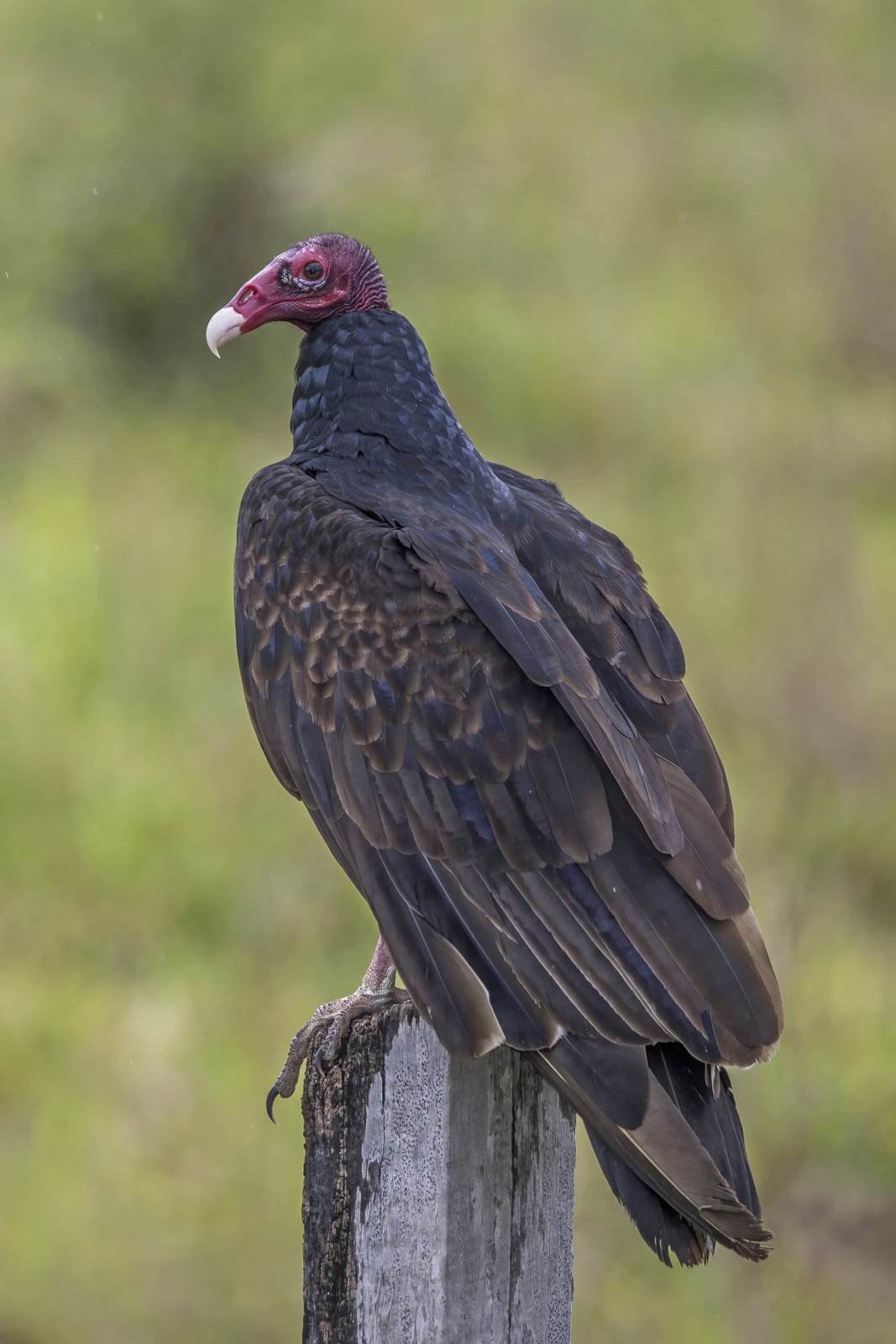
62–81 cm, with long, narrow wings and a rather long, rounded tail. The plumage is blackish brown, with paler edges on the back and wing coverts. The head is small and bare, red with a white bill in adults; juveniles have a grey head and a dark bill. From below the wings are two-toned: black forewing and silvery grey flight feathers along their whole length. Soars with wings in a marked V, rocks from side to side and rarely flaps. The sexes are alike. Resident birds in southern Central America often have a pale band on the nape.
Confusion species
The Black Vulture Coragyps atratus is stockier and shorter-tailed, has a grey head and white patches only at the wingtip, and flies with quick, shallow beats on flat wings. The Lesser Yellow-headed Vulture Cathartes burrovianus has a yellow to orange head, pale shafts to the outer primaries above, and hunts low over savanna and marshes. The Zone-tailed Hawk Buteo albonotatus soars with the same V and from below looks very like a Turkey Vulture, but has a feathered head, yellow legs and white bands in the tail.
Habitat
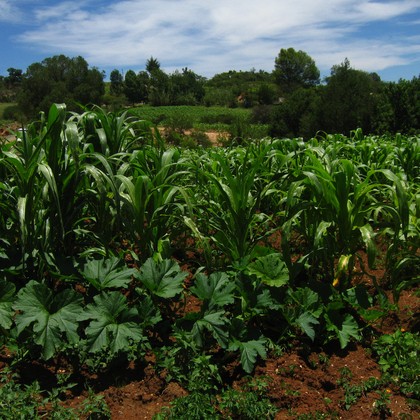
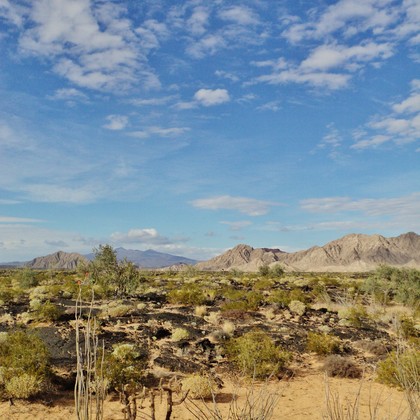
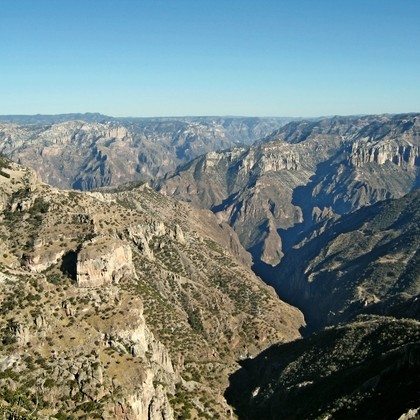
Almost all open and semi-open landscapes: pastures, fields, savanna, desert and thornscrub, forest edges, coasts and mountains with cliffs; from sea level to about 3000 m. Roosts in groups in trees, on rocks or on masts. Nests on the ground in a rock cavity, a hollow log or dense scrub.
Where the bird is most at home, classified by the vegetation units of Mexico and Central America.




Range and movements
Resident throughout the guide area, from Baja California and northern Mexico to Panama, including most offshore islands. On passage in autumn, peaking in the second half of October, and in March and April, North American birds travel in large flocks along the Gulf coast of Veracruz, through Tabasco, Chiapas and Central America and along the Caribbean coast of Costa Rica and through Panama to South America. Some winter in Mexico and Central America from October to March. Outside the guide area from southern Canada to Tierra del Fuego.
- Resident
- dark = core range, pale = thinly spread
How and when to look
In autumn, millions of Turkey Vultures pass over the area around Cardel and Chichicaxtle in Veracruz within a few weeks, together with Swainson's Hawks and Broad-winged Hawks; the largest numbers come in the second half of October. Streams of migrating vultures can also be seen along the Caribbean coast of Costa Rica and over Panama City in October and November.
Conservation status
Not threatened. Numerous and widespread; benefits from roads, livestock farming and open country. Locally birds fall victim to poisoned bait and to lead from bullet fragments in carcasses.
Scientific name
Cathartes aura | (Linnaeus, 1758)
Linnaeus described the species in 1758 as Vultur Aura; because it was later moved to another genus, the author and year stand in brackets. The genus Cathartes was introduced in 1811 by Illiger. Cathartes is Greek kathartēs 'purifier', after its clearing away of carcasses. aura is probably a Latinised form of a native Mexican name for this vulture; the exact origin is uncertain. The specimen the first description was based on came from Veracruz, Mexico (later designated).