All species › Passerines › New World sparrows › Lark Bunting
Position in the tree Birds Aves › Birds with a flexible palate Neognathae › All other modern birds Neoaves › Landbirds Telluraves › Falcons, parrots and passerines Australaves › Falcons and passerines Eufalconimorphae › Parrots and passerines Psittacopasserae
Lark Bunting | Calamospiza melanocorys
Prairiegors | Gorrión ala blanca
The Lark Bunting is a large, stocky sparrow of open grassland. In breeding plumage the male is black with large white wing patches; in winter males and females resemble streaked, brown sparrows. The species breeds on the Great Plains of North America and winters in flocks on the dry plains of northern Mexico.
Voice
In winter mainly the call: a soft, whistled hoo-ee, often heard from a flock in flight. The song, in the breeding season often given in a song flight, is a rich series of whistles, trills and dry notes; in the guide area sometimes heard as early as spring.
Recording: Thomas G. Graves — CC BY-NC-SA 4.0 · shortened to the first 60 s, mono · xeno-canto
Identification
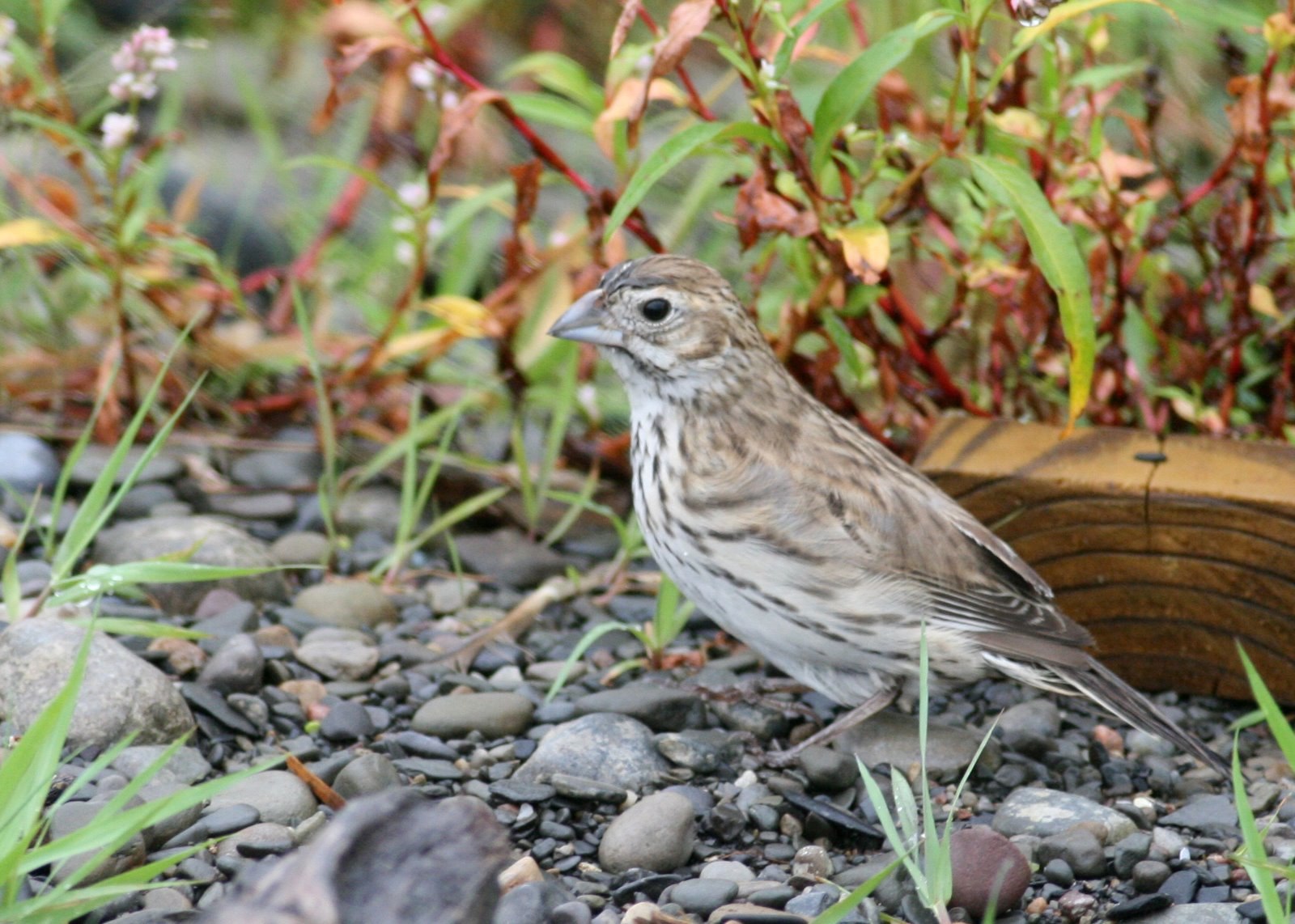
15–18 cm. Stocky, with a thick, conical, bluish-grey bill and a fairly short tail with white corners. Breeding male entirely black with a large white patch on the wing. Female and birds in non-breeding plumage grey-brown with dark streaks on back, breast and flanks, a pale supercilium, a dark malar stripe and a large white to pale buff patch on the wing; non-breeding males often show some black on the face and underparts. In March and April more and more males in blotchy black-and-white transitional plumage appear in the guide area.
Confusion species
Birds in non-breeding plumage may be confused with Vesper Sparrow Pooecetes gramineus, which has a smaller bill, a white eye-ring and white outer tail feathers and lacks a pale wing patch. The large pale wing patch, the thick bill and the flocking habit usually identify the Lark Bunting in the field.
Habitat
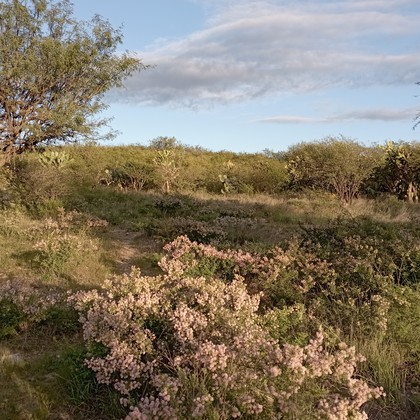
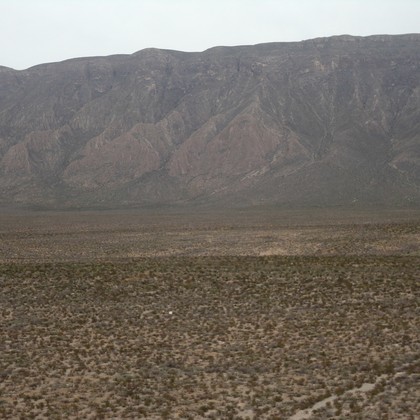
In winter open, short grassland, semi-desert grassland, fallow fields, stubble fields and pasture with scattered shrubs; also along roadsides. It lives in flocks of tens to hundreds of birds that fly low over the fields and forage together on the ground for seeds.
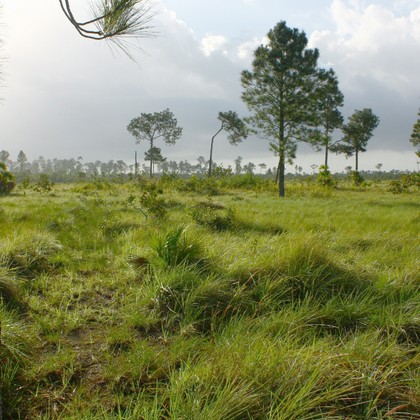
Where the bird is most at home, classified by the vegetation units of Mexico and Central America.

Range and movements
Breeds on the Great Plains, from southern Canada to northern Texas and New Mexico. Winters in the south-western United States and northern and central Mexico. In the guide area mainly in Sonora, Chihuahua, Coahuila, Durango, Zacatecas and Nuevo León, south to San Luis Potosí, Aguascalientes, Jalisco and Guanajuato; rare in Baja California.
- Winter visitor (c. Oct–Mar)
- dark = core range, pale = thinly spread
How and when to look
Flocks are best found by driving slowly along roads through semi-desert grassland and farmland and watching for the white wing patches of birds taking flight.
Conservation status
Not threatened (LC). Still numerous, but the breeding population on the Great Plains has declined steeply since the 1960s. Conversion of grassland and semi-desert grassland to cropland, both on the breeding grounds and in the wintering areas of northern Mexico, is considered the main cause.
Scientific name
Calamospiza melanocorys | Stejneger, 1885
Stejneger described the species in 1885 and placed it straight away in the genus where it still stands. The genus Calamospiza was introduced in 1838 by Bonaparte. Calamospiza is Greek, from kalamos 'reed, grass' and spiza 'finch': 'grass finch', after the open grasslands it inhabits. melanocorys is Greek, from melas 'black' and korus 'lark': 'black lark', after the male's black breeding plumage. The specimen the first description was based on came from plains of the Platte River (USA; per the description).