All species › Passerines › New World sparrows › Lark Sparrow
Position in the tree Birds Aves › Birds with a flexible palate Neognathae › All other modern birds Neoaves › Landbirds Telluraves › Falcons, parrots and passerines Australaves › Falcons and passerines Eufalconimorphae › Parrots and passerines Psittacopasserae
Lark Sparrow | Chondestes grammacus
Roodoorgors | Gorrión arlequín
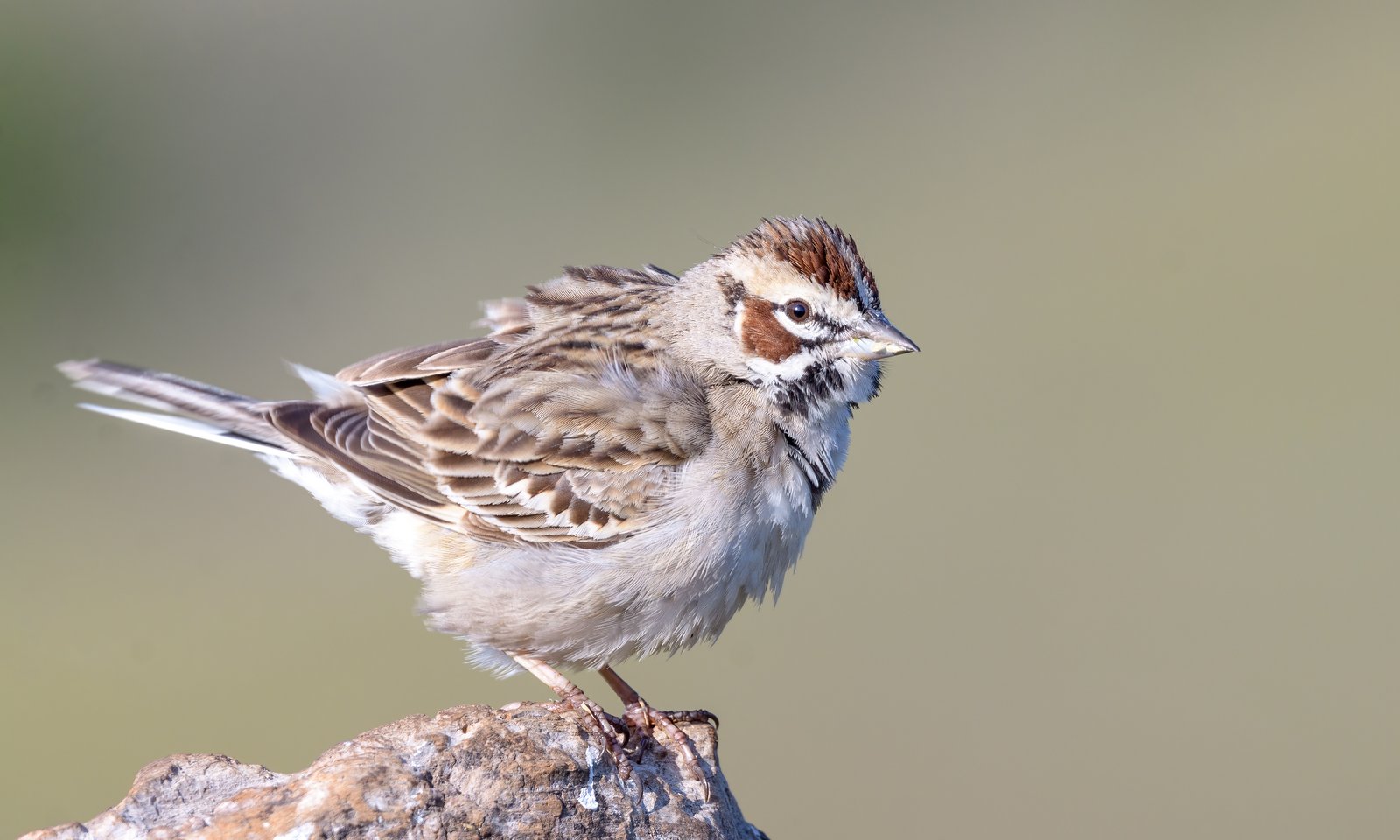
The Lark Sparrow is a large sparrow of open, dry country with scattered trees and shrubs. Its head shows a crisp pattern of chestnut, black and white. It breeds across much of North America and in northern Mexico; in winter it spreads over a large part of Mexico.
Voice
The song is long and varied: an alternation of clear whistles, trills and buzzy, harsh notes, often starting with two clear notes. The call is a sharp, thin tsip, often repeated, also in flight.
Recording: Manuel Grosselet — CC BY-NC-SA 4.0 · shortened to the first 60 s, mono · xeno-canto
Identification
15–17 cm. Large and long-tailed. Head with a chestnut ear patch and chestnut crown sides, a white median crown stripe, a white supercilium, a white malar stripe and a black throat stripe. Breast white with a single black central spot. Upperparts grey-brown with dark streaks. The rounded tail is black with broad white corners, visible especially in flight. The sexes are alike. Juveniles are finely streaked on the breast and have a paler head pattern.
Confusion species
Adults are hardly confusable thanks to the head pattern. Vesper Sparrow Pooecetes gramineus also has white in the tail, but only along the outer feathers and not at the corners; it is streaked on the breast, has a white eye-ring and lacks the chestnut and black head pattern. Juvenile Lark Sparrows, with a streaked breast and a fainter head pattern, look more like Vesper Sparrow but already show the white-cornered tail.
Habitat
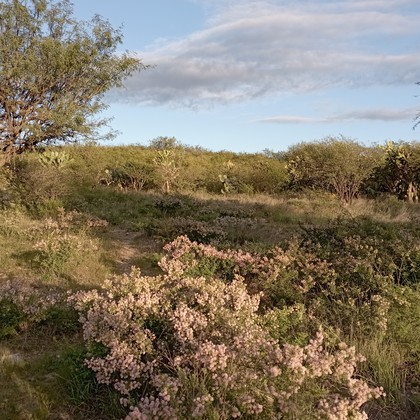
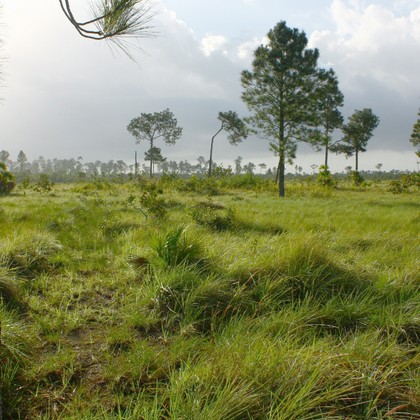
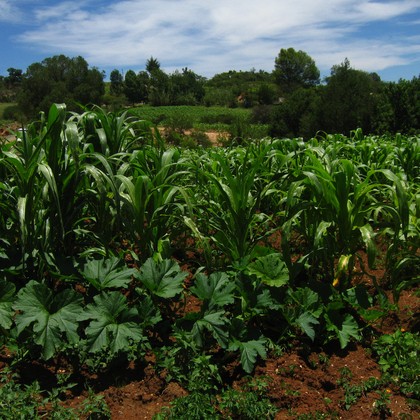
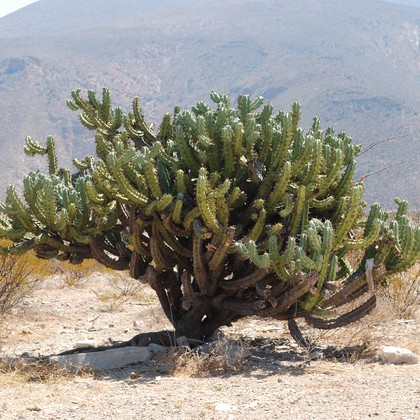
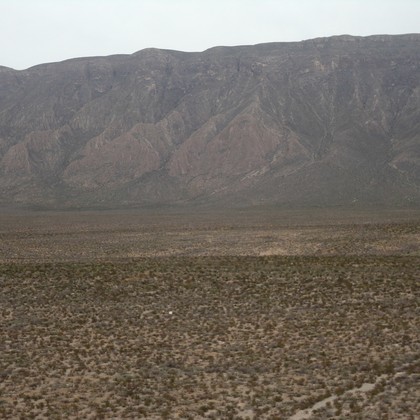
Open country with scattered trees and shrubs: semi-desert grassland, dry savanna, pasture with trees, field edges, orchards and roadsides; in winter also thornscrub and stubble fields. It forages on the ground for seeds and, in the breeding season, also for insects. Outside the breeding season often in flocks, which fly up into a tree when disturbed.
Where the bird is most at home, classified by the vegetation units of Mexico and Central America.

Range and movements
Breeds from southern Canada across much of the United States to northern Mexico, from Sonora and Chihuahua to Durango, Zacatecas, Nuevo León and Tamaulipas. Winters in the southern United States and in Mexico south to Oaxaca and Chiapas; scarce in Guatemala and El Salvador, exceptionally further south.
- Resident
- Summer visitor (c. Apr–Sep)
- Winter visitor (c. Oct–Mar)
- Passage (Mar–Apr, Oct–Nov)
- dark = core range, pale = thinly spread
How and when to look
In winter best found along roads through farmland and semi-desert grassland; a flushed flock can be recognised by the black, white-cornered tails and often settles in a nearby tree.
Conservation status
Not threatened (LC). Widespread; in parts of the northern range numbers have declined through the loss of open grassland and the overgrowing of abandoned land.
Scientific name
Chondestes grammacus | (Say, 1822)
Say described the species in 1822 as Fringilla grammaca; because it was later moved to another genus, the author and year stand in brackets. The genus Chondestes was introduced in 1827 by Swainson. Chondestes is Greek, from khondros 'grain' and edestēs 'eater': 'grain-eater'. grammacus comes from the Greek grammikos 'of lines, striped', after the boldly striped head pattern. The specimen the first description was based on came from Bellefontaine, near the mouth of the Missouri River, Missouri (USA).