All species › Cuckoos › Cuckoos › Greater Roadrunner
Position in the tree Birds Aves › Birds with a flexible palate Neognathae › All other modern birds Neoaves › Doves, turacos and allies Columbaves › Bustards, turacos and cuckoos Otidimorphae
Greater Roadrunner | Geococcyx californianus
Grote renkoekoek | Correcaminos norteño
The Greater Roadrunner is a large, terrestrial cuckoo of the deserts and dry scrubland of northern and central Mexico. It runs at high speed over the ground, using its long tail as a rudder, and flies only briefly. In southern and western Mexico it is replaced by the smaller Lesser Roadrunner.
Voice
The male's song is a series of four to eight descending, dove-like coos, coo coo coo-oo, often from a raised spot. Also a dry clattering made by snapping the bill, and whirring and whining sounds.
Recording: Mark McClelland — CC BY-NC-SA 4.0 · converted to mono · xeno-canto
Identification
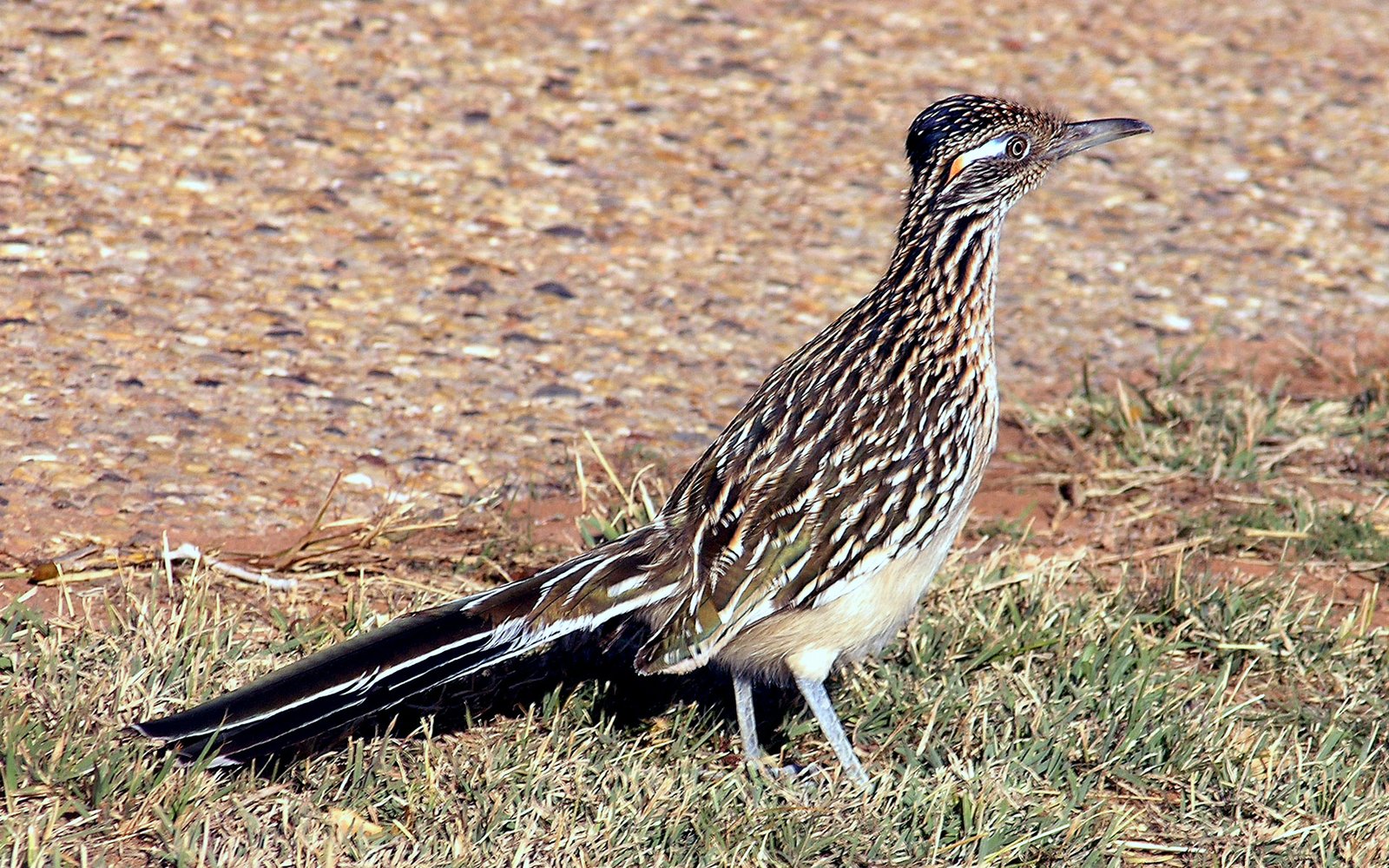
52–62 cm, about half of it tail. The upperparts are streaked brown and white with a bronze-green gloss; the head has a bushy, erectile crest of dark, pale-edged feathers. Behind the eye is a patch of bare skin that is blue and white, becoming orange-red at the rear. The neck and breast are pale with dark brown streaks, the belly dirty white. The bill is long, strong and slightly hooked at the tip. The tail is long and narrow, with white tips to the outer feathers, and is often cocked. In flight a white crescent shows on the short, rounded wings. The sexes are alike.
Confusion species
Lesser Roadrunner Geococcyx velox is clearly smaller, with a shorter bill and an unstreaked, plain buff throat and foreneck; it lives mainly in western and southern Mexico and Central America, overlapping in central Mexico. Other large, long-tailed ground birds such as the chachalacas lack streaks and a crest and have a short bill.
Habitat
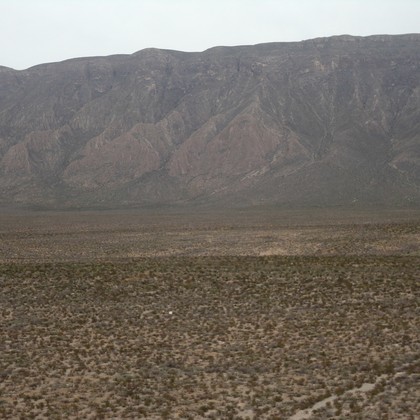
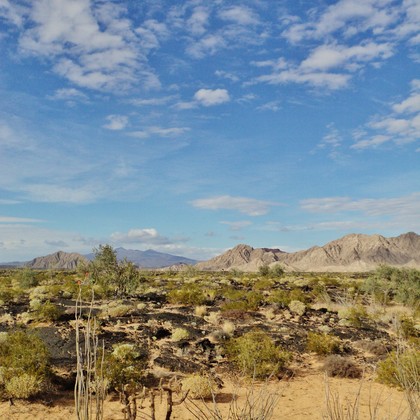
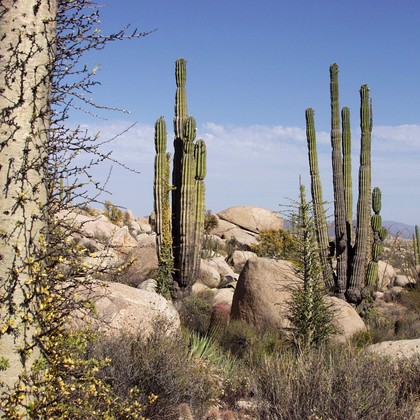
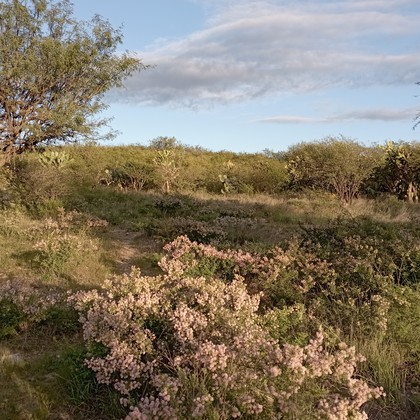
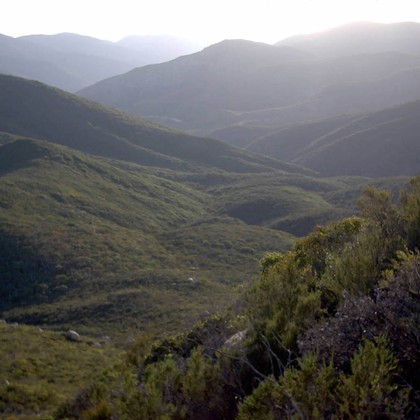
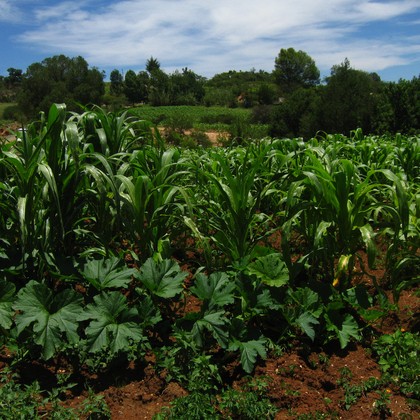
Desert and semi-desert with shrubs and cacti, dry grassland with scrub, chaparral, thorn scrub and open dry woodland, also field edges and farmyards; from sea level to about 2300 m. It hunts on the ground for large insects, scorpions, lizards, snakes (including rattlesnakes), rodents and small birds, and in winter also eats fruit and seeds. The nest is a flat cup of twigs low in a bush, cactus or small tree.
Where the bird is most at home, classified by the vegetation units of Mexico and Central America.

Range and movements
In northern and central Mexico: the whole Baja California peninsula, Sonora, Chihuahua, Coahuila, Nuevo León and Tamaulipas, and southwards through northern Sinaloa, Durango, Zacatecas and San Luis Potosí to the central highlands of Jalisco, Guanajuato, Querétaro, Hidalgo, the State of Mexico and Puebla, and western Veracruz. Outside the guide area in the south-western and southern United States.
- Resident
- dark = core range, pale = thinly spread
How and when to look
In the deserts of Baja California, Sonora and Chihuahua it is often seen along roads and at the edge of farmyards, especially early in the morning, when it sits with its back to the sun to warm the dark skin on its back. When disturbed it runs off rather than flying.
Conservation status
Least Concern. The species has a large range and is fairly common in suitable dry country. Locally it suffers from urbanisation and the conversion of scrubland to farmland.
Scientific name
Geococcyx californianus | (Lesson, 1829)
Lesson described the species in 1829 as Saurothera californiana; because it was later moved to another genus, the author and year stand in brackets. The genus Geococcyx was introduced in 1831 by Wagler. Geococcyx is Greek, from gē 'earth, ground' and kokkux 'cuckoo': 'ground cuckoo', after its running, terrestrial habits. californianus means 'of California', where the species was described from. The specimen the first description was based on came from California.