All species › Pelicans, herons and ibises › Herons, egrets and bitterns › Great Blue Heron
Position in the tree Birds Aves › Birds with a flexible palate Neognathae › All other modern birds Neoaves › Birds of the elements Elementaves › Tropicbirds and waterbirds Phaethoquornithes › Core waterbirds Aequornithes
Great Blue Heron | Ardea herodias
Amerikaanse blauwe reiger | Garza morena
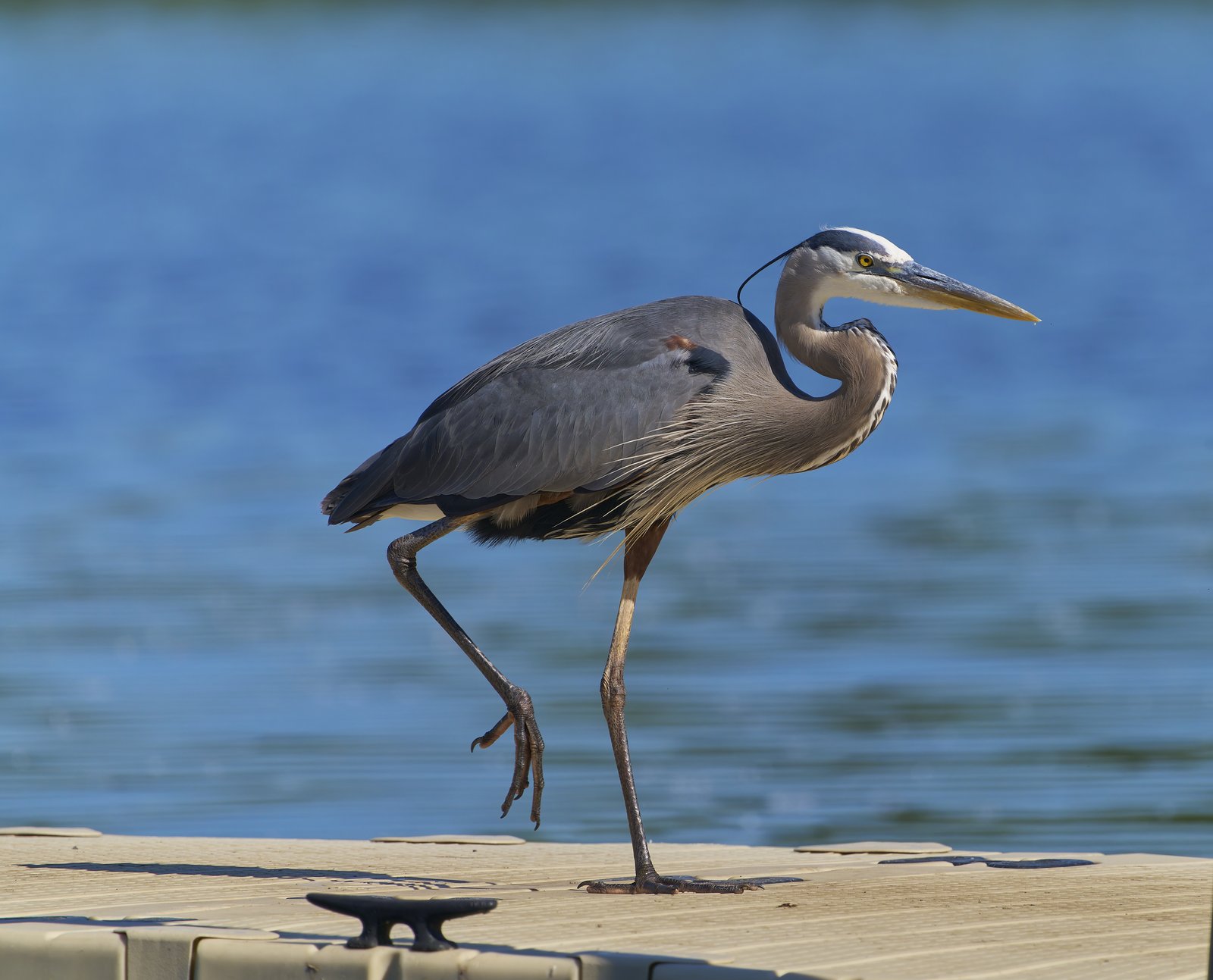
The Great Blue Heron is the largest heron of the guide area. Most birds are winter visitors from North America, which spread from September to April across all coasts and wetlands to Panama. In Mexico the species breeds locally, and in the north of the Yucatán Peninsula the all-white morph also occurs, formerly regarded as a separate species under the name Great White Heron.
Voice
Usually silent. When disturbed a deep, harsh frahnk or kraak, often repeated when flying off.
Recording: Jeff Stewart — CC BY-NC-SA 4.0 · converted to mono · xeno-canto
Identification
97–137 cm, large and heavy, with a long neck and a stout, dagger-shaped yellowish bill. Adults are blue-grey above, with a white crown and face, a broad black stripe above the eye ending in black plumes, and a grey to grey-brown, wine-tinged neck with a black-and-white stripe down the front. The thighs and the bend of the wing are rufous, the belly streaked grey and white. Juveniles have a dark cap, a greyer, duller plumage and rusty edges to the wing coverts. The white morph is all white, with a yellow bill and pale, yellowish legs. In flight slow, deep beats with the neck drawn in.
Confusion species
Cocoi Heron Ardea cocoi of Panama has an all-black crown, a white neck and black belly sides. The white morph differs from Great Egret Ardea alba in its larger, heavier build, the stouter bill and pale rather than black legs. Bare-throated Tiger Heron Tigrisoma mexicanum is smaller and stockier, with a barred brown neck and a bare yellow throat. Little Blue Heron Egretta caerulea is much smaller and dark slate-coloured.
Habitat
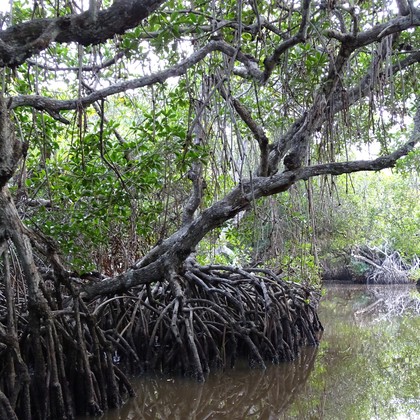
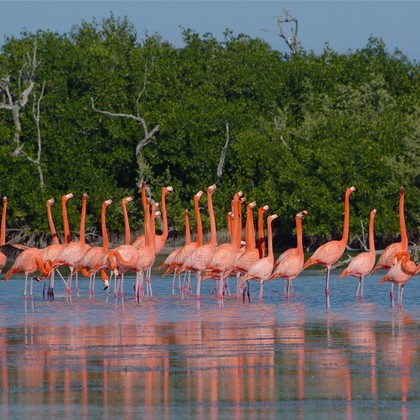
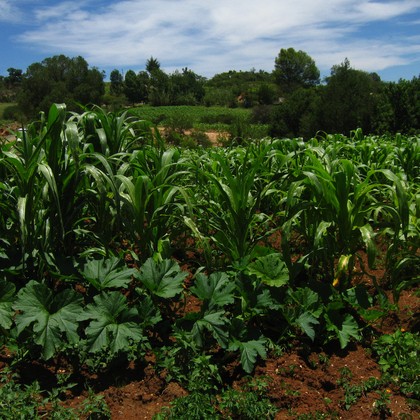
Mangroves, tidal mudflats, lagoons and estuaries, shallow bays and rocky coasts, also shores of lakes, reservoirs, rivers and freshwater marshes, rice fields and fish farms; mainly in the lowlands, in winter also at lakes on the Mexican Plateau. It hunts alone, standing or stalking slowly, for fish, crabs, frogs and other animals. It breeds in mangroves, trees or on islets, alone or in small colonies; the nest is a large platform of sticks.
Where the bird is most at home, classified by the vegetation units of Mexico and Central America.



Range and movements
Breeds locally in Mexico, mainly along the coasts and on islands of Baja California and the Gulf of California, along the Pacific coast of Sonora and Sinaloa, and on the coast of the Yucatán Peninsula, where the white morph also occurs. In winter throughout Mexico, most numerous in the north and along the coasts, and further in smaller numbers throughout Central America to Panama. Outside the guide area it breeds from southern Alaska and Canada through the United States, in the Caribbean and on the Galápagos Islands; northern birds winter south to northern South America.
- Winter visitor (c. Oct–Mar)
- dark = core range, pale = thinly spread
How and when to look
Large coastal lagoons, mangroves and mudflats are most promising in the northern winter, for example the lagoons of Baja California and Sinaloa, the Ría Celestún and Ría Lagartos in Yucatán and Palo Verde in Costa Rica. In Panama any large grey heron deserves a check of thighs and crown because of possible confusion with Cocoi Heron.
Conservation status
Not threatened. The North American breeding population is large. The small breeding populations in the guide area are sensitive to disturbance and to the loss of mangroves.
Scientific name
Ardea herodias | Linnaeus, 1758
Linnaeus described the species in 1758 and placed it straight away in the genus where it still stands. He introduced the genus Ardea in that same work. Ardea is the Latin word for 'heron'. herodias comes from the Greek erōdios 'heron'. The specimen the first description was based on came from Hudson Bay, Canada.