All species › Swifts › Hummingbirds › Garden Emerald
Position in the tree Birds Aves › Birds with a flexible palate Neognathae › All other modern birds Neoaves › Birds of the elements Elementaves › Nightjars and swifts Strisores
Garden Emerald | Chlorostilbon assimilis
Tuinsmaragdkolibrie | Colibrí esmeralda jardinero
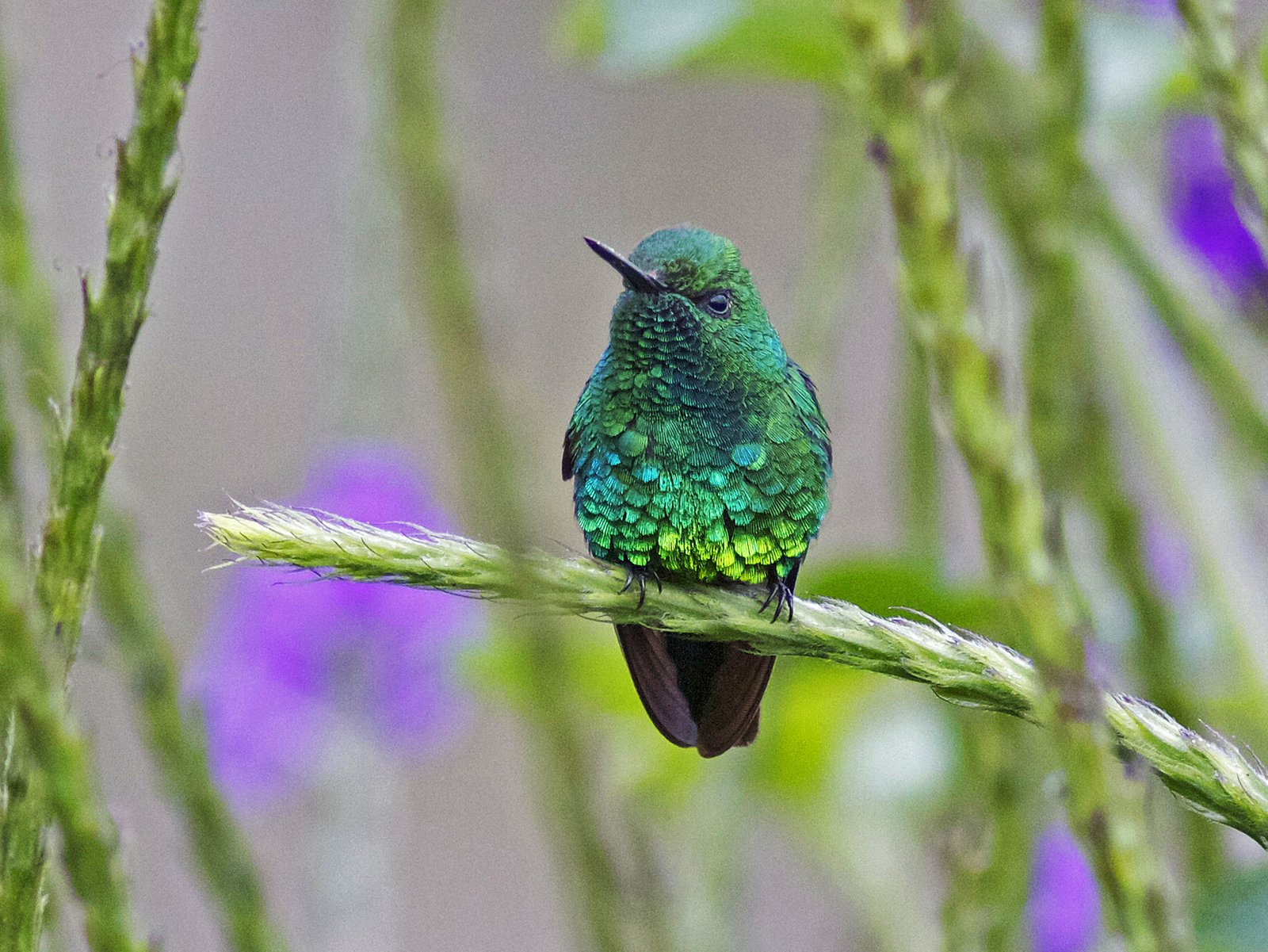
The Garden Emerald is the small emerald of Costa Rica and Panama. It lives in open, man-made landscapes and is often the commonest small hummingbird in gardens, scrub and along forest edges. The male is almost entirely glittering green.
Voice
A dry, short chit or chik, and in chases a dry, rattling twitter.
Recording: Scott Olmstead — CC BY-NC-SA 4.0 · converted to mono · xeno-canto
Identification
7–8 cm, with a short, straight black bill. The male is glittering green, with a blue-black, slightly forked tail. The female has green upperparts, a white stripe behind the eye, a dark ear patch, pale grey underparts and a dark tail with white tips to the outer feathers.
Confusion species
Canivet's Emerald Cynanthus canivetii, found in north-west Costa Rica, is slightly larger, with a red base to the bill and a more deeply forked tail. White-tailed Emerald Microchera chionura has a white belly and, in the male, white outer tail feathers. Female Ruby-throated Hummingbird Archilochus colubris has no dark ear patch and a longer bill.
Habitat
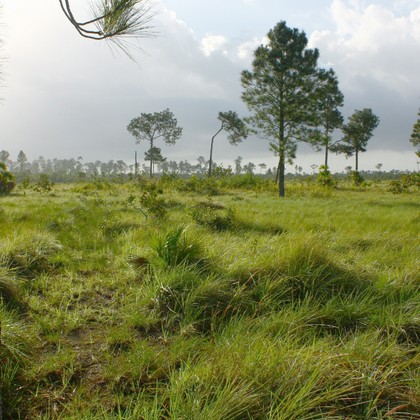
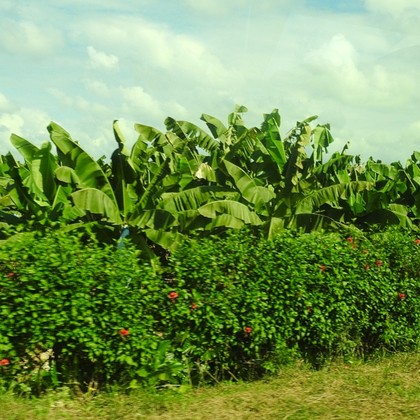
Open and semi-open country: scrub, forest edges, dry forest, savanna, wooded pasture, plantations and gardens, from sea level to about 1200 m, locally higher. It feeds low at flowers of shrubs and herbs.
Where the bird is most at home, classified by the vegetation units of Mexico and Central America.




Range and movements
Almost confined to the guide area. In Costa Rica on the Pacific slope south of Guanacaste and in the Central Valley; in Panama mainly in the Pacific lowlands from Chiriquí to Panamá and Darién, also in the Canal Zone, locally on the Caribbean slope and on the Pearl Islands. Beyond that at most in extreme north-west Colombia.
- Resident
- dark = core range, pale = thinly spread
How and when to look
In gardens and parks in Panama City, such as Parque Natural Metropolitano, and in the Canal Zone; in Costa Rica along the Pacific coast around Carara and in gardens in the Central Valley. Often at low flowering shrubs and hedges.
Conservation status
Not threatened. Common, and increasing where forest gives way to open, shrubby country.
Scientific name
Chlorostilbon assimilis | Lawrence, 1861
Lawrence described the species in 1861 and placed it straight away in the genus where it still stands. The genus Chlorostilbon was introduced in 1853 by Gould. Chlorostilbon is Greek, from khlōros 'green' and stilbōn 'shining', after the glittering green plumage. assimilis is Latin for 'similar', because the species closely resembles related emeralds. The specimen the first description was based on came from Isthmus of Panama (along the Panama Railway).