All species › Passerines › New World warblers › Orange-crowned Warbler
Position in the tree Birds Aves › Birds with a flexible palate Neognathae › All other modern birds Neoaves › Landbirds Telluraves › Falcons, parrots and passerines Australaves › Falcons and passerines Eufalconimorphae › Parrots and passerines Psittacopasserae
Orange-crowned Warbler | Leiothlypis celata
Oranjekruinzanger | Chipe corona naranja
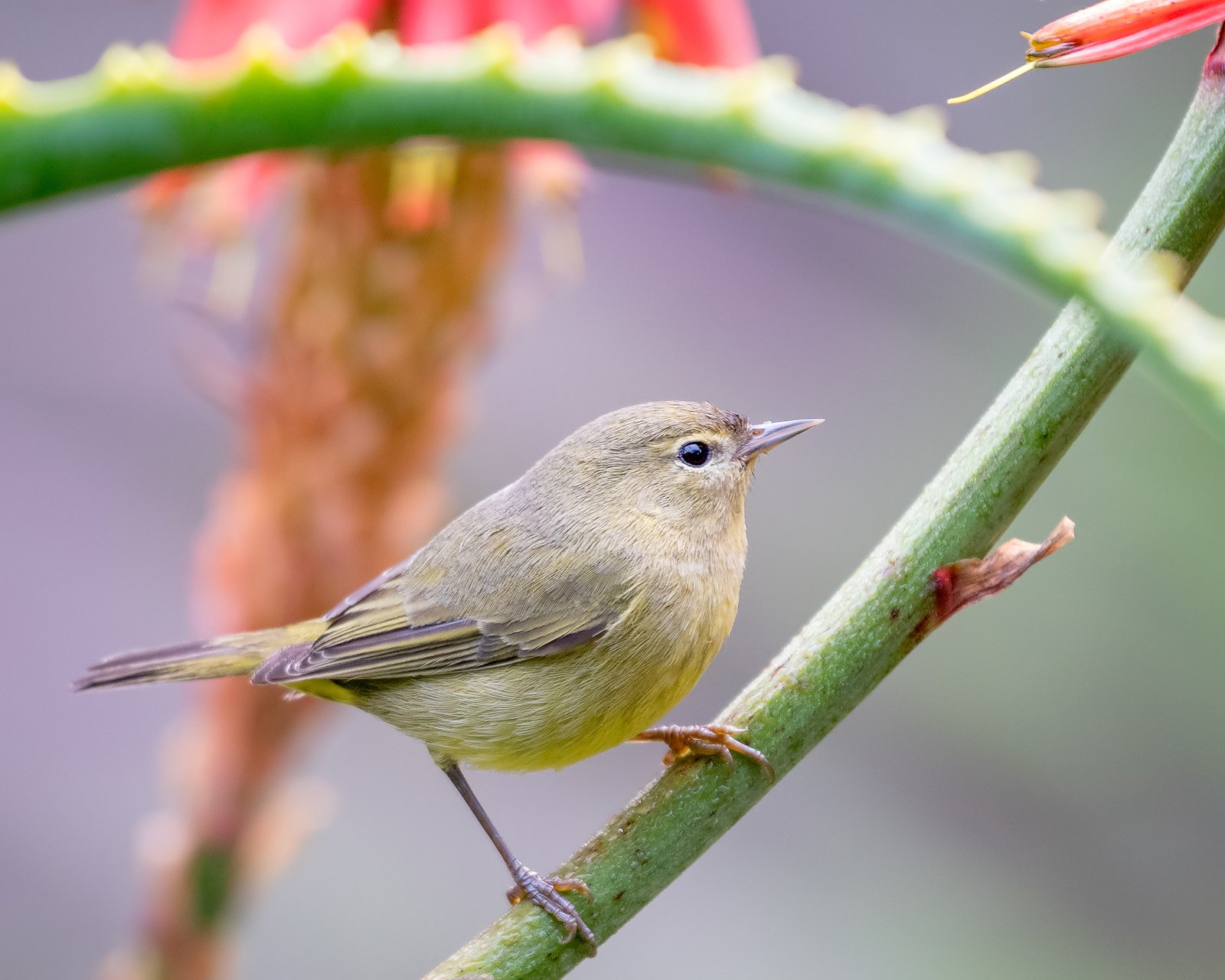
The Orange-crowned Warbler is a small, dull olive-green warbler without obvious markings. It breeds across much of North America and in winter is one of the commonest warblers in scrub and gardens in northern and central Mexico. The orange crown patch that gives it its name is rarely seen.
Voice
The song is a loose, slightly irregular trill that fades or drops in pitch at the end. The call is a sharp, metallic chet.
Recording: Ed Pandolfino — CC BY-NC-SA 4.0 · shortened to the first 60 s, mono · xeno-canto
Identification
12–13 cm. Upperparts greyish olive-green, underparts yellowish olive with faint, blurry streaks on the breast. Narrow dark eyeline, with a short pale supercilium and a broken pale eye-ring. Undertail coverts yellow. No wingbars. The orange crown patch is usually hidden. Birds from western North America and Baja California are yellower; birds from the east and north are greyer, with a grey head. Bill thin and pointed.
Confusion species
Tennessee Warbler Leiothlypis peregrina is brighter green, with a clearer supercilium, a shorter tail and white undertail coverts. Nashville Warbler Leiothlypis ruficapilla has a grey head with a complete white eye-ring and a plain yellow throat. The female Wilson's Warbler Cardellina pusilla is yellower, with a pale supercilium and a longer tail.
Habitat
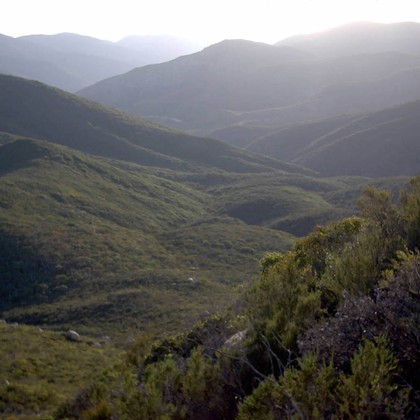
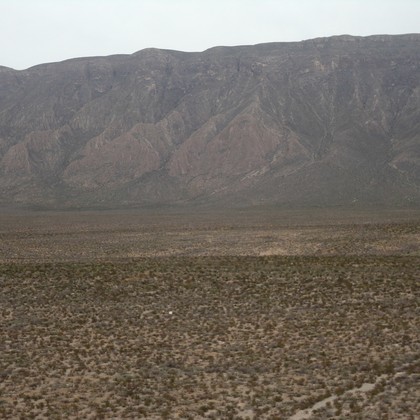
In winter scrub, chaparral, riparian woodland, dry-country thickets, the edges of oak and pine-oak forest, gardens and parks, mainly in lowlands and middle elevations. It breeds in dense scrub and on wooded slopes. It searches foliage for insects, including dead leaf clusters, and takes nectar, sap and berries.
Where the bird is most at home, classified by the vegetation units of Mexico and Central America.




Range and movements
Breeds in Alaska, Canada and the western United States, and in the guide area in north-western Baja California and on the islands off its coast. Winters from the southern United States through northern and central Mexico to Oaxaca and Chiapas, in small numbers to Guatemala; rare further south.
- Winter visitor (c. Oct–Mar)
- dark = core range, pale = thinly spread
How and when to look
In winter often seen in scrub and gardens on the Mexican Plateau and in Baja California. The sharp chet call gives it away in dense cover.
Conservation status
Not threatened (LC). Widespread and common; numbers are fairly stable in the long term.
Scientific name
Leiothlypis celata | (Say, 1822)
Say described the species in 1822 as Sylvia celatus; because it was later moved to another genus, the author and year stand in brackets. The genus Leiothlypis was introduced in 2008 by Sangster. Leiothlypis is Ancient Greek, from leios 'plain, smooth' and thlypis, an unidentified small bird mentioned by Aristotle. celata is Latin for 'concealed', after the orange crown patch usually hidden under the green feathers. The specimen the first description was based on came from near Omaha, Nebraska (USA).