All species › Owls › Owls › Burrowing Owl
Position in the tree Birds Aves › Birds with a flexible palate Neognathae › All other modern birds Neoaves › Landbirds Telluraves › Raptors, owls, kingfishers and woodpeckers Afroaves › Hawks and owls Hieraves
Burrowing Owl | Athene cunicularia
Holenuil | Tecolote llanero
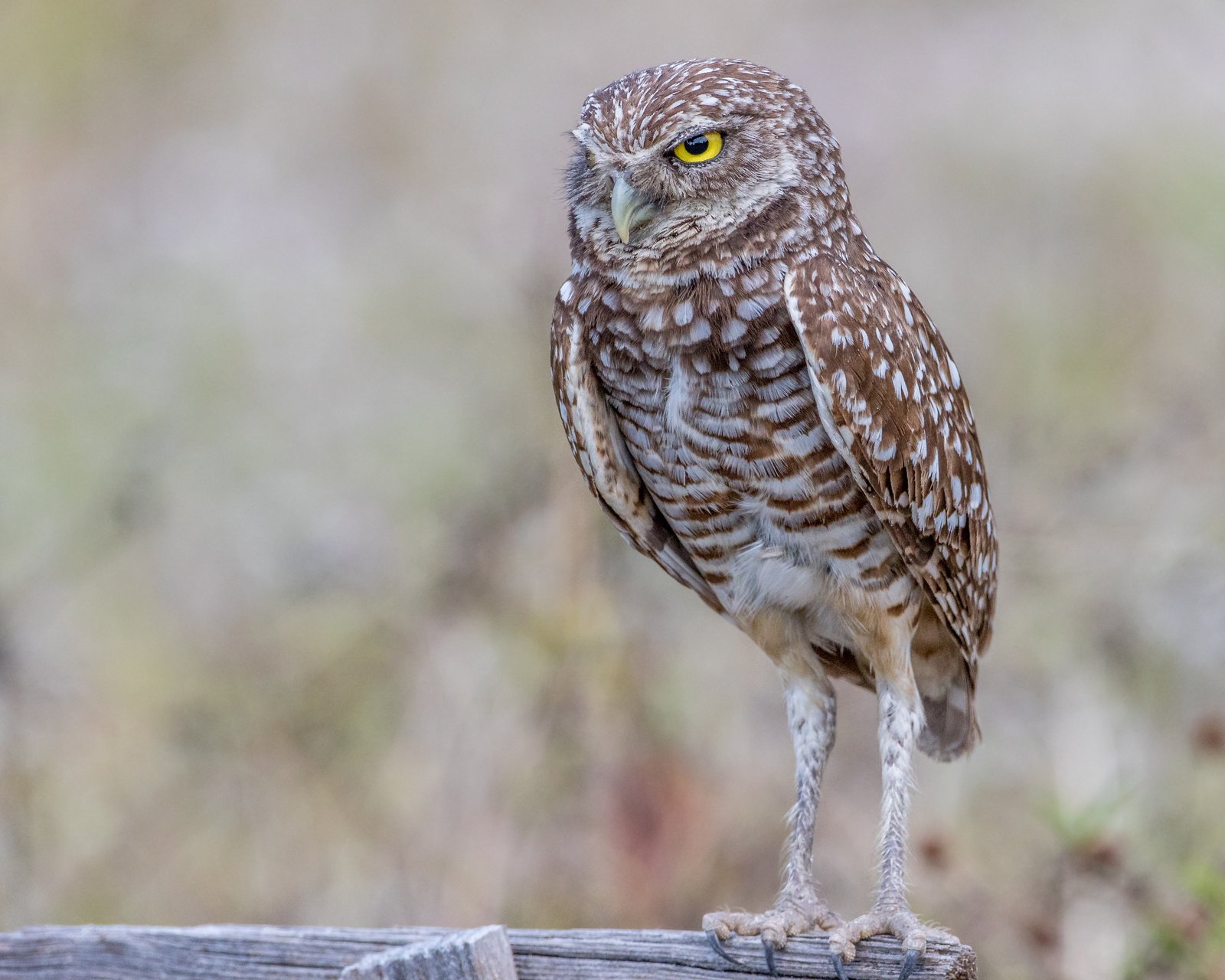
The Burrowing Owl is a small, long-legged owl of open country that ranges from Canada to Tierra del Fuego. It lives on the ground, nests in burrows, often abandoned burrows of prairie dogs or ground squirrels, and is also active by day. In the guide area it is resident in northern and central Mexico; birds from North America winter in Mexico and northern Central America.
Voice
The male's song is a soft, two-part coo-cooo, mainly at night and at dusk. When alarmed a rapid chattering kak-kak-kak. Young in the burrow make a hissing sound that resembles the rattle of a rattlesnake.
Recording: Manuel Grosselet — CC BY-NC-SA 4.0 · converted to mono · xeno-canto
Identification
19–25 cm, with long, sparsely feathered legs, a round head without ear tufts, yellow eyes and a short tail. The upperparts are sandy brown with white spots; a white eyebrow runs above the eye and the throat is white, bordered by a dark band. The underparts are white with brown barring, especially on the breast. Juveniles have a plain buff belly. It often stands upright on a mound, a post or a fence and bobs when alarmed.
Confusion species
The Short-eared Owl Asio flammeus also lives in open country, but is much larger, with long wings, and hunts in low flight. Pygmy owls (Glaucidium) and the Elf Owl Micrathene whitneyi are smaller, have short legs and live in trees or cacti. With its long legs and life on the ground, the Burrowing Owl cannot be confused with any other owl in the guide area.
Habitat
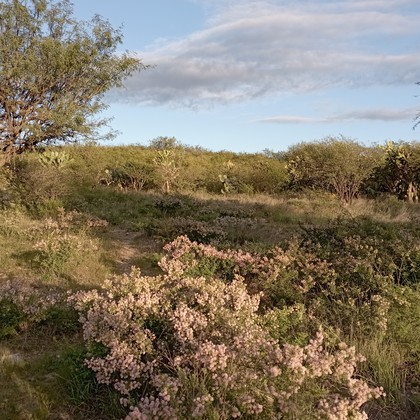
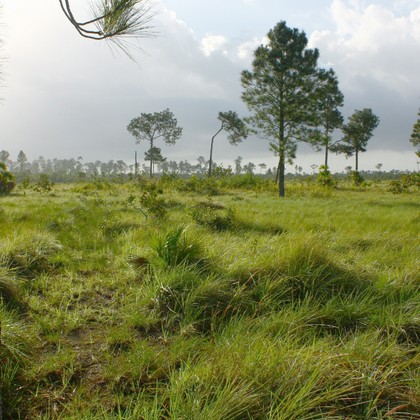
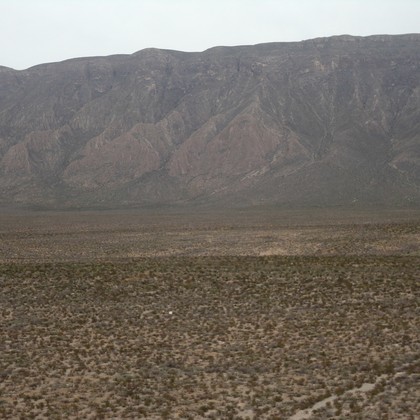
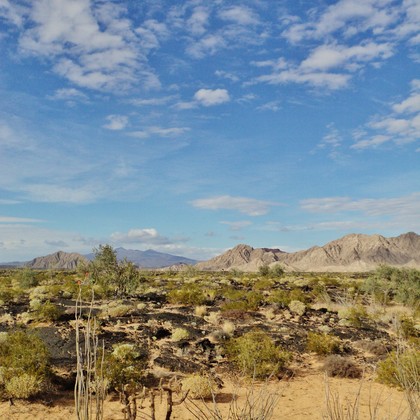
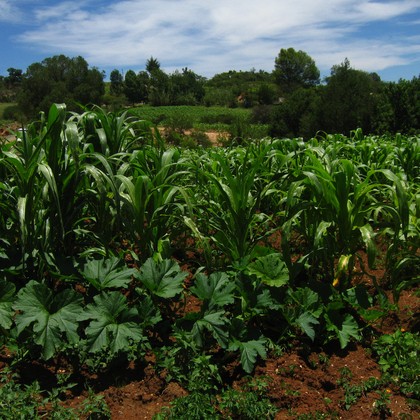
Open, dry country with short grass or bare ground: semi-desert grassland, prairie-dog colonies, fields, pastures, along irrigation canals, on airfields and waste ground and in coastal dunes. It nests in a burrow in the ground, usually an abandoned mammal burrow. It hunts at dusk and at night, but also by day, taking insects, especially beetles and grasshoppers, as well as mice, lizards and small birds.
Where the bird is most at home, classified by the vegetation units of Mexico and Central America.


Range and movements
Resident in northern and central Mexico, mainly on the plains and plateaus of Baja California, Sonora, Sinaloa, Chihuahua, Durango, Coahuila and Nuevo León, and south to the plateau around Mexico City and Hidalgo. A separate subspecies is resident on Isla Clarión in the Revillagigedo Islands. In winter, roughly from October to April, birds from North America arrive; they move south to the Gulf coast, southern Mexico, Belize, Guatemala, El Salvador and Honduras, and rarely to Nicaragua and Costa Rica. Outside the guide area in western Canada and the United States, Florida, the Caribbean islands and much of South America.
- Resident
- Summer visitor (c. Apr–Sep)
- Winter visitor (c. Oct–Mar)
- Passage (Mar–Apr, Oct–Nov)
- dark = core range, pale = thinly spread
How and when to look
In northern Mexico it is seen mainly in prairie-dog colonies, for example in the grasslands around Janos in Chihuahua, and along fields and irrigation canals in the Mexicali Valley and in Sonora and Sinaloa. By day birds often stand at the burrow entrance or on a post. Wintering birds in Central America often sit on airfields, waste ground and in coastal dunes.
Conservation status
Not threatened, but numbers in North America and northern Mexico have declined through the loss of prairie-dog colonies, more intensive agriculture and the use of insecticides. In farmland with irrigation canals it can be locally numerous.
Scientific name
Athene cunicularia | (Molina, 1782)
Molina described the species in 1782 as Strix Cunicularia; because it was later moved to another genus, the author and year stand in brackets. The genus Athene was introduced in 1822 by Boie. Athene refers to the Greek goddess Athena, whose emblem was the owl. cunicularia is Latin for 'miner, burrower' (from cuniculus 'tunnel, rabbit'), after its nesting in burrows. The specimen the first description was based on came from Chile.