All species › Passerines › Tyrant flycatchers and allies › Black-capped Flycatcher
Position in the tree Birds Aves › Birds with a flexible palate Neognathae › All other modern birds Neoaves › Landbirds Telluraves › Falcons, parrots and passerines Australaves › Falcons and passerines Eufalconimorphae › Parrots and passerines Psittacopasserae
Black-capped Flycatcher | Empidonax atriceps
Zwartkapfeetiran | Mosquero cabecinegro
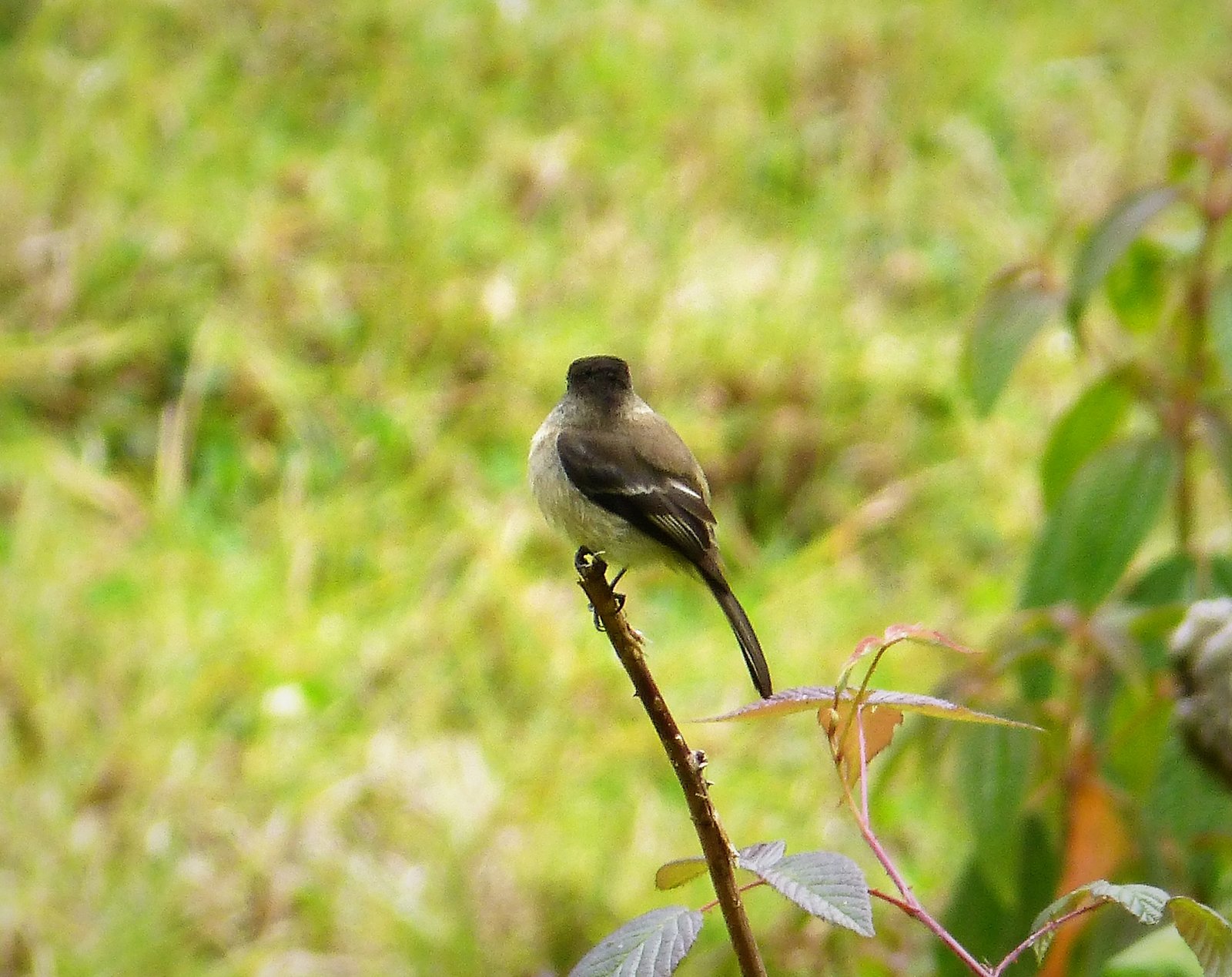
The Black-capped Flycatcher is a small Empidonax flycatcher of the highest mountains of Costa Rica and western Panama. Its blackish crown and white eye-ring distinguish it from the other Empidonax of the guide area. It often perches low and in full view at forest edges and in clearings.
Voice
A short, soft, high call, and in the breeding season a short, squeaky song.
Recording: Allen T. Chartier — CC BY-NC-SA 3.0 · shortened to the first 60 s, mono · xeno-canto
Identification
12 cm. Crown blackish, rest of the head dark greyish brown, with a white eye-ring that is wider behind the eye. Back dark olive-brown. Throat greyish white, breast greyish brown to olive-grey, belly pale yellow. Wings dark with two pale, brownish wing-bars. Bill short, the lower mandible paler. Male and female are alike.
Confusion species
Yellowish Flycatcher Empidonax flavescens lives lower in the mountains, is olive-green with yellow underparts and has an olive head without a dark crown, with an eye-ring drawn out into a point behind the eye. Northern Tufted Flycatcher Mitrephanes phaeocercus has a pointed crest and a cinnamon breast.
Habitat
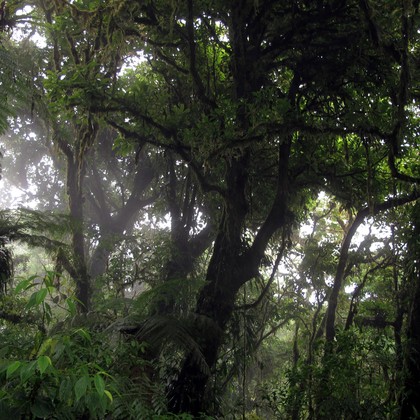
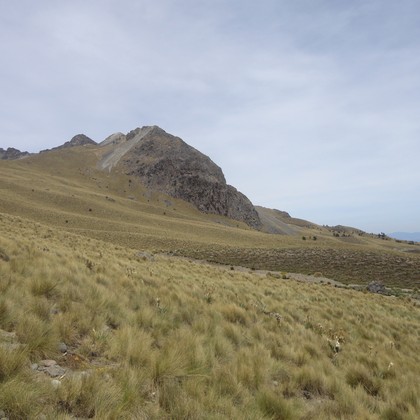
Edges and clearings of montane rainforest and oak forest, also scrub, pasture with trees and vegetation around the treeline, mainly above about 2000 m. It catches insects from a low, open perch such as a shrub, branch or post.
Where the bird is most at home, classified by the vegetation units of Mexico and Central America.

Range and movements
Only in the guide area: the mountains of Costa Rica (Cordillera de Talamanca and the highest parts of the Cordillera Central) and western Panama (Chiriquí).
- Resident
- dark = core range, pale = thinly spread
How and when to look
Regularly found in the higher parts of the Cordillera de Talamanca, such as around Cerro de la Muerte and in the San Gerardo de Dota valley, often perched on a post or branch at a forest edge.
Conservation status
Not threatened. Common within its small range, much of which lies in protected areas.
Scientific name
Empidonax atriceps | Salvin, 1870
Salvin described the species in 1870 and placed it straight away in the genus where it still stands. The genus Empidonax was introduced in 1855 by Cabanis. Empidonax is Greek, from empis 'gnat' and anax 'master': 'gnat-king', after its insect hunting. atriceps is Latin, from ater 'black' and -ceps '-headed', after the black cap. The specimen the first description was based on came from Volcán Barú (Chiriquí), Panama.