All species › Passerines › Tyrant flycatchers and allies › Buff-breasted Flycatcher
Position in the tree Birds Aves › Birds with a flexible palate Neognathae › All other modern birds Neoaves › Landbirds Telluraves › Falcons, parrots and passerines Australaves › Falcons and passerines Eufalconimorphae › Parrots and passerines Psittacopasserae
Buff-breasted Flycatcher | Empidonax fulvifrons
Blonde feetiran | Mosquero pecho leonado
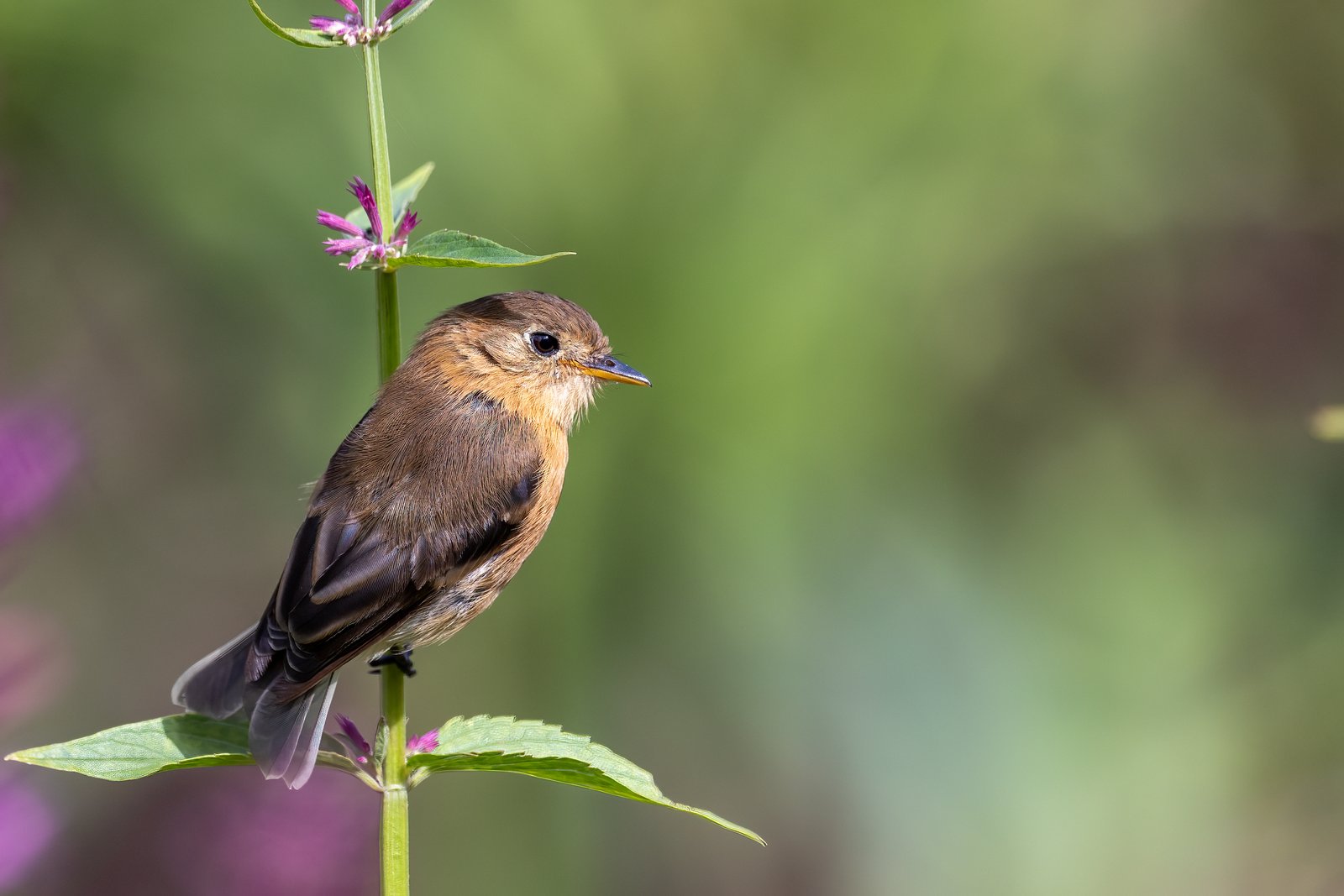
The Buff-breasted Flycatcher is the smallest Empidonax flycatcher and the only one with a warm buff breast. It lives in open pine and pine-oak woodland in the mountains of Mexico and northern Central America. The northernmost birds, in northern Mexico and south-eastern Arizona, move away in winter.
Voice
The call is a short, dry pit. The song is a quick chicky-whew, often alternated with other short phrases.
Recording: Richard E. Webster — CC BY-NC-SA 4.0 · shortened to the first 60 s, mono · xeno-canto
Identification
12–13 cm. Upperparts greyish brown, head slightly greyer. Throat pale buff, breast warm buff to cinnamon, belly paler, pale buff to whitish. A white eye-ring. Wings dark with two white to pale buff wing-bars. Bill small, the lower mandible pale. Male and female are alike; young birds are less warmly coloured.
Confusion species
Northern Tufted Flycatcher Mitrephanes phaeocercus also has a cinnamon breast, but is larger, with a pointed crest, an olive back and a yellow belly. Least Flycatcher Empidonax minimus and the other grey Empidonax species lack the buff breast. Pine Flycatcher Empidonax affinis is larger and more olive, with a yellowish belly.
Habitat
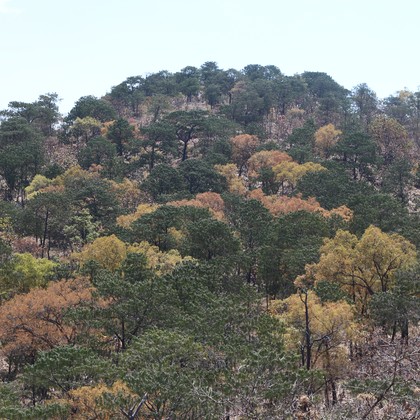
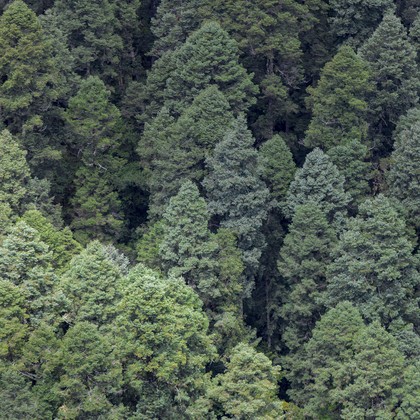
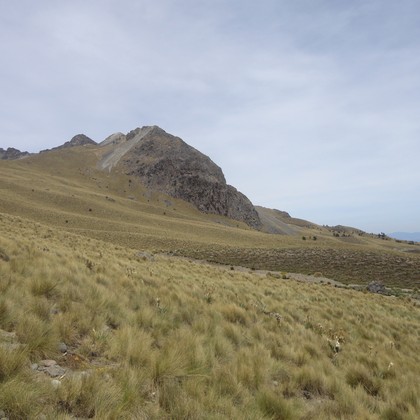
Open pine and pine-oak woodland with grassy openings and clearings, also wooded canyons and forest edges, mainly above about 1500 m. It catches insects from a branch in the lower parts of the trees.
Where the bird is most at home, classified by the vegetation units of Mexico and Central America.

Range and movements
From south-eastern Arizona and extreme south-western New Mexico through the mountains of Mexico, mainly the Sierra Madre Occidental and the highlands of central and southern Mexico, to the highlands of Guatemala, El Salvador and Honduras. Birds from the north of the range winter farther south in Mexico.
- Resident
- Summer visitor (c. Apr–Sep)
- Winter visitor (c. Oct–Mar)
- Passage (Mar–Apr, Oct–Nov)
- dark = core range, pale = thinly spread
How and when to look
Often perches in full view on a low branch at the edge of a clearing in pine woodland. The warm-coloured breast is obvious in good light.
Conservation status
Not threatened. Locally fairly common in Mexico; scarce and local at the northern edge of the range.
Scientific name
Empidonax fulvifrons | (Giraud, 1841)
Giraud described the species in 1841 as Muscicapa fulvifrons; because it was later moved to another genus, the author and year stand in brackets. The genus Empidonax was introduced in 1855 by Cabanis. Empidonax is Greek, from empis 'gnat' and anax 'master': 'gnat-king', after its insect hunting. fulvifrons is Latin, from fulvus 'tawny' and frons 'forehead', after the warm buff face and breast. The specimen the first description was based on came from Miquihuana, Tamaulipas, Mexico (originally given in error as 'Texas').