All species › Passerines › New World sparrows › Bell's Sparrow
Position in the tree Birds Aves › Birds with a flexible palate Neognathae › All other modern birds Neoaves › Landbirds Telluraves › Falcons, parrots and passerines Australaves › Falcons and passerines Eufalconimorphae › Parrots and passerines Psittacopasserae
Bell's Sparrow | Artemisiospiza belli
Bells gors | Zacatonero de artemisa
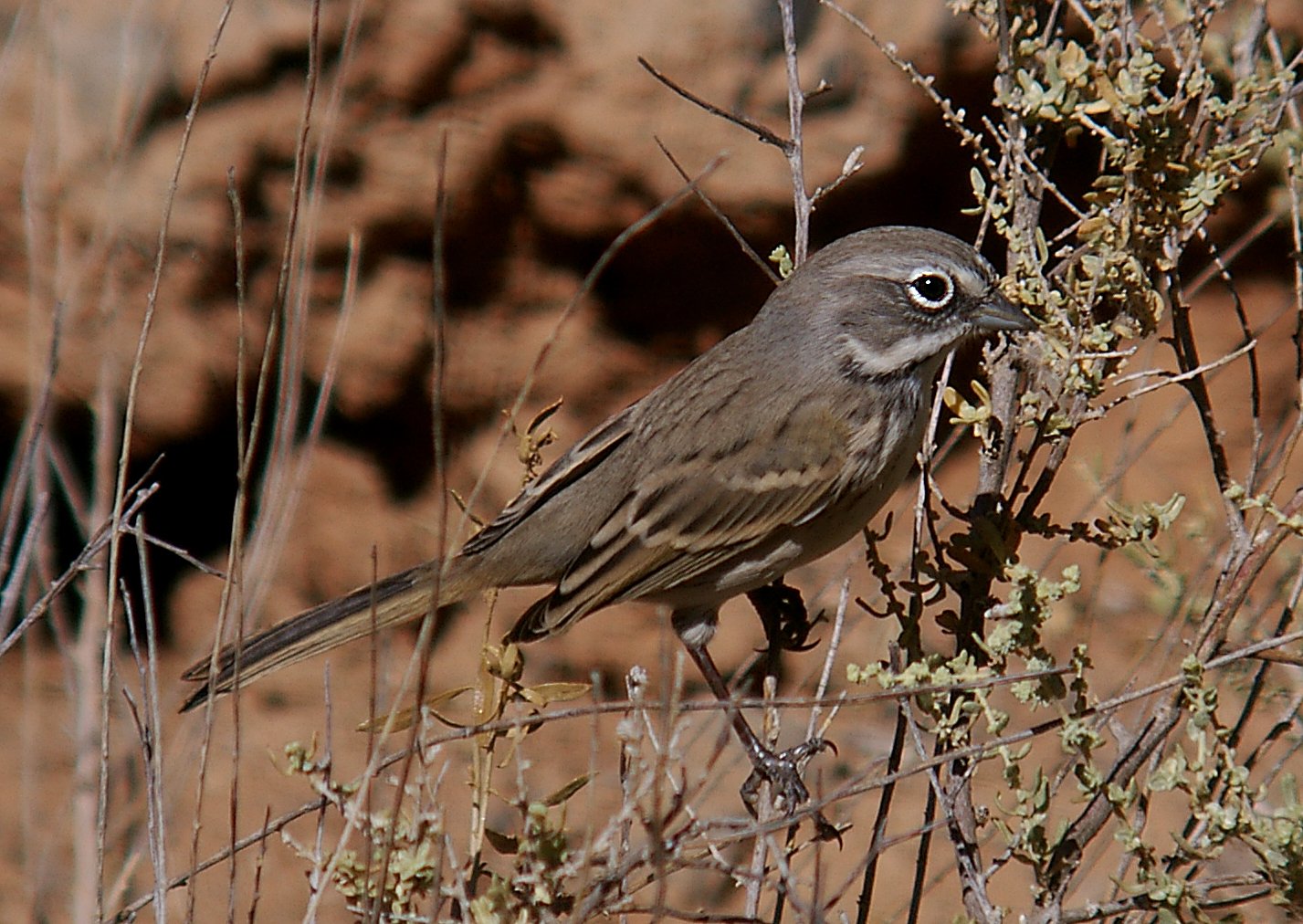
Bell's Sparrow is a small, grey sparrow of chaparral and desert scrub, with a dark breast spot and a clearly patterned head. It is resident in California and Baja California; a pale interior form from California winters partly in the north of the guide area. Until 2013 it was treated together with Sagebrush Sparrow as a single species.
Voice
The song is a short, stuttering series of high, chirping and buzzy notes, often sung from the top of a bush. The call is a thin, high tseet and soft ticking.
Recording: Paul Marvin — CC BY-NC-SA 4.0 · shortened to the first 60 s, mono · xeno-canto
Identification
13–15 cm. Small and slender, with a fairly long, dark tail and a small, pointed bill. Head grey with a white spot in front of the eye, a narrow white eye-ring, a white moustachial stripe and a broad black malar stripe. Back grey-brown and largely unstreaked. Underparts white, with a dark spot in the centre of the breast and buffy, finely streaked flanks. Tail blackish. The forms in Baja California differ: birds in the north-west are dark and contrasting, those of the Vizcaíno region in the middle of the peninsula and the interior form from California are paler. The sexes are alike.
Confusion species
Sagebrush Sparrow Artemisiospiza nevadensis is paler and larger, with a distinctly streaked back and a narrower malar stripe; especially the pale forms of Bell's Sparrow are barely separable from it in the field. Black-throated Sparrow Amphispiza bilineata has a black throat and a conspicuous white supercilium. Rufous-crowned Sparrow Aimophila ruficeps has a rufous crown and no breast spot.
Habitat
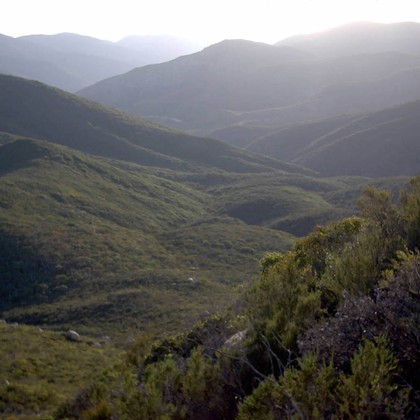
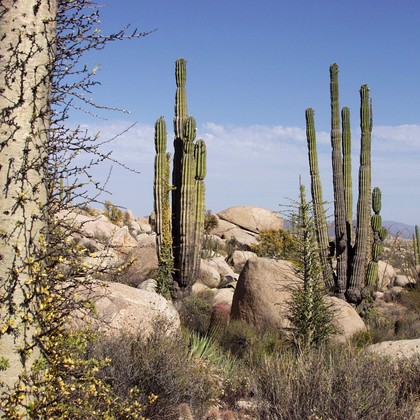
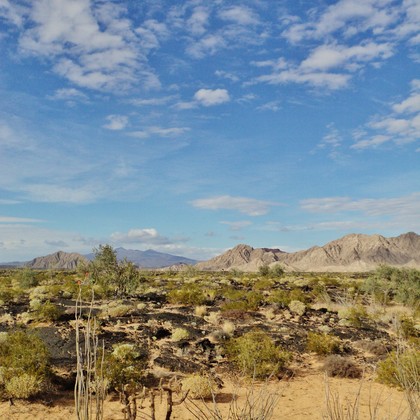
Chaparral, coastal sage scrub and open desert scrub with scattered shrubs, in winter also saltbush and creosote bush on flat desert ground. It runs quickly over the ground between shrubs with the tail raised and takes seeds and insects. In the breeding season the male sings from a high twig.
Where the bird is most at home, classified by the vegetation units of Mexico and Central America.
Range and movements
Resident in western California and in Baja California, from the border south to about the Vizcaíno region; also on San Clemente Island. A pale form breeds in interior California and winters partly in north-eastern Baja California, north-western Sonora and south-western Arizona.
- Resident
- Summer visitor (c. Apr–Sep)
- Winter visitor (c. Oct–Mar)
- Passage (Mar–Apr, Oct–Nov)
- dark = core range, pale = thinly spread
How and when to look
In the breeding season best found by watching chaparral and coastal sage scrub in north-western Baja California for a small grey sparrow singing from a bush top.
Conservation status
Least Concern (LC). Locally numerous, but chaparral and coastal sage scrub in California and northern Baja California are declining through development, agriculture and fires. The San Clemente Island form is rare.
Scientific name
Artemisiospiza belli | (Cassin, 1850)
Cassin described the species in 1850 as Emberiza belli; because it was later moved to another genus, the author and year stand in brackets. The genus Artemisiospiza was introduced in 2011 by Klicka & Banks. Artemisiospiza combines Artemisia, the sagebrush genus, with Greek spiza 'finch', after the sagebrush steppes these sparrows inhabit. belli honours the American taxidermist and collector John Graham Bell (1812–1889). The specimen the first description was based on came from near Sonoma, California.