All species › Rodents › Blind mole-rats › Podolian Mole Rat
Podolian Mole Rat | Spalax zemni
Spalax zemni | Spalax zemni
Spalax zemni is the blind mole-rat of Podolia and the Ukrainian right bank of the Dnieper. Erxleben described it in 1777 as Glis zemni, from animals in the Ternopil region; through the twentieth century it was usually called Spalax polonicus or S. podolicus in the literature, but zemni is the oldest available name and therefore has priority. The species is endemic to Ukraine and is the sister species of the Sandy Mole Rat of the Oleshky Sands; the Dnieper separates the two. It has been regarded as rare since the end of the nineteenth century. There is no Dutch or Spanish vernacular name; in Ukrainian it is called sliepak podilskyi.

Tracks
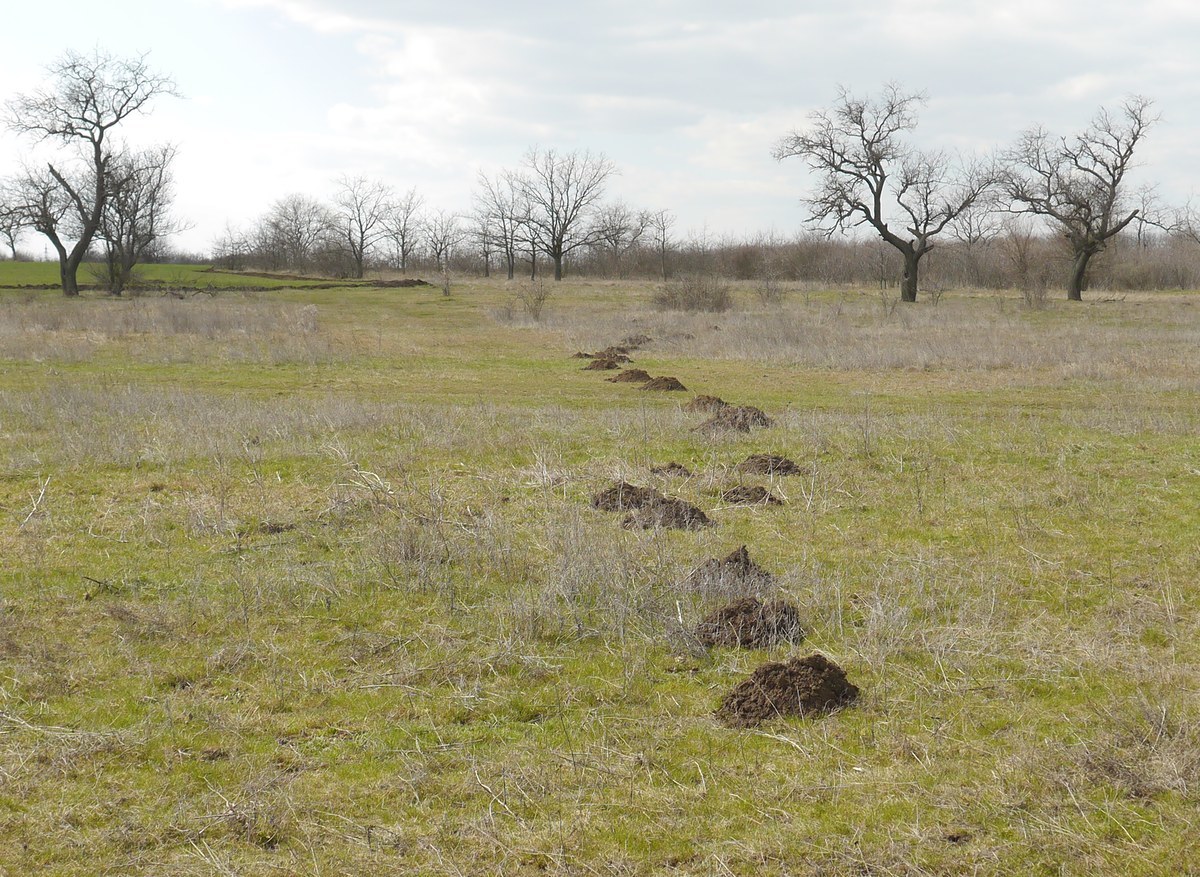
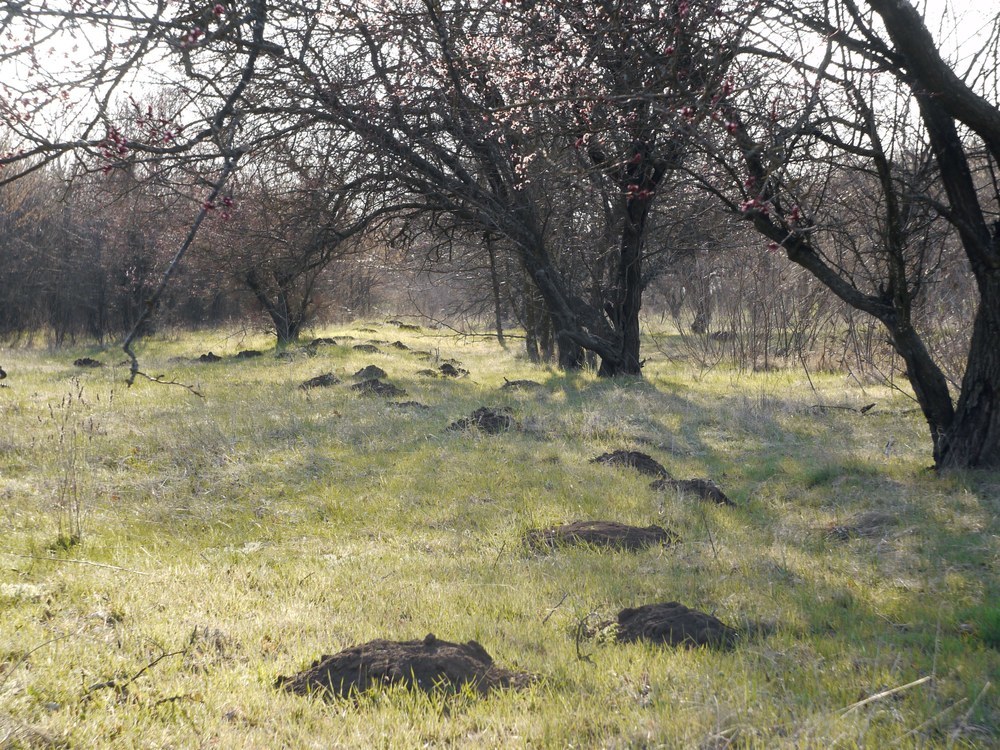
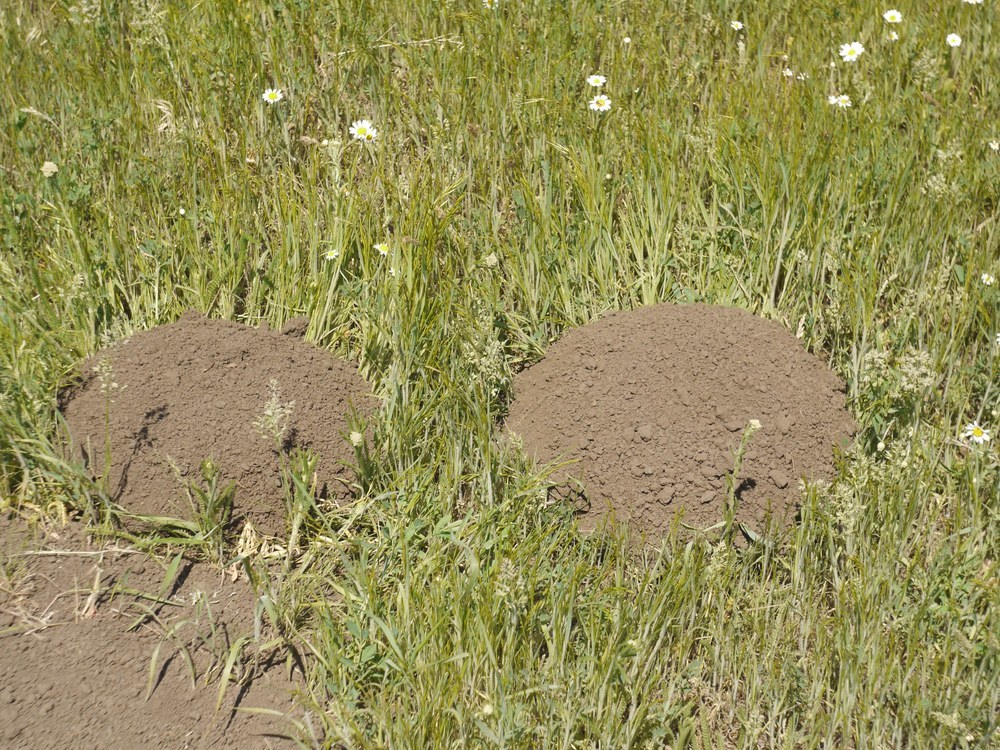
Almost only the mounds of this species are ever recorded. They measure thirty to sixty-seven centimetres across and ten to twenty-three centimetres high, are broad and low rather than conical, consist of coarse clods and have no visible tunnel mouth, because the tunnel is plugged from within. They lie close together and jointly follow the course of the burrow system. A molehill is smaller, higher, finer-grained and comes from a vertical shaft. Below ground a shallow net of feeding tunnels runs at thirteen to twenty-one centimetres, ten metres long in a young animal and up to two hundred and ten metres in an adult. Beneath it, reached by two to six vertical shafts, lie the deep chambers at ninety to two hundred and seventy-five centimetres: one or two nest chambers, three to five store chambers and latrines, with connecting tunnels that sometimes link the chambers in a ring. Further signs are gnawed roots of alfalfa, chicory and field bindweed in the tunnel, browsed seedlings of oak, mulberry and acacia, and small patches at the surface where a plant has been pulled down from below.
Identification
A large blind mole-rat of 20 to 31 centimetres and 370 to 570 grams, neckless and cylindrical, with a broad, flat, wedge-shaped head and a heavy forequarter. The fur is slate grey with a reddish tinge, darker than in most related species, with a paler grey head that may carry a white stripe or white spots, and a grey belly. Ear pinnae are absent, the eyes are reduced to tiny lenses beneath a closed fold of skin, and there is no external tail; none of the sources consulted gives a tail measurement. From the bare nose pad a fringe of pale stiff hairs runs back towards the ear region. The incisors protrude in front of the lips, so that the animal can bite into the soil with its mouth closed. The chromosome number is 2n = 62.
Similar species
Within the genus the species cannot be separated on external characters, and the chromosome number is not decisive either: every Spalax has 2n = 60 or 62. Separation rests on skull characters and mitochondrial DNA. The sister species S. arenarius is paler and lives on sand; the practical distinction is geographical: S. zemni occupies the right bank of the Dnieper, the Sandy Mole Rat the left bank. To the north-east and east the range borders that of S. microphthalmus, and in the far south-west, beyond the Dniester, that of the much smaller genus Nannospalax. Only that last distinction can be made in the field. A Spalax measures twenty to over thirty centimetres and weighs four to seven hundred grams; a Nannospalax seldom reaches half a kilo. The size difference underlies the names of the two genera (greater and lesser blind mole-rats) and was confirmed with DNA by Németh and colleagues in 2013. The mounds also differ: a Spalax places them close together, a Nannospalax in a thin line twenty to thirty metres apart. The mole is smaller, with shovel-shaped forefeet and a short tail; the water vole has external ears, visible eyes and a long tail.
Habitat
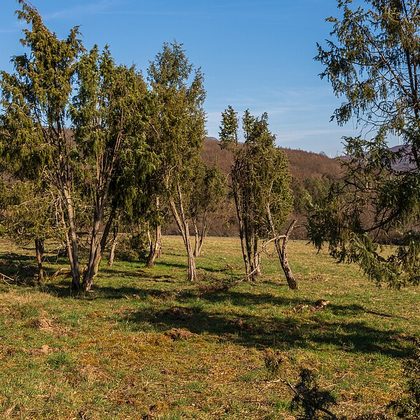
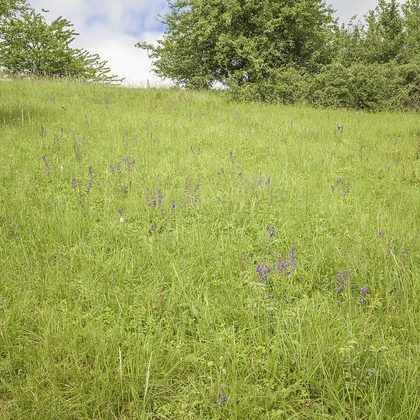
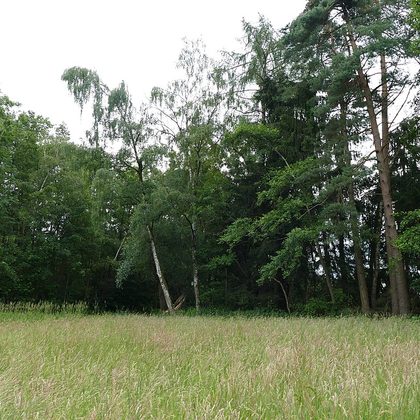
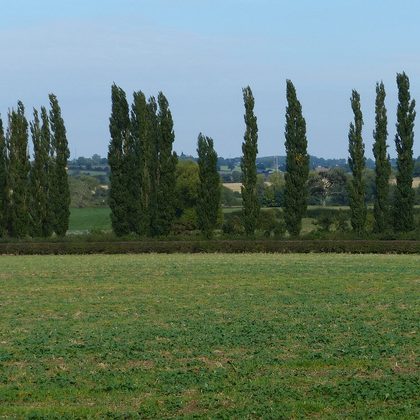
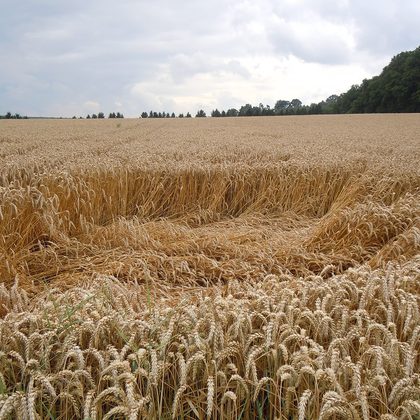
Undisturbed steppe, but in practice mainly its remnants: roadsides, railway embankments, shelterbelts and forest belts between fields, unploughed field margins and old military firing ranges, that is, places that have not been ploughed. The species also occurs in arable land and, unlike most related species, tolerates sandy soils. It depends on deep, loose, free-draining soil with an underground supply of roots, tubers and bulbs. Where deep ploughing takes place, it disappears.
Where the animal is most at home, classified with EUNIS — the European standard for habitats.

Distribution
Western and central Ukraine, from the Polish border in the north-west southwards to near the Moldovan border and eastwards into the centre of the country; the species inhabits the right bank of the Dnieper. The type locality lies in Ternopil Oblast, in Podolia. The present core areas lie in Mykolaiv and Khmelnytskyi oblasts and along the Southern Bug; records reach east into Dnipropetrovsk and Zaporizhzhia. The population is highly fragmented, so that the range on a map is considerably larger than the area of occupancy, which is estimated at about two thousand square kilometres.
- Native
- dark = core range, pale = thinly spread
Way of life
The species is active all year; unlike most subterranean mammals, digging continues through the winter months. Nothing further has been published on its daily rhythm; it is classed as crepuscular because soil is pushed to the surface mainly at the beginning and end of the day. There is no hibernation or winter torpor. Food consists of alfalfa, chicory, field bindweed, mallows and seedlings of oak, mulberry and acacia. The animals are solitary. Densities are one to eight animals per hectare, the highest values in undisturbed steppe. No data on the reproduction of this species have been published. Recorded predators are the Steppe Polecat, the European Polecat and the Long-legged Buzzard.
Where and when to look
Search in March or April in the steppe remnants of the Ukrainian right bank, such as unploughed balkas, old orchards and shelterbelts between fields. The grass is then still short and fresh soil shows dark; scan across the ground rather than just in front of you. An occupied system consists of a group of broad, low, coarsely clodded mounds lying close together along the course of the tunnel; walk the line. Fresh, damp, dark soil indicates an occupied system, bleached and overgrown mounds an abandoned one. The animal itself can only be seen after a long wait a few metres from the newest mound, until soil is pushed out from within. Do not dig: it damages the burrow system, and the species is in the Red Data Book of Ukraine. Report finds; knowledge of the distribution rests largely on isolated reports of mounds.
Conservation status
Endangered (2024). The species has been regarded as rare since the end of the nineteenth century, and its decline has since run parallel to the loss of steppe. The population is highly fragmented; the area of occupancy is about two thousand square kilometres. The main threats are conversion of steppe to cultivation and building on the remaining parts. Deep ploughing destroys the burrow system and kills the animals inside it. Because blind mole-rats have one litter a year and first breed in their second year, a lost colony is not recolonised naturally. The species is listed in the Red Data Book of Ukraine. The effects of the war since 2022 on the eastern subpopulations have not yet been fully taken into account in the 2024 assessment.
Scientific name
Spalax zemni | (Erxleben, 1777)
Erxleben described the species in 1777 as Glis Zemni; because it was later moved to another genus, the author and year stand in brackets. Spalax is Greek spalax, also aspalax, 'mole'. zemni is the animal's local Slavic name, from Polish and Ukrainian ziemia, 'earth' — the earth beast; Erxleben took the name over from older Polish literature. The specimen the first description was based on came from Ukraine, Ternopolsk.