All species › Rodents › Spiny rats and coypu › Coypu
Coypu | Myocastor coypus
Beverrat | Myocastor coypus
The Coypu is a South American rodent that reached Europe through fur farming and remained in the wild after the fur market collapsed. It is about the size of a small dog and, where it is not hunted, is also visible by day, for example along city canals. Of the European rodents it causes the most damage to banks and dykes. The best field character is the white whiskers.
Tracks
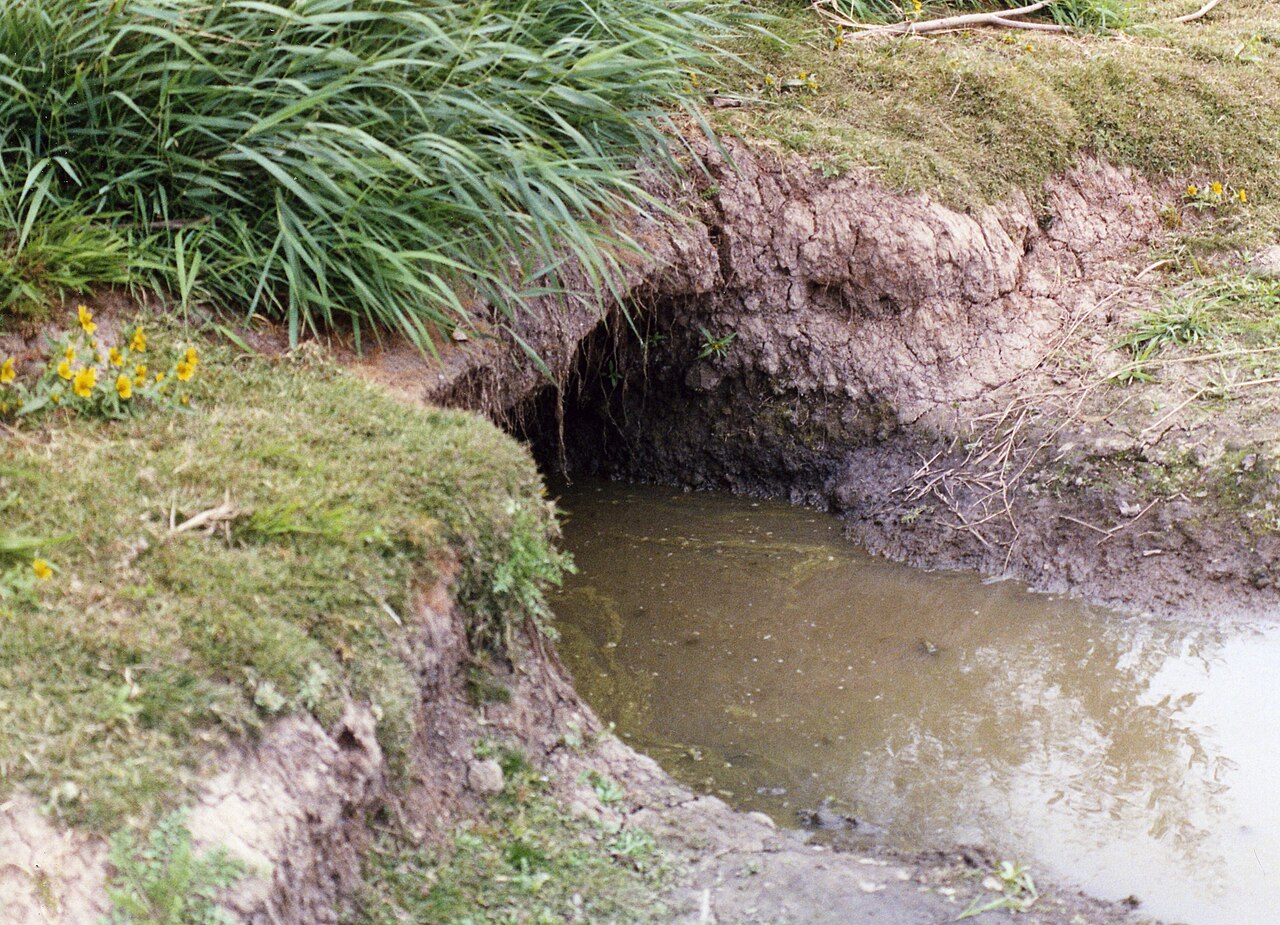
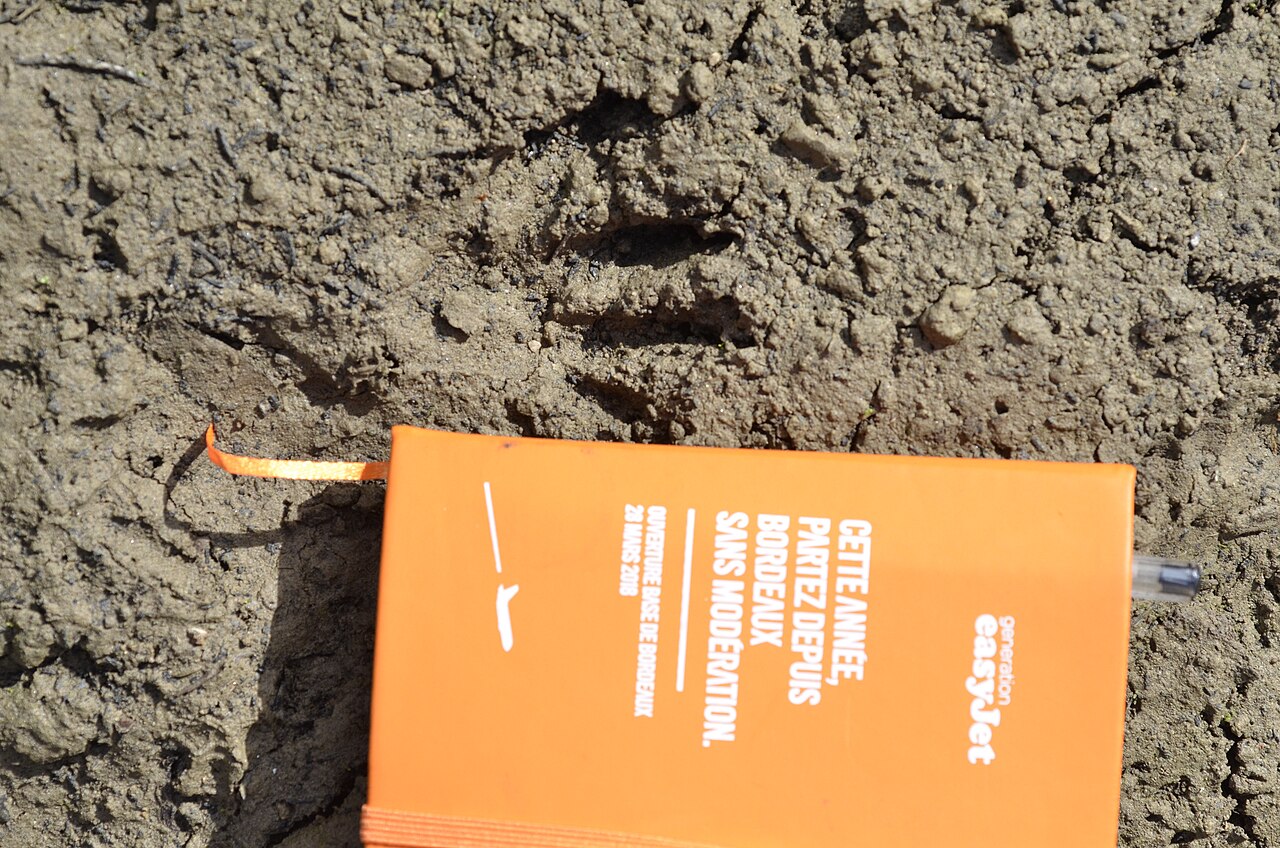
The clearest sign is the bank burrow and its consequences. The coypu digs tunnels 20 to 25 cm in diameter that start just above or below the waterline and run metres into the bank, often with several entrances and side tunnels. Above such a tunnel system the turf subsides, the bank erodes and an overhang forms that eventually slides into the water. On quays, ditches and dyke slopes this is the damage that water managers look for. There are also feeding areas: reed and reedmace stands grazed down to cropped stubble, and in winter peeled rhizomes on the bank; in adjacent fields it eats sugar beet, maize and cereals. It makes worn paths and slides from the water up the bank, broader and muddier than those of a muskrat, and uses fixed, half-sheltered feeding places with cut stems, peelings and droppings. The dropping is a good character: a dark, almost black cylinder four to seven centimetres long and about a centimetre thick, with blunt ends and, seen close up, fine lengthwise grooves that occur in no other European mammal; droppings lie in groups on the bank or float in the water. The print is large: the hind foot is 12 to 15 cm long, with five long toes of which four are joined by web, so that the web leaves a flat impression between the toes in wet mud; the forefoot is much smaller and hand-shaped, with five free toes. A tail drag often runs through the trail.
In its habitat
The young
Identification
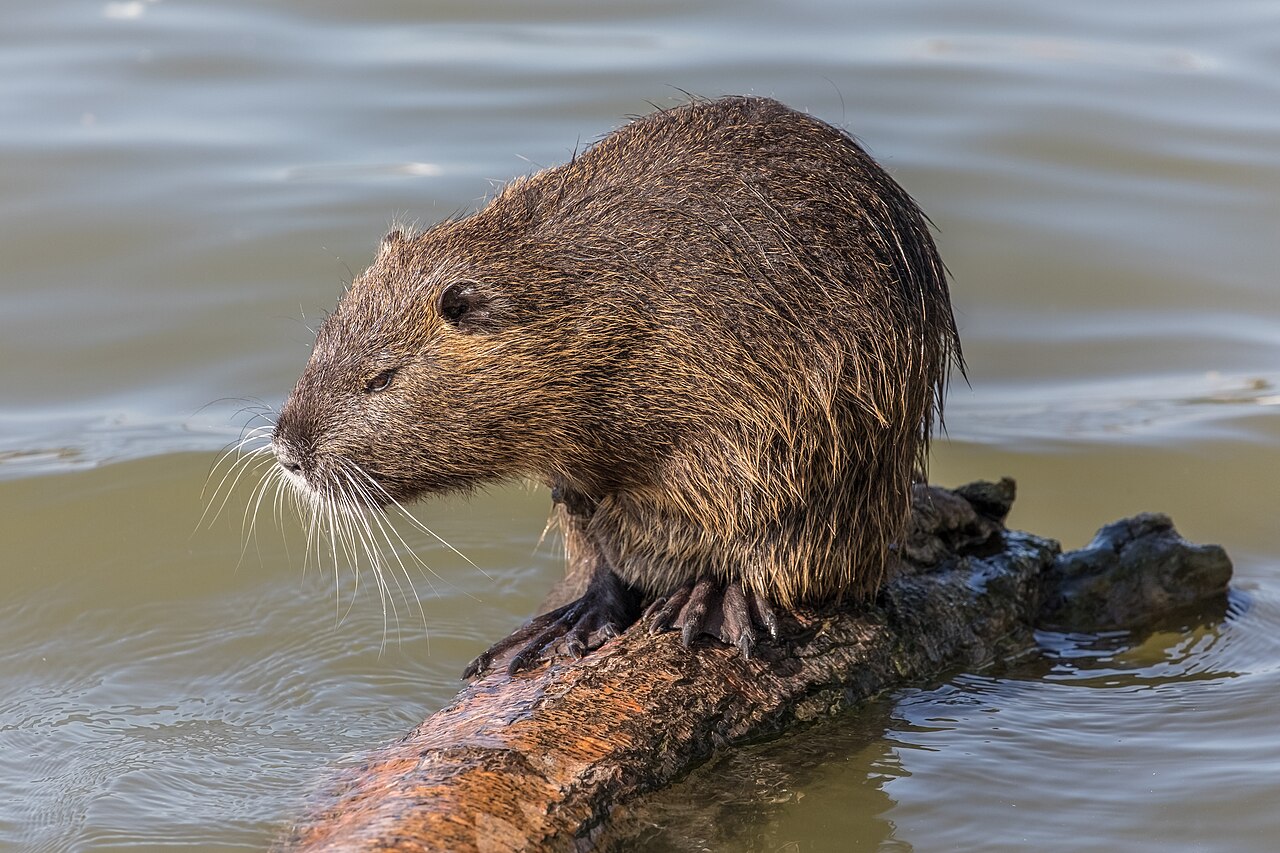
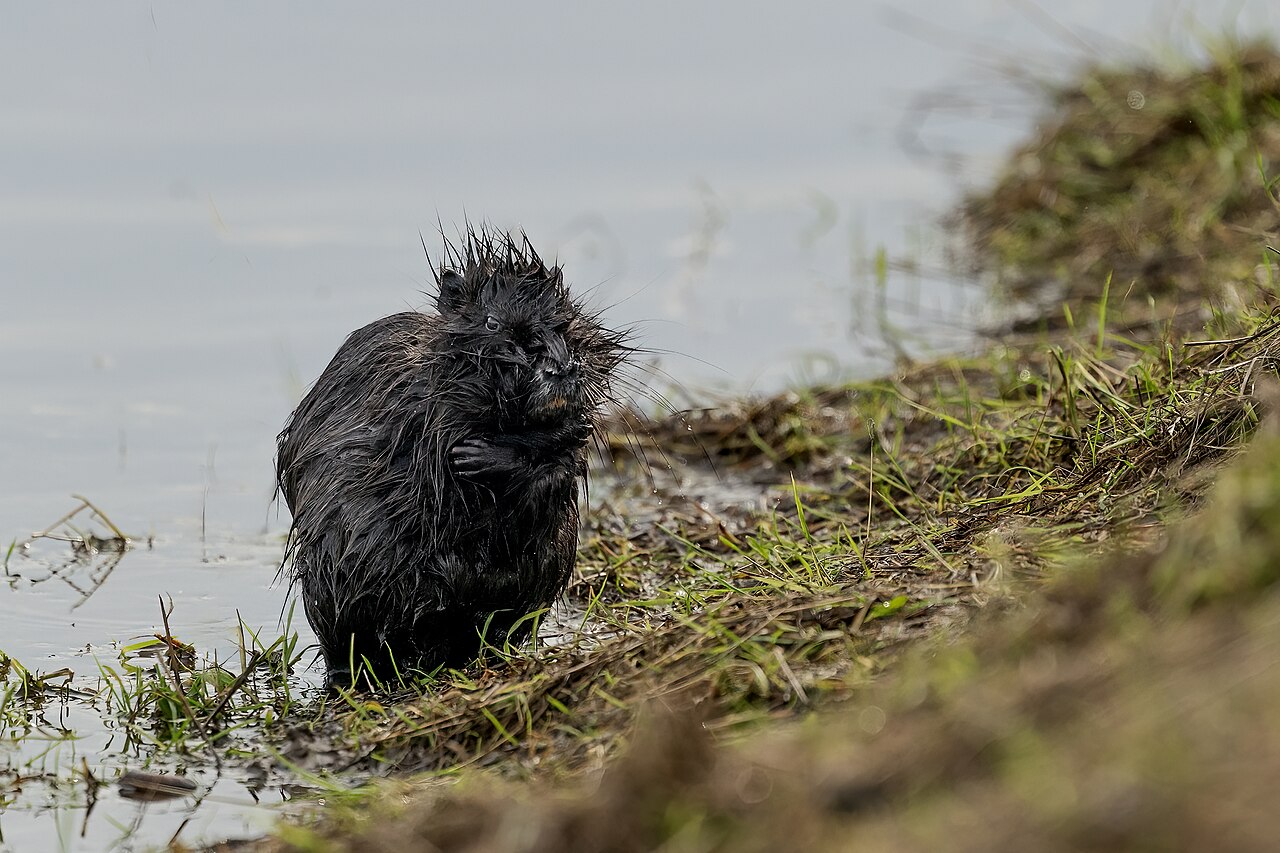
A heavily built water animal with an arched back, 47 to 58 cm head-body and five to ten kilos, twice as long as a muskrat and half as long as a beaver. The coat is shaggy and yellow-brown to dark brown, with a dense grey underfur; when dry, head and back often look greyish because of the long, coarse guard hairs. The face is decisive: a large, blunt, almost triangular head with a white patch around the nose and upper lip and long white whiskers, small round ears and small, high-set eyes. The incisors are bright orange to red-orange and visible at a distance on a feeding animal. The tail is 34 to 40 cm long, round in cross-section, thinly haired and scaly; this round tail is the quickest distinction from beaver and muskrat. The hind feet are large and have webs between four of the five toes; the outer toe is free. The female's teats are set high on the flank, so that the young can suckle while she swims.
Similar species
The Eurasian Beaver is almost twice as long and much heavier, and has a broad, horizontally flattened, naked tail that no other European mammal has; it fells trees, the coypu does not. The Muskrat is less than half as long, darker, without a white muzzle, and has a tail flattened sideways. If the animal swims away and only the head is visible, the size of the head and, if the tail breaks the surface, its shape are decisive: round is coypu, flattened sideways is muskrat, broad and flat is beaver. On land identification is easy: the coypu walks with a strongly arched back and low head, and often sits feeding on the bank for long periods, which the beaver rarely does. Confusion with the Otter arises only at a distance; the otter is slim, dives with a rolling movement and does not sit in the grass.
Habitat
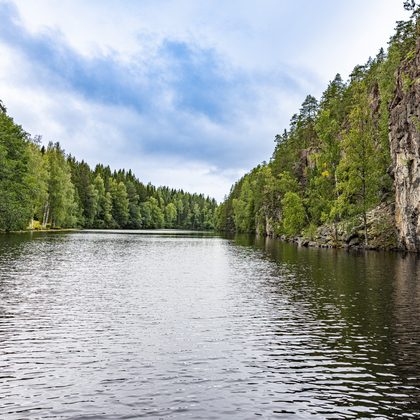
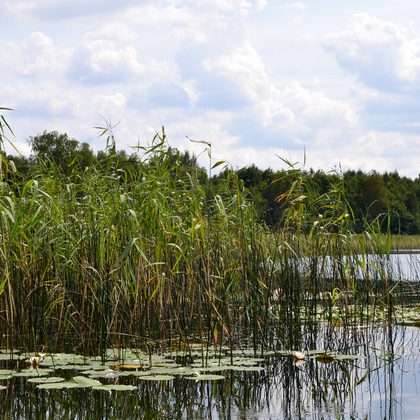
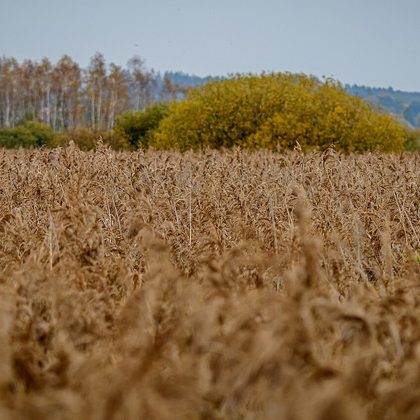
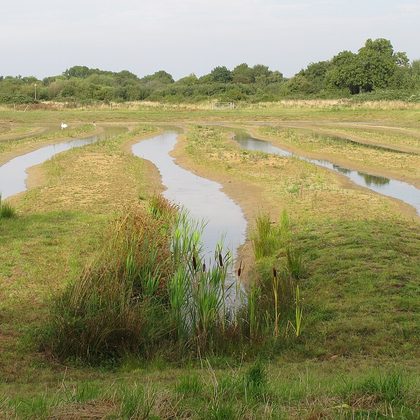
Quiet fresh and slightly brackish waters with a vegetated, soft bank that can be dug into: rivers and backwaters, canals, ditches, ponds, city canals, fish ponds, reed marshes, marshy floodplains and wet grassland. The species prefers dense bankside vegetation of reed, reedmace and bulrush and banks with enough height difference for a burrow. Adjacent arable land serves as a food source. The limit of the European range is determined not by food but by winter: in prolonged frost tail and feet freeze and entire populations die, so that a series of mild winters leads to expansion north and east and a hard winter to a setback.
Where the animal is most at home, classified with EUNIS — the European standard for habitats.


Distribution
Native to southern South America: Chile, Argentina, Uruguay, Paraguay, Bolivia and southern Brazil. In Europe the species derives from fur farming, which from the 1920s and 1930s had farms in almost every European country; when the fur market collapsed, animals were released or escaped, and where the winters allowed, they remained. The centre of the range is in France and Italy, where tens of thousands live in the Po plain, the Camargue and the western river valleys, surrounded by Germany, the Netherlands, Belgium, Czechia, Switzerland, Austria and the Balkans. In the Low Countries the species arrives mainly from Germany and Wallonia and is trapped by the water boards. In Spain the species became established from France, with nuclei in Navarre, Gipuzkoa, Aragon and the Ebro valley and scattered records in Catalonia and along the Cantabrian coast; it is listed in the Spanish catalogue of invasive alien species and is controlled. In Britain the species no longer occurs: the East Anglian population, derived from fur-farm escapes in the 1920s, was eradicated between 1981 and 1989; this is regarded as the standard example of a successful eradication of an established mammal.
- Established introduction
- dark = core range, pale = thinly spread
Way of life
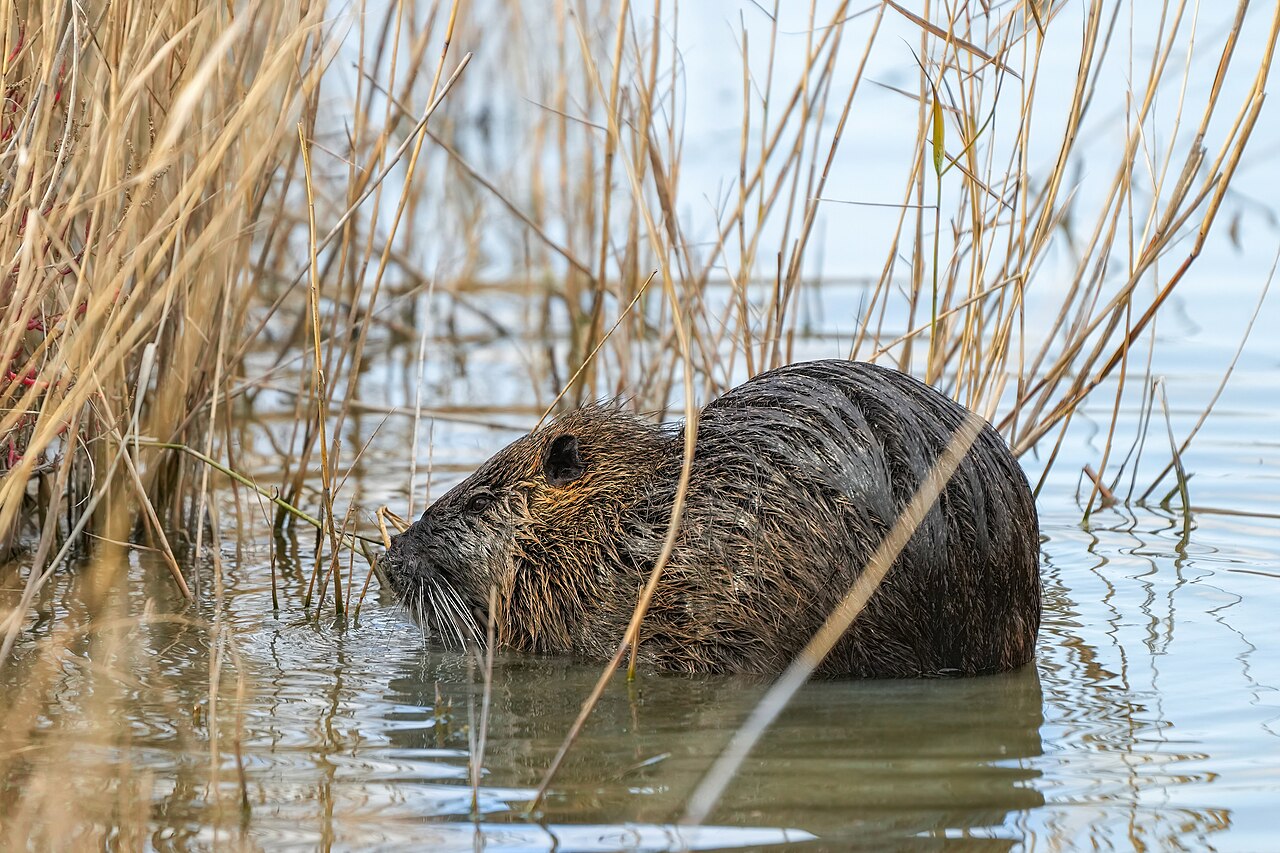
Mainly nocturnal and crepuscular, but where the species is not hunted, such as in city parks, along canals and in busy nature reserves, also visible by day. The diet is almost entirely vegetarian: rhizomes, stems and leaves of reed, reedmace, bulrush and water plants, supplemented with grass, crops and occasionally freshwater mussels. The species lives in family groups of six to twelve animals sharing a burrow system, and swims with its back half above the water. Breeding is not seasonal: throughout the year, after a gestation of more than four months, long for a rodent, four to six fully furred young with open eyes are born, which swim within a day and enter the water with the mother immediately. Females are adult at six months and have two to three litters a year. In the wild an animal seldom lives beyond three years; winter is the main cause of death.
Where and when to look
The Coypu is easy to see in large parts of Europe: along a city canal, park pond or river backwater in France, northern Italy or Germany the species can usually be found quickly. In the Low Countries it is scarcer, because its presence there results from influx and the animals are trapped; border rivers and floodplains offer the best chance there. In Spain the riverside woods along the Ebro and the rivers of Navarre and Gipuzkoa at dusk are the best sites. With any water rodent, check the whiskers first: white whiskers indicate a coypu. Report a sighting in the Netherlands or Flanders to the water board or through the national recording scheme, and in Spain to the authorities; every record is relevant to control and monitoring.
Conservation status
Least Concern globally (LC, 2016). This assessment concerns South America, where the species has declined locally through hunting and marsh drainage, and says nothing about Europe. In Europe the Coypu has been on the Union list of invasive alien species of Union concern since 3 August 2016 (Regulation 1143/2014): keeping, breeding, transporting, trading and releasing are prohibited, and member states must eradicate new occurrences and manage established populations; in Spain the species is also on the national catalogue of invasive alien species. The damage is threefold. First, banks and flood defences: the burrow systems undermine dykes, embankments, locks and railway embankments; in Italy, France and the Low Countries this is the main cost item and the principal reason for control. Second, marsh vegetation: at high densities reed and reedmace vegetation disappears, and with it the breeding habitat of marsh birds such as Bittern, Little Bittern and Great Reed Warbler; freshwater mussels also decline. Third, agriculture, mainly sugar beet and maize. Public health also plays a role: the species is a suitable host for Leptospira, the agent of Weil's disease, and for the liver fluke. In Italy and France large-scale trapping began in the 1990s without numbers declining substantially; in the Netherlands the goal of pushing the species back to the national border has been achieved for the Coypu, and attention now focuses on the continuing influx from Germany. An important factor in management is public support: an animal that feeds from the hand in a city park is hard for the public to regard as a problem species.
Scientific name
Myocastor coypus | (G. I. Molina, 1782)
G. I. Molina described the species in 1782 as Mus Coypus; because it was later moved to another genus, the author and year stand in brackets. Myocastor is Greek, from mys, genitive myos, 'mouse', and kastōr, 'beaver': the mouse-beaver. coypus is the animal's Chilean name, Mapudungun coypu, which Molina took over unchanged as a noun in apposition. The specimen the first description was based on came from Chile, Santiago.