All species › Lagomorphs › Hares and rabbits › Iberian Rabbit
Iberian Rabbit | Oryctolagus algirus
Oryctolagus algirus | Oryctolagus algirus
Oryctolagus algirus is the rabbit of western Iberia and the Maghreb and has only recently been recognised as a separate species. About two million years ago the rabbits of the Iberian Peninsula became separated in two ice-age refugia — one around the Ebro and one around the Gulf of Cádiz — and the lineages have remained separate. The western lineage now bears the name Oryctolagus algirus. The species has no vernacular name of its own in English, Dutch or Spanish; in Portugal and Spain it is called a rabbit, like its eastern sister species.
Tracks
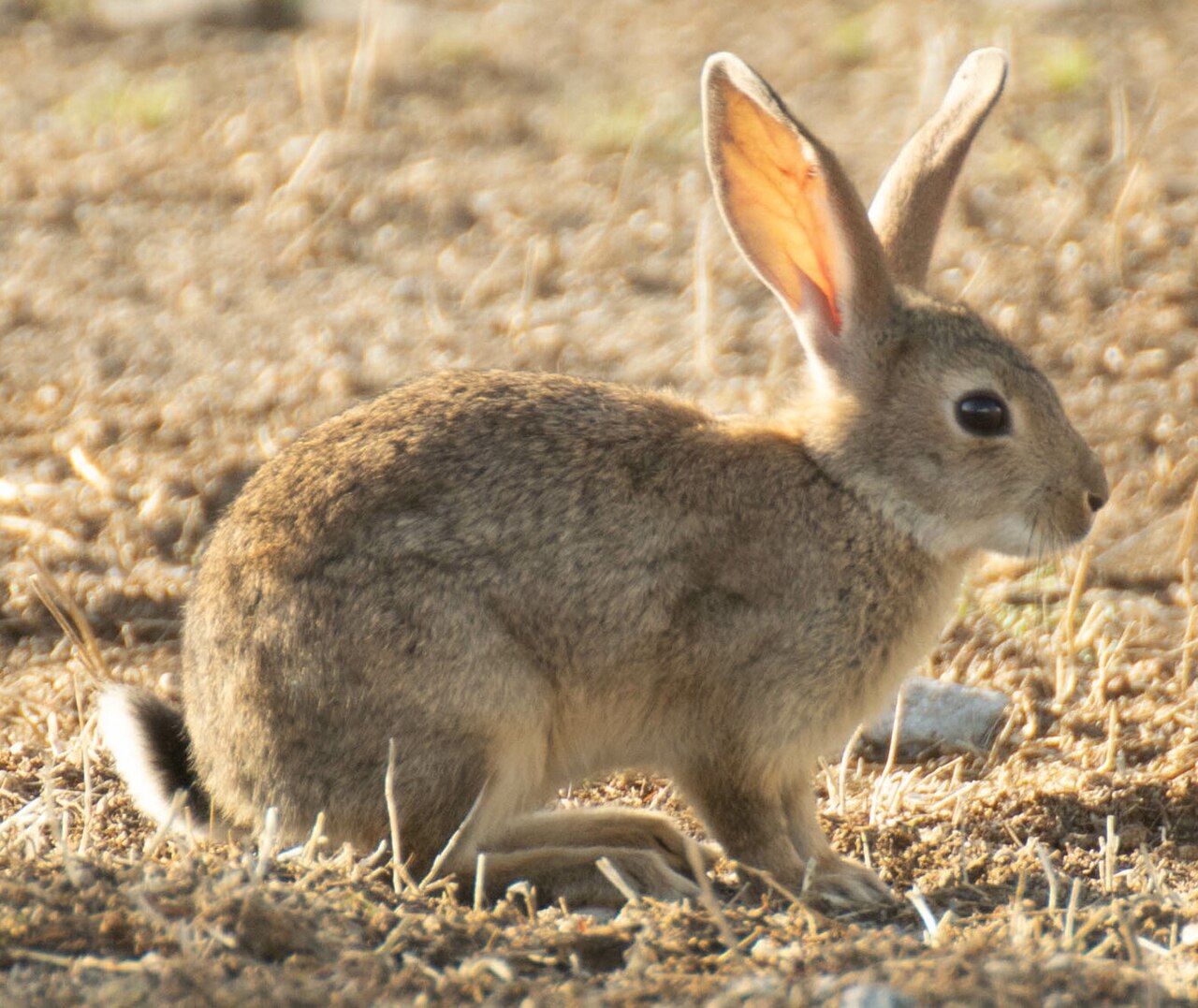
The signs of this species are numerous and conspicuous in south-western Europe. The droppings are round, dry, fibrous pellets of 7 to 12 mm, yellow-brown to almost black, and are not scattered but lie in latrines: heaps of tens to hundreds of pellets on a raised spot — a molehill, stone, termite mound or ditch edge — used for months and serving as a territorial boundary. A latrine usually lies at the edge of a warren. The warren consists of a network of holes 10 to 15 cm across, lower and broader than those of a fox, with a fan of spoil in front and worn runs through the cistus scrub. The print is small and rarely sharp: four toes, no visible pads because of the dense fur on the sole, the hind foot 3 to 4.5 cm long; the track pattern is the same Y pattern as in the hare, but smaller, with bounds of 20 to 40 cm. In the dry south the feeding signs are the quickest to recognise: grass bitten off to the ground, twigs bitten through cleanly at an angle, and bark of young cork oaks and olive trees gnawed away up to the height a sitting rabbit can reach.
In its habitat
Head close-up
Identification
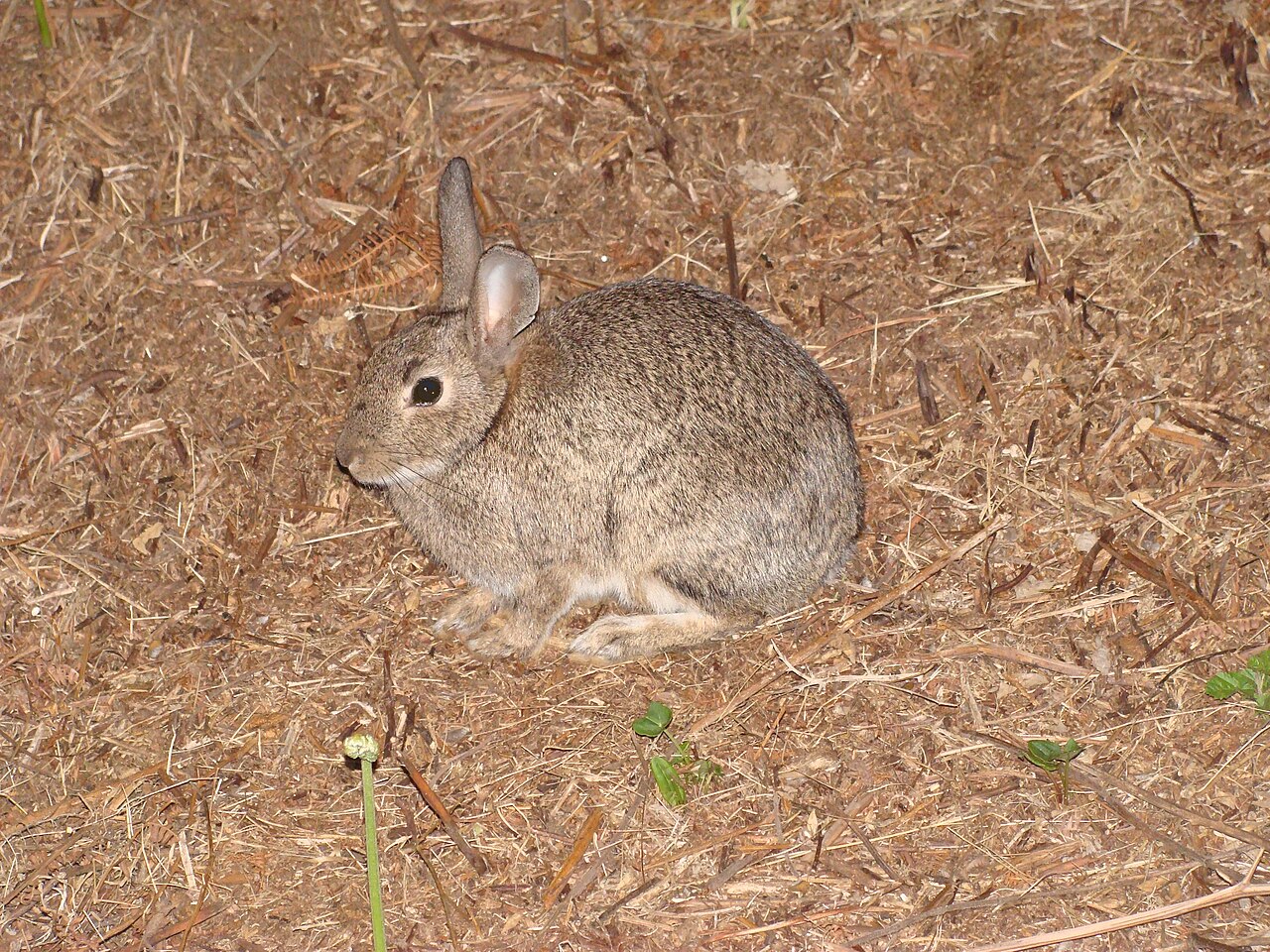
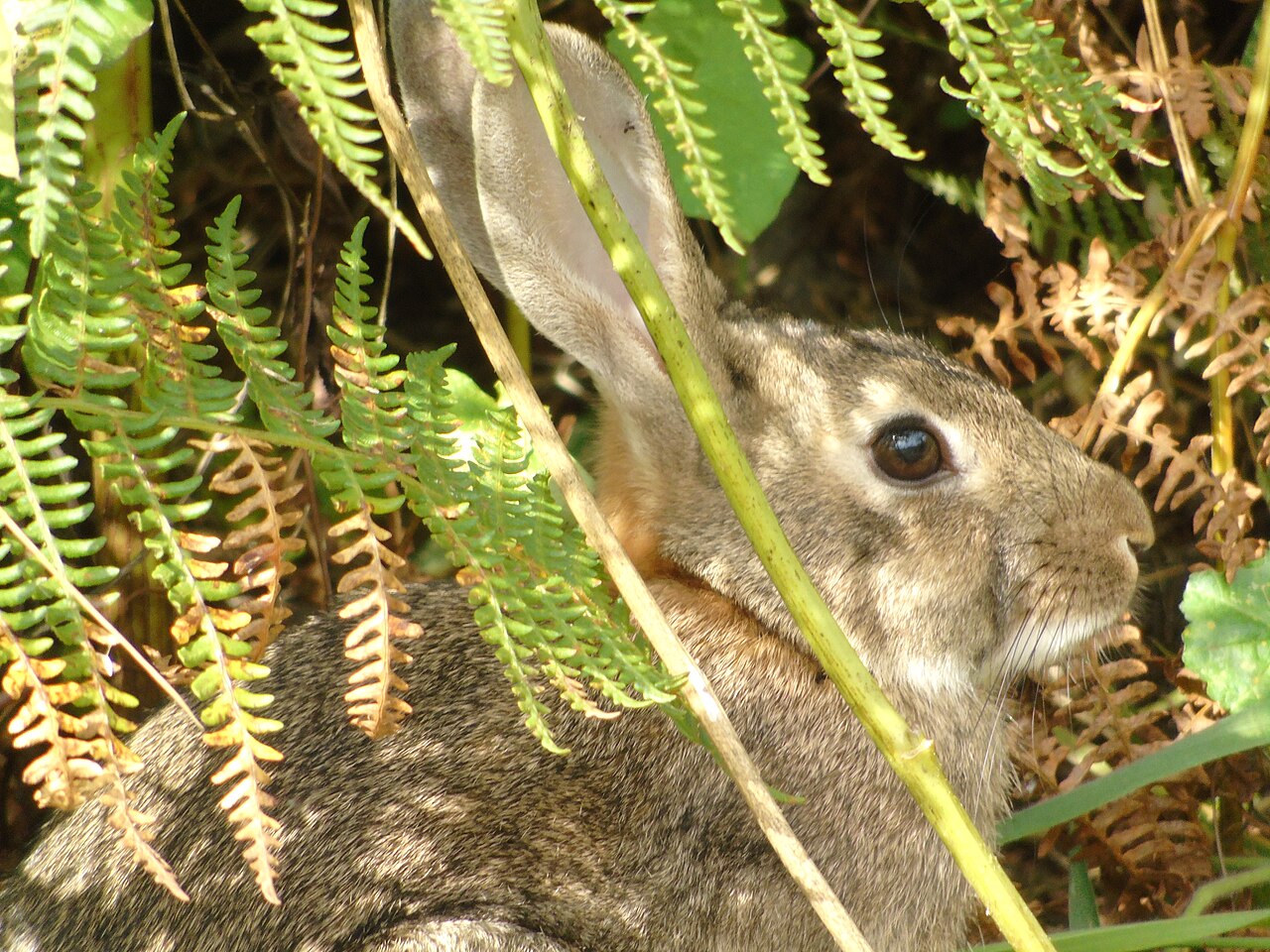
In appearance a rabbit: grey-brown with a rusty nape, short ears without black tips and a short tail that is black above and pure white below; the white underside is visible when the animal runs off. Compared with the European Rabbit it is smaller and more lightly built — about a kilogram against one and a half to two — with a proportionally smaller head and a darker, more russet coat. The weight difference is measurable in the hand but not visible in the field, and the two species cannot be separated in a photograph. In practice the locality determines the species: west of the line from Galicia to the Guadalquivir and in north-west Africa, wild rabbits belong to this species.
Similar species
Only the European Rabbit (Oryctolagus cuniculus) is a real source of confusion, and the separation is geographic rather than visual: the European Rabbit inhabits eastern and north-eastern Iberia and has spread from there across the world; this species inhabits western and south-western Iberia and North Africa. Between the two a narrow contact zone runs from Galicia to Andalusia, in which they occur together and interbreed little; this is one of the arguments for treating them as two species. Apart from the locality, only genetic analysis or skull measurements are conclusive. The Iberian Hare (Lepus granatensis) is much larger and longer-legged, with long black-tipped ears and a tail black above; it does not dig and does not use burrows. The Eastern Cottontail, introduced in Italy and France, does not occur in Iberia.
Habitat
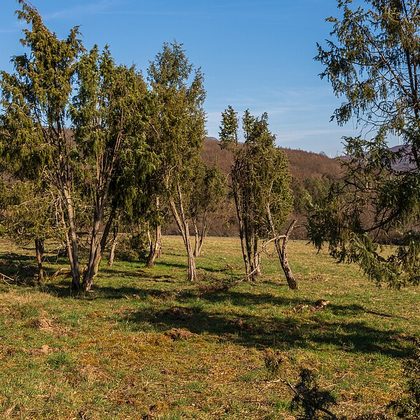
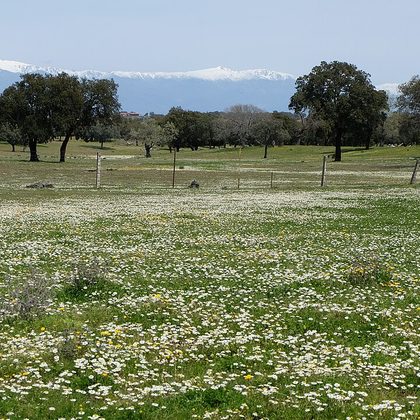
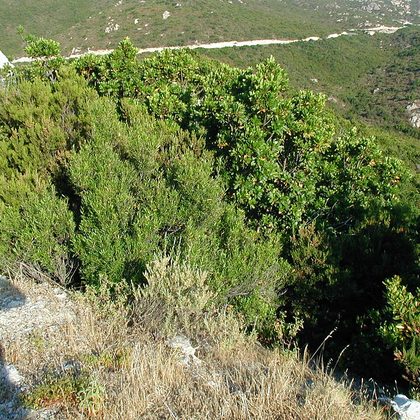
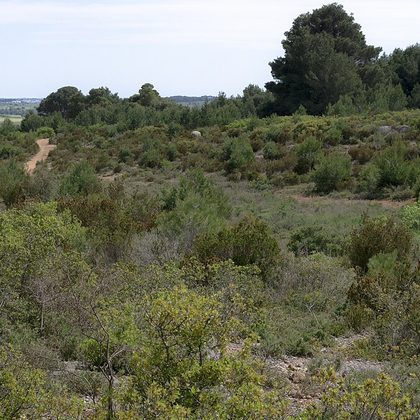
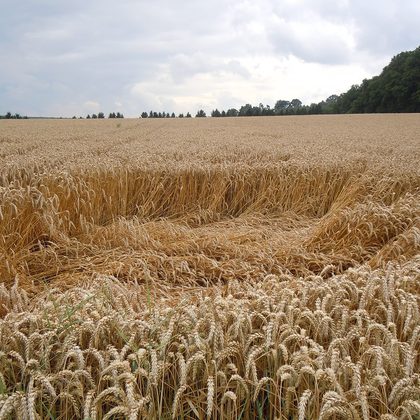
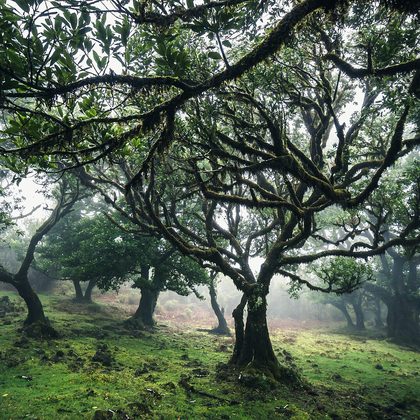
The Mediterranean mosaic landscape: cistus and heath scrub, maquis and garrigue with open patches, dunes, cork-oak and holm-oak dehesa, field margins, fallow land and the banks of roads and railways. The species needs both soil soft enough to dig in and cover at short distance, and disappears when either is lacking. In Portugal and south-western Spain it occurs from sea level to over a thousand metres, in Morocco and Algeria on the coastal plain and at the foot of the Atlas.
Where the animal is most at home, classified with EUNIS — the European standard for habitats.

Distribution
Portugal, Galicia, western and south-western Spain as far as the Guadalquivir, and north-west Africa (Morocco and Algeria). Within Spain the rabbits of Catalonia, Aragón, Navarre and the Ebro valley belong to the European Rabbit, those of Extremadura, western Andalusia, Galicia and western Castile and León to this species; the boundary is diffuse, and in Doñana and the Sierra Morena both lineages occur after decades of releases for hunting. People have taken the species to the Azores, Madeira and the Canary Islands, and it also occurs on the Balearics, Corsica, Sardinia and Sicily. The rabbits of the rest of Europe — including those in Britain and Ireland (since the twelfth century) and the Low Countries (since the thirteenth century) — and the rabbits spread by people to Australia and New Zealand belong to the eastern lineage, Oryctolagus cuniculus.
Way of life
Active mainly at dusk and at night, in quiet places also in the early morning. It grazes grasses and herbs, supplemented in summer with bark, roots and seed; it rarely drinks and obtains moisture from green food. It lives in colonies of a few to a few dozen animals around one warren, with a rank order in which the dominant female gets the best nursery. Breeding in Iberia falls mainly between November and June and depends on rainfall: in a wet year it continues longer, in a dry year it stops earlier. After 28 to 30 days two to seven naked, blind young are born in a dead-end side tunnel, which the mother lines with fur from her own belly and closes again after each visit. Litters are smaller than in the European Rabbit and the animals mature earlier. It is a main prey of Iberian Lynx, Spanish Imperial Eagle, Red Fox, Badger, Egyptian Mongoose and Eagle Owl.
Where and when to look
In the last two hours before sunset go to a dehesa or cistus field with visible latrines and sit facing into the wind ten metres from a fan of spoil. In the Coto de Doñana, the Sierra de Andújar and the Alentejo rabbits are regularly seen this way. By day the animal is seldom seen, but latrines and runs show at once whether an area is occupied; lynx surveys are also based on these signs. In western Iberia and Portugal a wild rabbit belongs to this species.
Conservation status
Not Evaluated (NE): the Red List does not yet treat the species separately, because the split dates from 2026. The study that described the species points to the consequence. The broad species Oryctolagus cuniculus has been assessed as Endangered (EN) since 2019, but that assessment averages two lineages with opposite trends: the European Rabbit holds its own or increases in eastern Spain and in the areas where it has been introduced, whereas the western lineage is declining sharply in Portugal and south-western Spain because of myxomatosis, the rabbit virus RHDV2 and the conversion of scrub to intensive olive and almond plantations. Because both lineages were managed under one name, this decline remained hidden for a long time, and animals of the eastern lineage have been released on a large scale within the range of the western one. This is of direct importance for the Iberian Lynx, which depends largely on this rabbit for food.
Scientific name
Oryctolagus algirus | (Loche, 1867)
Loche described the species in 1867 as Cuniculus Algirus; because it was later moved to another genus, the author and year stand in brackets. Oryctolagus is Greek, from oryktos, 'dug, burrowing', and lagōs, 'hare': the digging hare. algirus means 'of Algiers', the city whose fauna Loche described as curator; the name goes back to Arabic al-Jazāʾir, 'the islands'. The specimen the first description was based on came from Algeria.