All species › Rodents › Mice and rats › Brown Rat
Brown Rat | Rattus norvegicus
Bruine rat | Rata parda
The brown rat is a rodent from north-east Asia that reached Europe only in the eighteenth century. Within two hundred years it spread to almost every city, farmyard and sewer in Europe, and after humans it is probably the most numerous large mammal on the continent. It lives close to people, swims and dives well and digs burrows in banks and dykes.
Tracks
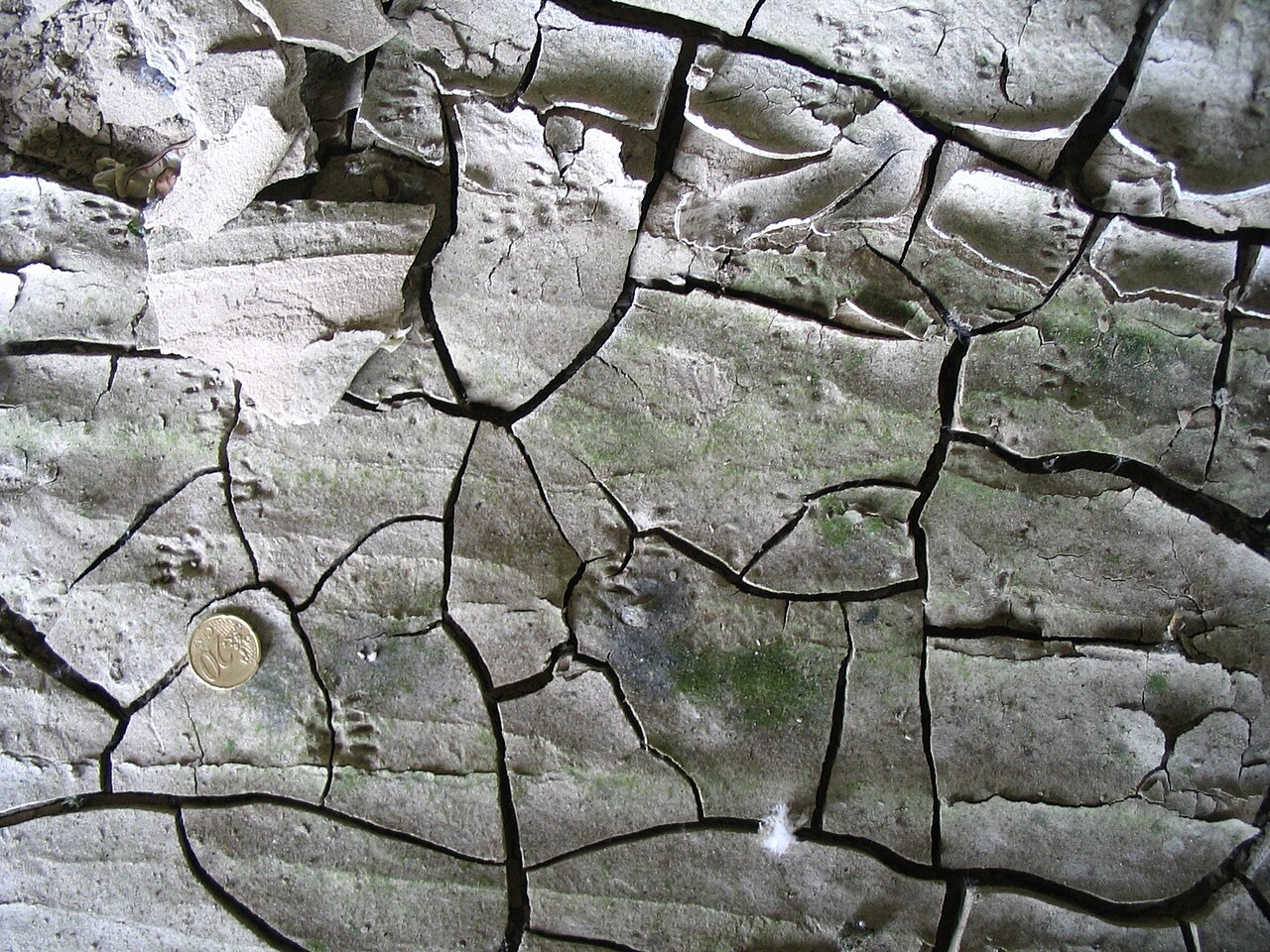
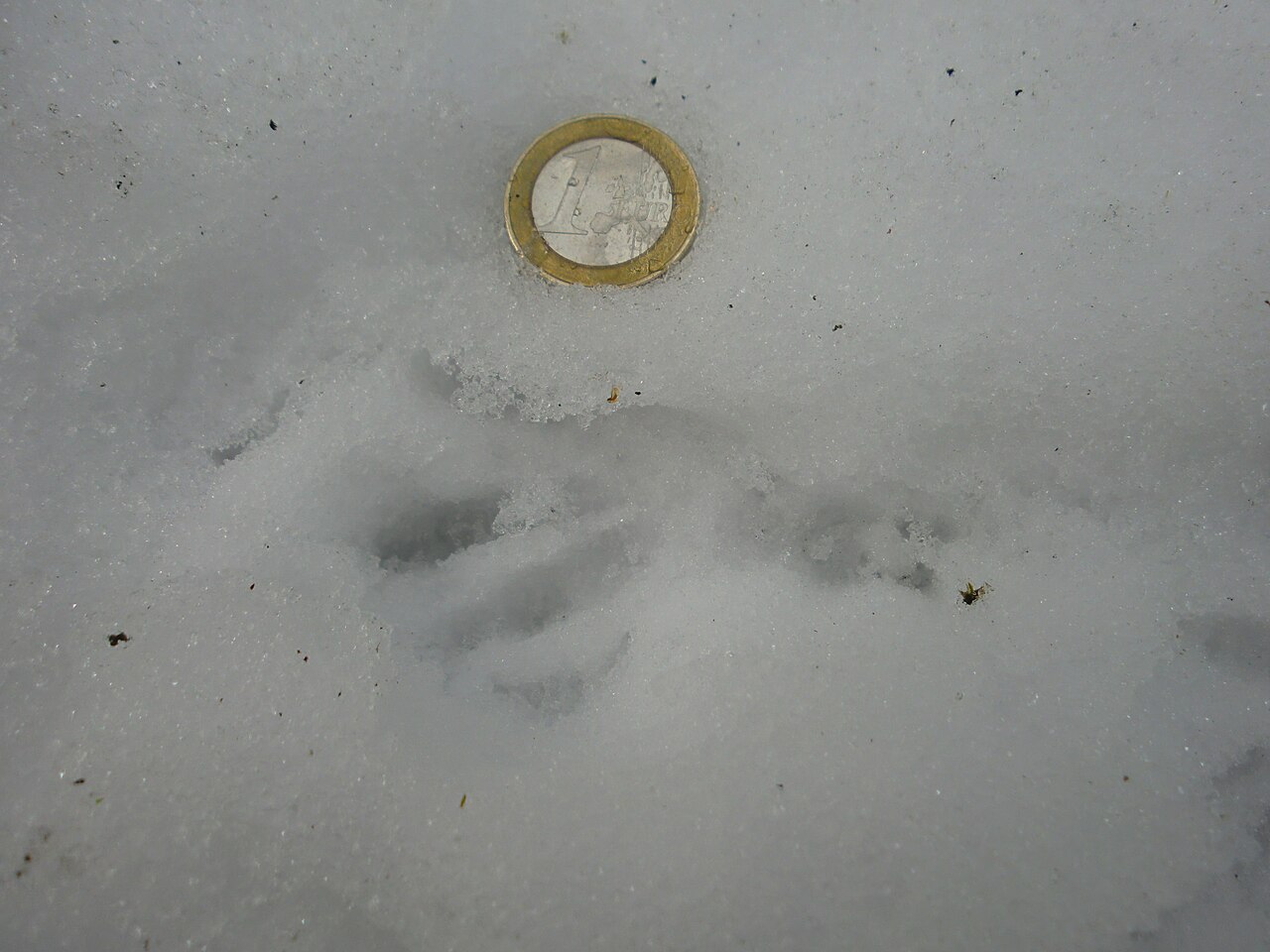
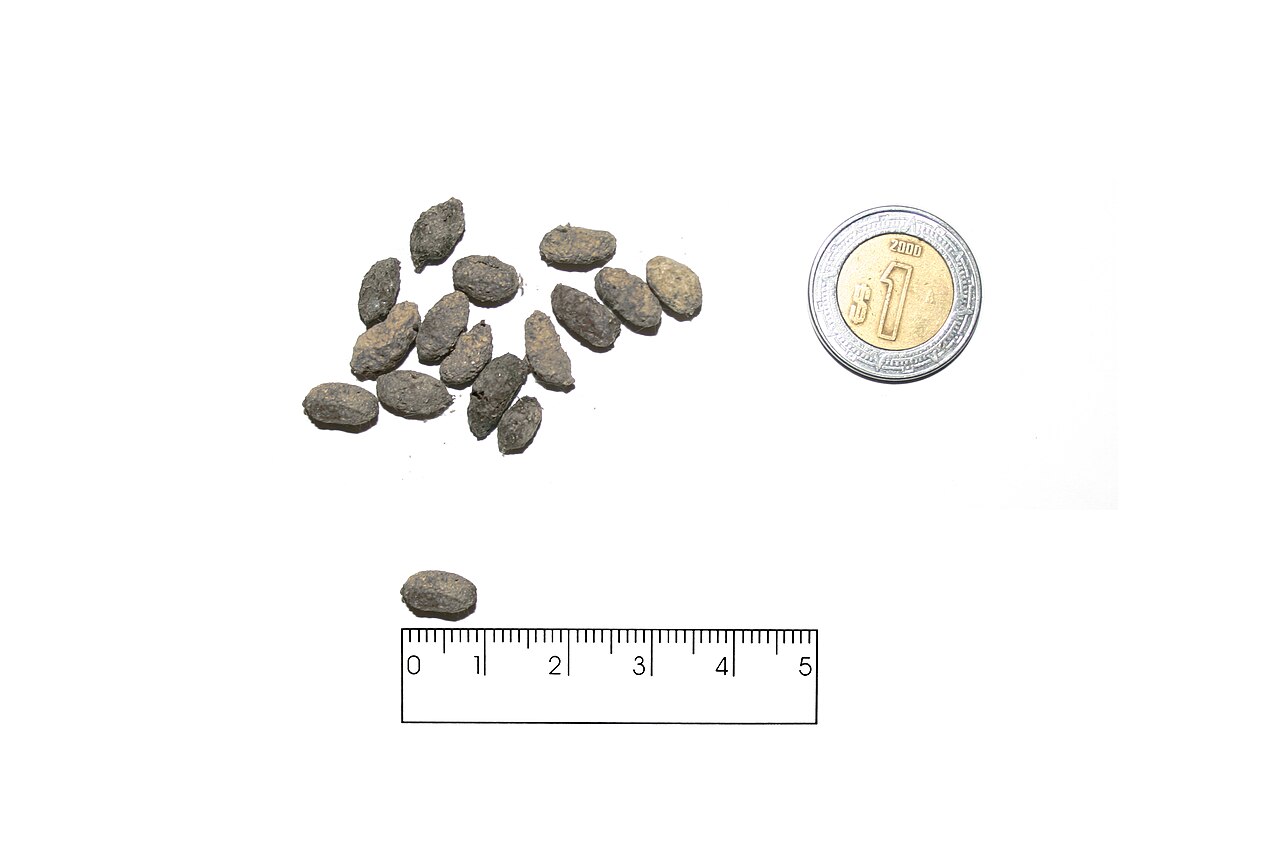
The brown rat leaves many easily recognised signs. Prints: the fore foot measures about 18 to 22 millimetres and has four toes spread in a star shape, with the vestigial thumb sometimes visible as a dot; the hind foot is much larger, over four centimetres long, with five toes and a long, clearly printed sole. That difference in size between fore and hind foot is the character: in mud or snow along a bank, a shed door or a compost heap the small four-toed prints lie among the large five-toed ones, often with a tail drag between them. The droppings are twelve to twenty millimetres long and four to six millimetres thick, sausage-shaped with blunt, rounded ends; in this they differ from the spindle-shaped, pointed droppings of the house mouse and from the smaller, thinner droppings of the black rat. Fresh droppings are black and glossy; one animal produces about forty a day, in groups along runs and at food sources. Along regular routes against walls, beams and pipes dark, greasy smear marks of dirt, grease and urine form. The burrow is characteristic of this species; no other rat digs such burrows: tunnels about nine centimetres across, usually in a bank, a dyke, under a shed floor, under a compost heap or in a riverbank, with a fan of excavated soil at the entrance and a bare, worn path leading to it. Around such a burrow lie runs: trodden paths five to eight centimetres wide through grass and nettles. Gnawing is coarse, with paired grooves two to three millimetres wide, in wood, plastic, lead, cables and sacks; a raided egg is broken open on one side and licked out. A room with rats has a sharp, musty, ammoniacal smell, heavier than the sweetish smell of mice.
In its habitat
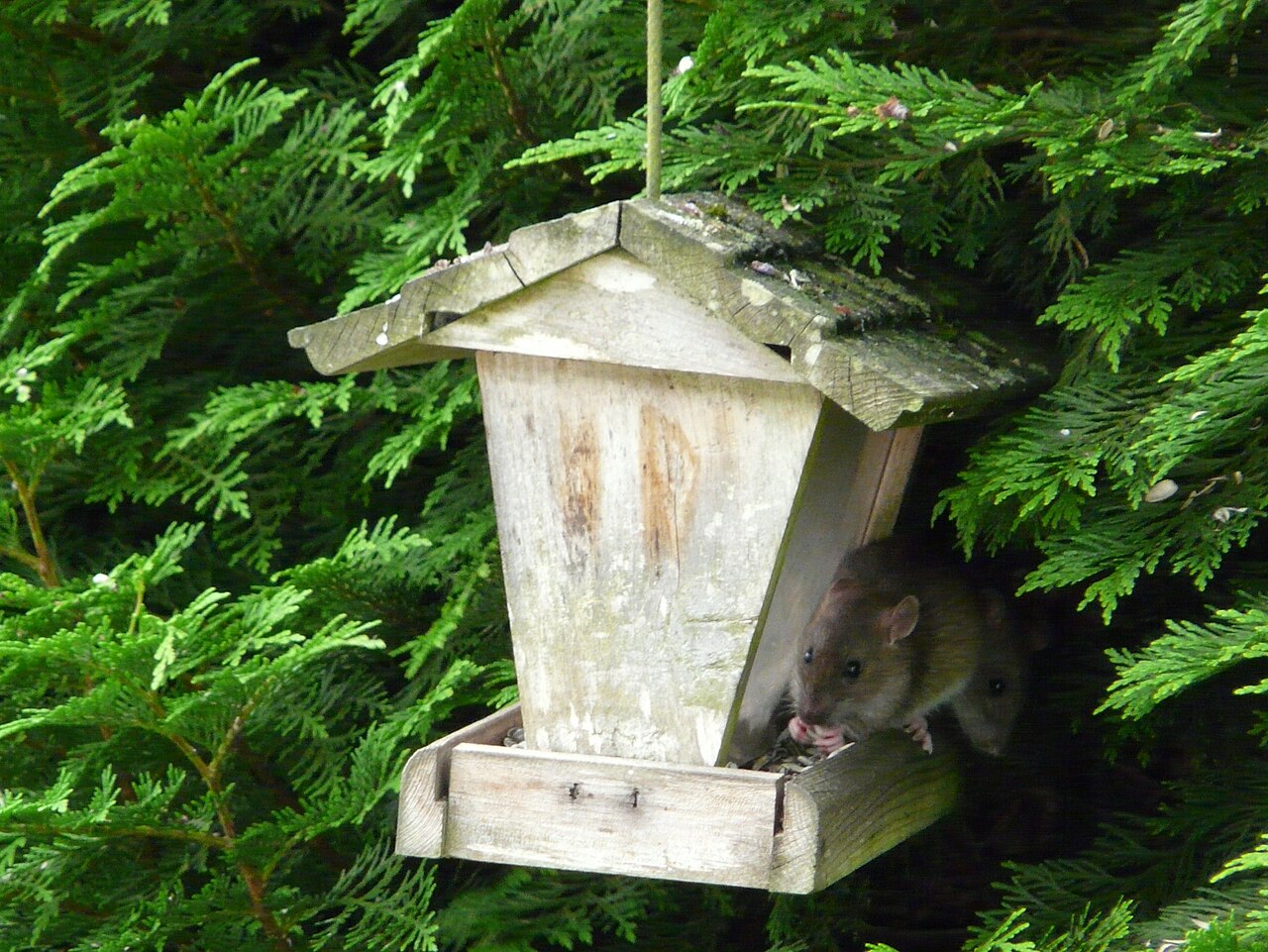
Head close-up
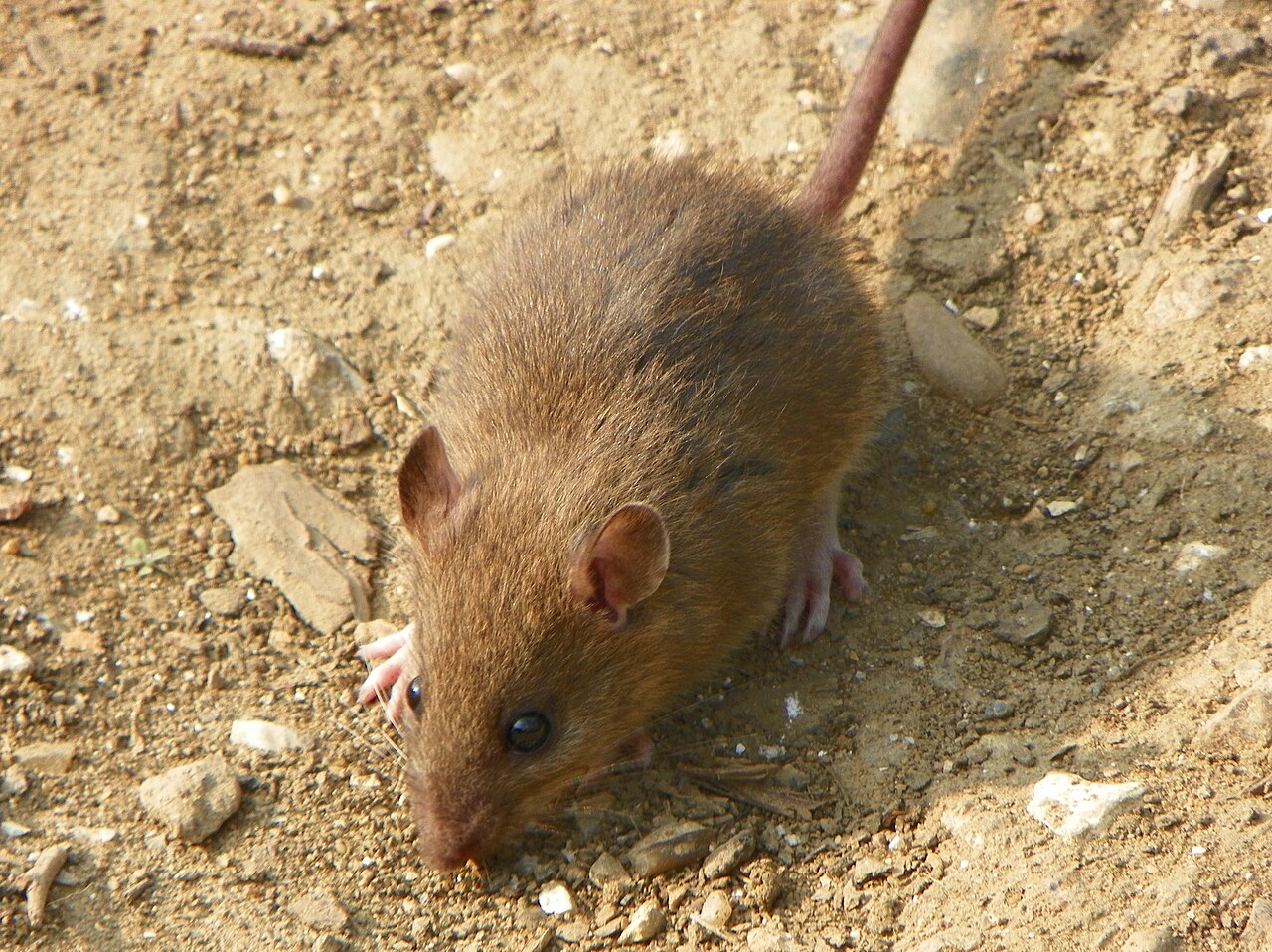
Identification
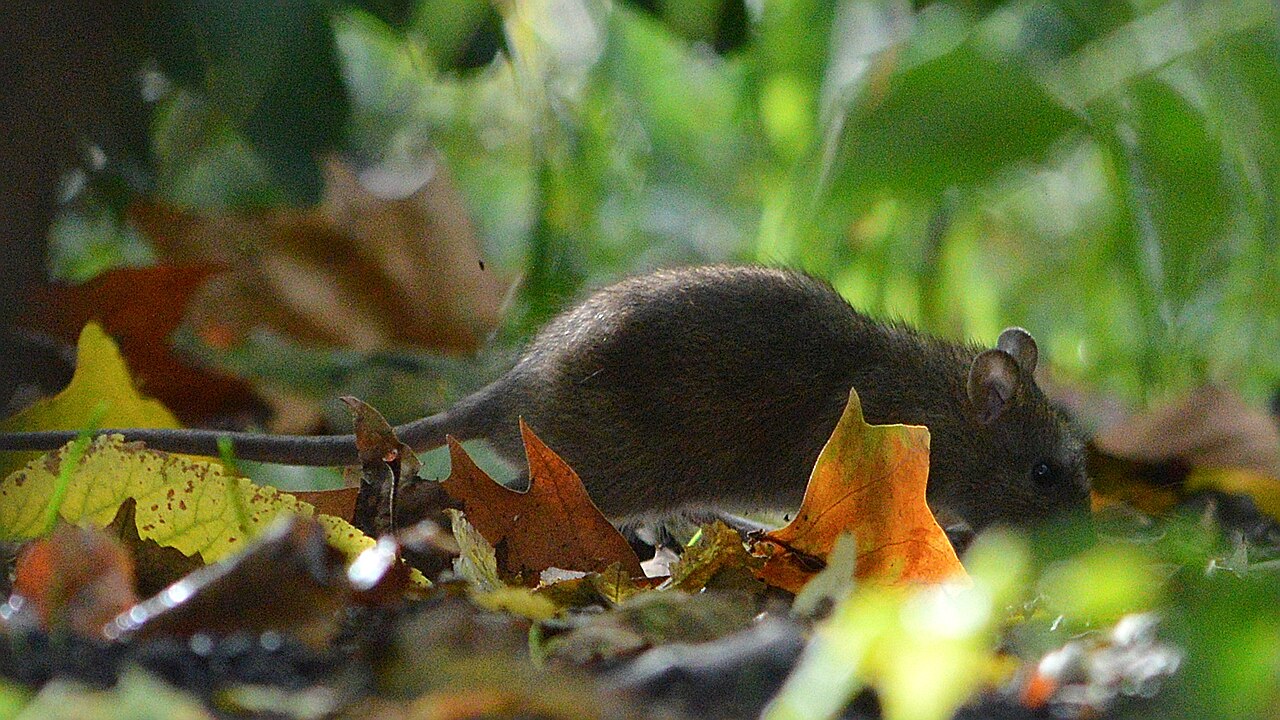
A substantial rat: head and body nineteen to thirty centimetres, tail fifteen to twenty-two centimetres, weight two hundred to five hundred grams; this makes it the heaviest rodent found in European houses. The coat is coarse, grey-brown to drab brown with grey, dirty-white or yellowish-grey underparts and no sharp line between them; black and pale individuals occur. The main character is the build: a heavy, thickset body, a blunt muzzle, small, thick, short-haired ears that do not reach the eye when laid forward, and small eyes. The tail is shorter than head and body, thick at the base, scaly, sparsely haired and often paler below. The hind foot is large and broad, over four centimetres in an adult. It moves low to the ground, swims and dives well, digs deep burrows and climbs moderately.
Similar species
The black rat (Rattus rattus) is the only species with which real confusion is possible; three characters are decisive. The tail is longer than head and body in the black rat, shorter in the brown rat. The ear in the black rat is large, thin and almost naked and reaches over the eye when laid forward; in the brown rat it is small, thick and furred. The muzzle is pointed in the black rat and blunt in the brown. The location also differs: the black rat lives high, in roofs, lofts and rafters, the brown rat low, in cellars, sewers, burrows and banks. A young brown rat is often mistaken for a large house mouse; a young rat has a proportionally much heavier head and much larger feet than an adult house mouse of the same weight, and a thick tail. The water vole is as large, but has a blunt, rounded head, small ears hidden in the fur, a furred tail half the body length, and feeds on plants along banks. The muskrat is much larger, with a laterally flattened tail. The coypu is larger still, with white whiskers and orange incisors.
Habitat
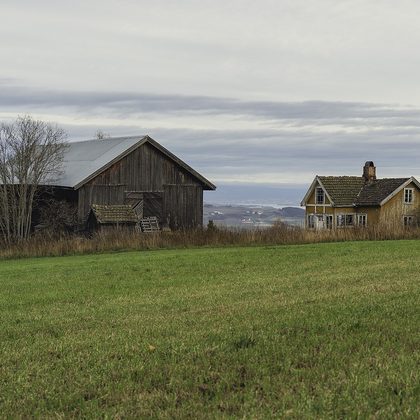
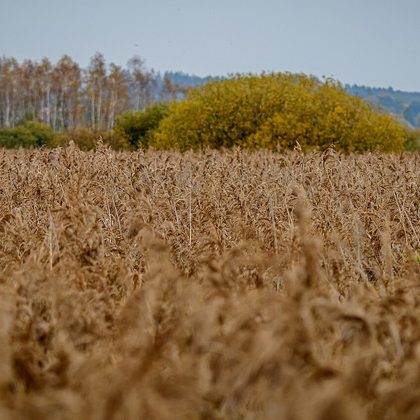
Anywhere food, cover and water come together, which in Europe is almost everywhere. Sewers, cellars, crawl spaces, docks, warehouses, markets, refuse tips, compost heaps, zoos, stables and farmyards; outdoors in the banks of ditches, canals, ponds and urban waterways, in reed beds, in dykes and railway embankments, and in summer in cereal fields and allotments. The species has a clear preference for a damp, not too warm environment; in north-west Europe it mainly occupies low, wet places, the black rat drier and higher places. In autumn part of the outdoor population moves indoors. On islands, in dune slacks and at seabird colonies it is one of the most damaging invasive species.
Where the animal is most at home, classified with EUNIS — the European standard for habitats.




Distribution
Originally a wild species of northern China, Mongolia, south-eastern Siberia and Japan, where it lived in damp woods and fields. Carried by people it has spread worldwide and is absent only from Antarctica. It reached Europe in the eighteenth century: recorded in Ireland in 1722, England in 1730, France in 1735, Germany about 1750 and Spain about 1800; it then spread across the whole of Europe within a few generations. In Europe it is now absent only from a few islands where it has been eradicated or never arrived, including islands off the Scottish and Irish coasts where eradication has taken place. In Britain and Ireland it is the commonest rat everywhere, from city sewers to farms and harbours. In the Netherlands and Flanders it occurs almost everywhere, from city centres to river floodplains; Terschelling was reached only in the summer of 2024. On the Iberian Peninsula it occurs throughout, and also on the Balearic and Canary Islands, associated with cities, ports, sewers, irrigated land, rice fields and riverbanks; in the Guadalquivir marshes and the Ebro Delta it is numerous, and on islets with seabird colonies its presence or absence determines the future of those colonies.
- Native
- dark = core range, pale = thinly spread
Way of life
Nocturnal, with most activity in the hours just before and after sunset; rats active by day usually indicate a high density or disturbance. Omnivore and opportunist: grain, seeds, fruit, roots, snails, insect larvae, amphibians, young mammals, eggs, nestlings, carrion and household refuse; it also gnaws soap and candles. It swims and dives well and takes mussels, shrimps and fish from shallow water. The species lives in large groups with a strict hierarchy, in burrow systems, sewers and cellars; when food is short, subordinate animals die first. Its hearing extends far into the ultrasonic range, its sense of smell is very good and its eyesight poor. Neophobia is characteristic: new objects are avoided for days, which makes control difficult. Breeding continues all year, with peaks in March and from September to November; after a gestation of twenty to twenty-three days an average of seven young are born, with three to five litters a year, and the young are sexually mature at three to four months. There is no hibernation. In the wild the brown rat seldom lives longer than a year.
Where and when to look
The best places are city parks with water, canals and harbours, about an hour after sunset. Sit quietly near a place where ducks are fed: rats often appear along the waterside within a quarter of an hour, and urban rats allow a still observer to be close. By day presence can be established from signs: search banks for holes about nine centimetres across with a fan of soil, for trodden runs through nettles and for prints in waterside mud, where small four-toed and large five-toed prints lie side by side. In winter a thin layer of snow along a shed or compost heap is the easiest way to find tracks. Keep your distance: a rat with no escape route may bite.
Conservation status
Least Concern (2025). The brown rat is one of the most numerous mammals on earth and is nowhere threatened with extinction; estimates for individual cities vary widely (for New York from a quarter of a million to nearly a hundred million), which mainly shows how imprecisely these numbers are known. Rattus norvegicus is a wild species with its own natural range in north-east Asia, which has spread with people without being domesticated, like the rabbit, the house mouse and the black rat. The laboratory rat and the fancy rat have been bred from this species; these bred forms are domestic animals. In Europe the brown rat is not a native species, but one introduced about three hundred years ago. Attention to the species concerns damage, not conservation: it destroys and contaminates stored food, gnaws through cables and insulation, undermines dykes and quays, and transmits among others Weil's disease, rat-bite fever, Q fever, hantaviruses and toxoplasmosis. Control with anticoagulants is becoming less effective (resistance has been established across much of north-west Europe) and leaves residues in Barn Owl, Kestrel, Buzzard and Stone Marten, which is leading to stricter rules throughout the European Union. On islands it is one of the most damaging invasive species: it eats the eggs and chicks of storm petrels, auks and terns and has caused whole colonies to disappear. The eradication projects on islands from Scotland to the subantarctic are regarded as among the most successful restoration projects in the world.
Scientific name
Rattus norvegicus | (J. Berkenhout, 1769)
J. Berkenhout described the species in 1769 as Mus Norvegicus; because it was later moved to another genus, the author and year stand in brackets. Rattus is the medieval Latin word for 'rat'. Related forms stand side by side in Germanic, Romance and Celtic; how they hang together, and where the word ultimately came from, is unknown. norvegicus means 'Norwegian'. Berkenhout believed the rat had reached England on Norwegian ships in 1728; in fact the species comes from northern Asia and Norway had nothing to do with it. The specimen the first description was based on came from United Kingdom.