All species › Rodents › Mice and rats › Short-tailed bandicoot rat
Short-tailed bandicoot rat | Nesokia indica
Kortstaartmolrat | Nesokia indica
The Short-tailed Bandicoot Rat (Nesokia indica) is, despite its alternative name, not a mole-rat but a member of the Muridae with a burrowing, subterranean way of life. It digs tunnel systems tens of metres long through damp arable soil with its incisors, lays in stores and rarely comes above ground. The range extends from north-eastern Africa and the Near East to the Indian subcontinent; in the west the species reaches the Nile Delta, the Arava and Jordan.
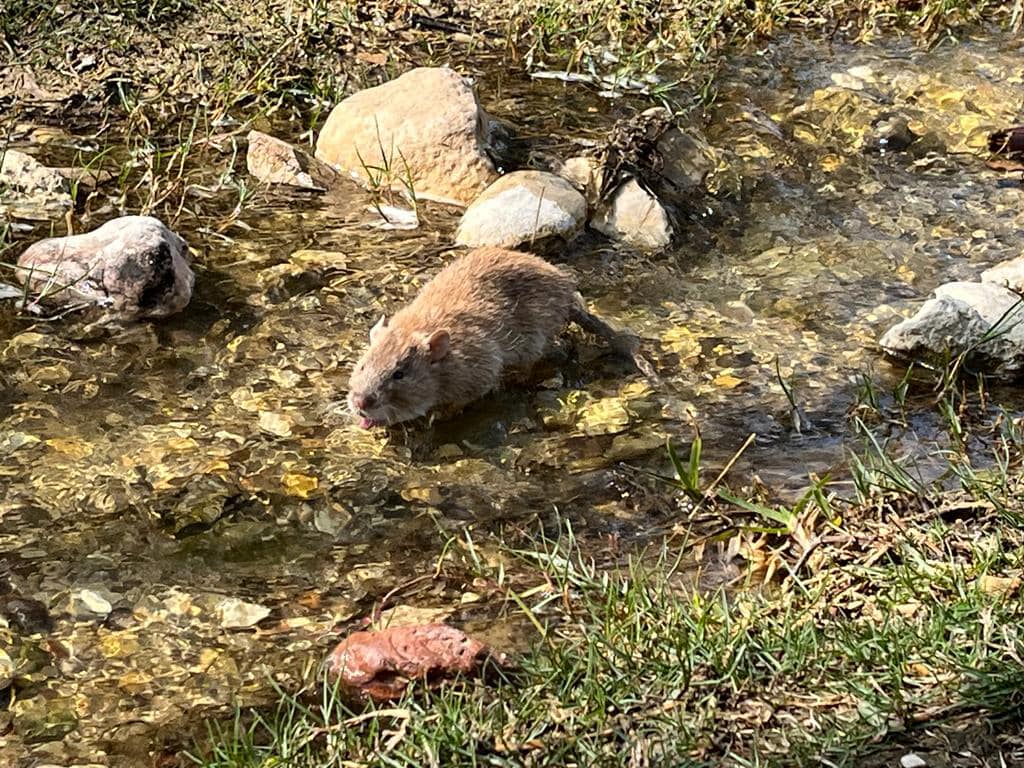
Tracks
Of this species almost only the digging is seen. In moist soil the animal makes a system of a few to many tunnels, up to twenty-three metres long, with storage chambers and a nest chamber, usually fifteen to sixty centimetres below the surface. The excavated soil is pushed up into heaps that lie in lines across an irrigated field or along a canal and differ from molehills in being larger and coarser and containing plant debris. Where the animal burrows through a bank or irrigation wall, the wall collapses; in the Nile Delta and the Jordan Valley farmers recognise the species by this. Crops are eaten from below: a row of plants wilting one after another with gnawed roots, without signs above ground, indicates this species, as do storage chambers with roots, tubers and ears of grain opened up by ploughing. Prints and droppings are rarely found, since the animal seldom comes above ground.
Identification
A heavy, thickset rat with a short tail: head-body fifteen to just over twenty centimetres, tail nine to fifteen centimetres, 55 to 60 per cent of head-body length, and a weight of nearly a hundred to over three hundred grams. The coat is coarse, short, harsh and somewhat spiny, fawn or yellowish brown to greyish brown above, paler below. The tail is naked, uniformly brown and thick, not bicoloured. The head is broad and blunt, the eyes small, the ears small and sunk in the fur, and the orange-yellow incisors are broad; they are used for digging. The legs are short and powerful, with strong claws.
Similar species
The Brown Rat (Rattus norvegicus) is as large, but has a much longer tail, a slimmer head, larger eyes and ears, a smooth coat and narrow incisors, and digs shallowly. The Black Rat has a tail longer than head and body, large thin ears, and climbs. The blind mole-rats (Spalax, Nannospalax) throw up comparable heaps and are therefore the most difficult to separate; they are, however, entirely tailless, without visible eyes and without external ears, and have a flattened head. An animal with a short but clearly present tail and visible eyes is a Short-tailed Bandicoot Rat. The Water Vole (Arvicola) does not occur in this part of the Near East. When only the heaps are found, as is usually the case, the region and the type of heap decide.
Habitat
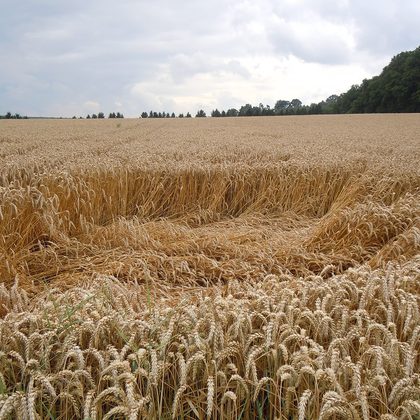
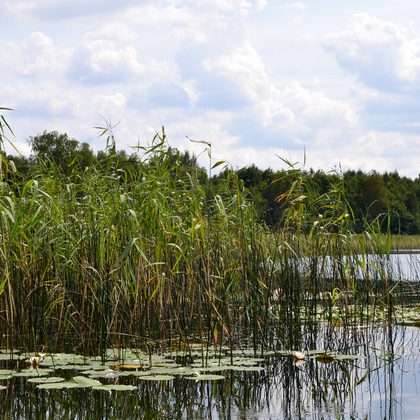
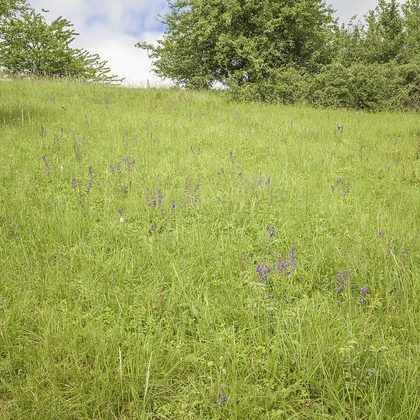
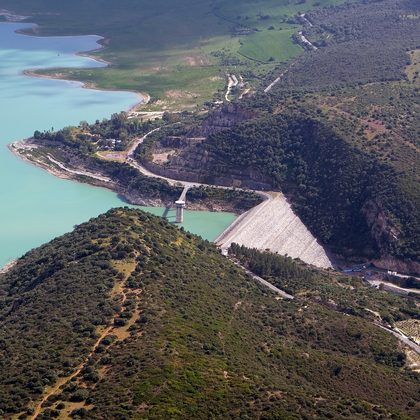
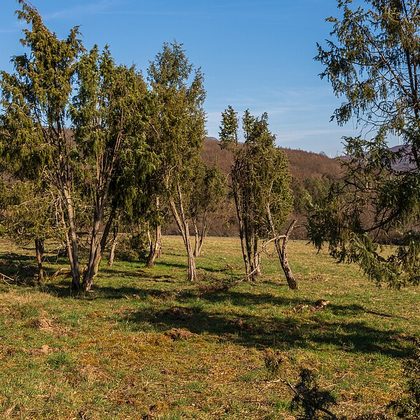
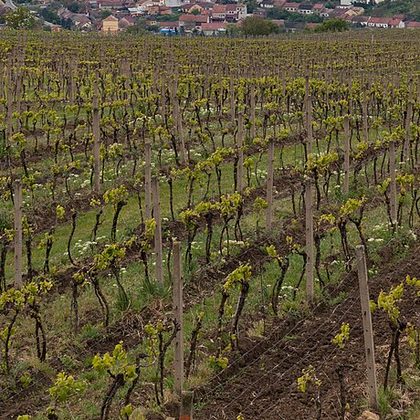
Moist soil near permanent water, in practice mainly farmland: irrigated fields, rice paddies, vegetable gardens, plantations, banks of irrigation canals and margins of rivers and ditches, and also dry scrub and grassland where the soil is deep and soft enough. The species occurs from sea level to about sixteen hundred metres and has a clear preference for moist soil near permanent water; in the driest part of its range it therefore depends on irrigation.
Where the animal is most at home, classified with EUNIS — the European standard for habitats.
Distribution
From North Africa and the Near East through Central Asia to the Indian subcontinent: northern Egypt (the Nile Delta), south-eastern Israel, western Jordan, north-eastern Syria, extreme south-eastern Turkey, Iraq, central-western Saudi Arabia, Iran, Turkmenistan, western and southern Uzbekistan, Afghanistan, western and central Tajikistan, north-western China, Pakistan, northern India, western and south-central Nepal and central Bangladesh. The western limit of the range lies in the Nile Delta, the Negev and Arava Valley, and Jordan. The species does not occur in Europe.
- Native
- dark = core range, pale = thinly spread
Way of life
Nocturnal and largely subterranean. A herbivore: roots, grasses, grain, vegetables and fruit from cultivated land, of which large quantities are stored in the chambers of the tunnel system. Breeding continues all year, with a peak in the rainy season; gestation is about seventeen days, a litter has one to ten young, and a female usually has about three litters a year. A tunnel system is occupied by a single animal or by a female with young; the species is not colonial. No hibernation; active in the coldest months too, living on stored food. Little is known about longevity and movements in the field.
Where and when to look
The animal itself is rarely seen; the species is recorded from its signs. Along the edges of irrigated plots in the Nile Delta, the Jordan Valley or the Arava, lines of coarse heaps with plant debris, collapsed irrigation walls and rows of wilting plants are indications. At sunset the animal pushes soil out, and at a fresh heap its head is then sometimes visible. Digging yields little and damages the farmer's banks. The nearest sites for visitors from Europe are the farmland of the Negev and the Arava and along the Nile.
Conservation status
Least Concern (LC, 2016). The species has a very large range, is locally numerous and has benefited from the spread of irrigated agriculture; where irrigation is introduced, it settles. It is therefore also an agricultural pest: it causes considerable damage to grain, vegetables and fruit and makes irrigation walls collapse, and in Egypt, Iraq and Iran it is locally subject to routine control. In the Arava and the Negev, at the western edge of the range, it is scarce and dependent on a small number of irrigated oases and field complexes, so that changes in water management there have immediate effects.
Scientific name
Nesokia indica | (J. E. Gray, 1830)
J. E. Gray described the species in 1830 as Arvicola indica; because it was later moved to another genus, the author and year stand in brackets. Nesokia is read as Greek nēsos, 'island', with oikein, 'to dwell'. Gray nowhere explains the name, and since the animal is no islander the reading remains uncertain. indica is Latin for 'Indian'; Gray described the animal from mainland India. The specimen the first description was based on came from India.