All species › Waterfowl › Ducks, geese and swans › White-Faced Whistling Duck
White-Faced Whistling Duck | Dendrocygna viduata
Witwangfluiteend | Suirirí cariblanco
An upright, long-necked whistling duck with a white face on a black head, living in large, loudly whistling flocks in sub-Saharan Africa and South America. In North Africa and the Middle East it is an exceptional vagrant, and escape from captivity must always be considered.
Voice
A clear, high, three-note whistle, swee-swee-sweeoo, given by day and night, in flight and on landing. A flock calls all at once, producing a whistling chorus that carries far over water.
Recording: Romuald Mikusek — CC BY-NC-SA 4.0 · converted to mono · xeno-canto
Identification
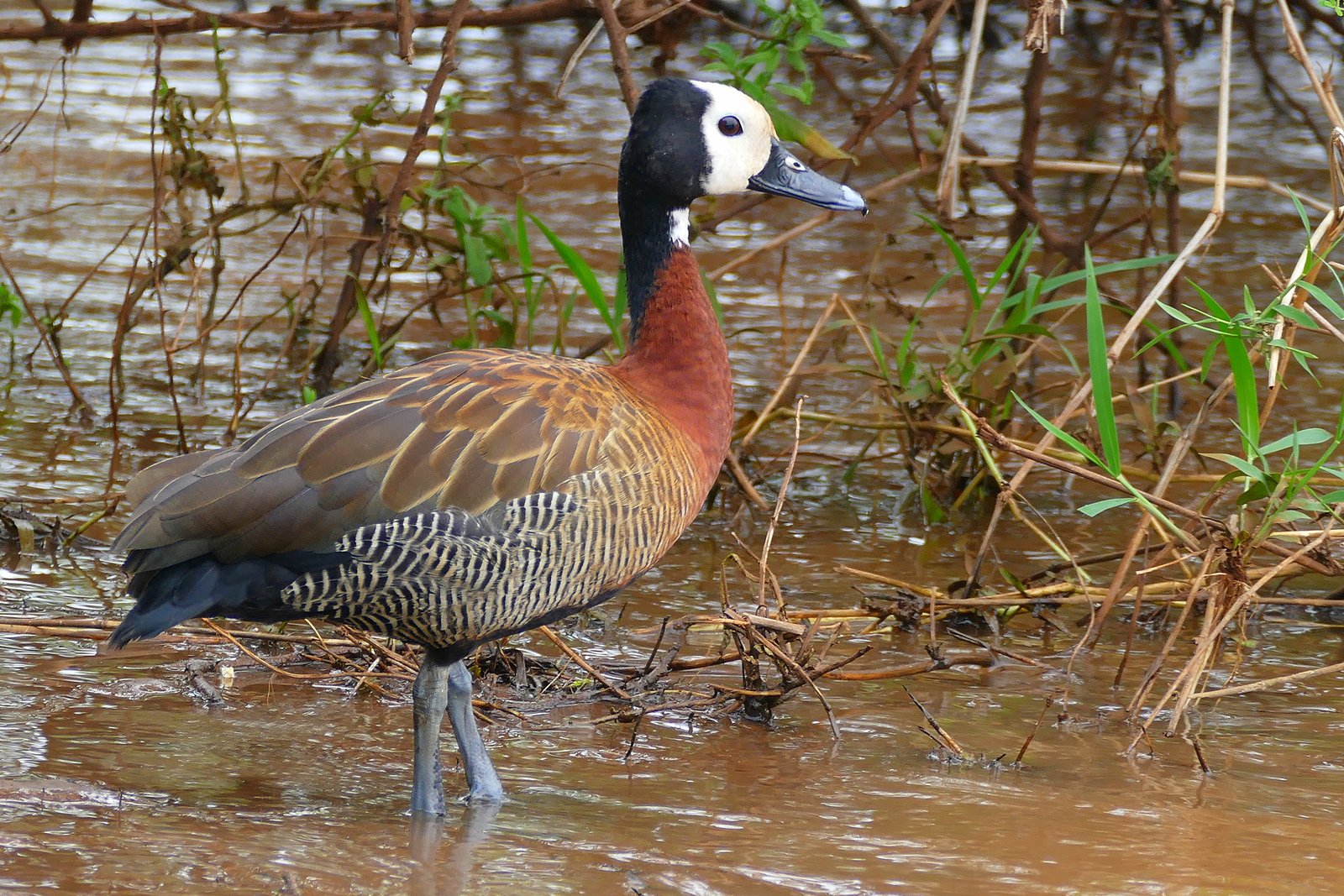
43–48 cm, with a long neck, long grey legs and an upright, goose-like stance. Face and forecrown white, hindcrown and hindneck black; the white can be stained rusty by iron-rich water. Neck and breast warm chestnut, flanks finely barred black and white, belly black, back brown with pale fringes. Bill blackish grey. In flight broad, uniformly dark wings without a speculum, with the feet projecting and the neck slightly drooped. Sexes alike; juveniles have a dingy grey-brown face.
Confusion species
Fulvous Whistling Duck (Dendrocygna bicolor) has the same build but an ochre-brown head and underparts with a dark stripe down the hindneck, creamy flank plumes and a white U on the rump in flight. Lesser Whistling Duck (Dendrocygna javanica) is smaller, with a brownish head and rufous upperwing coverts. Juvenile White-Faced Whistling Ducks with a grey-brown face give themselves away by the barred flanks and black belly.
Habitat
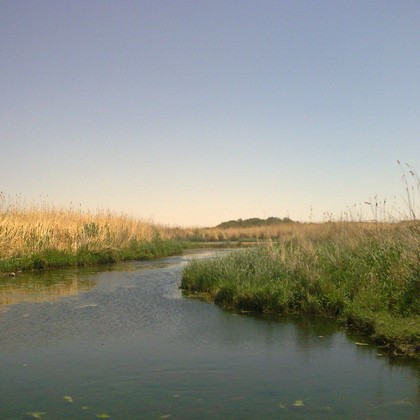
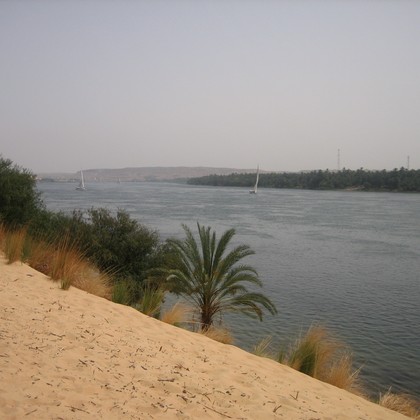
Shallow freshwater lakes, marshes with open water, river backwaters, rice fields and flooded grassland. It feeds mainly at dusk and by night, dabbling and diving for seeds and aquatic plants, and rests by day packed tightly on banks and sandbars. A vagrant in the region may turn up on any suitable fresh water, including reservoirs and sewage ponds.
Where the bird is most at home, classified by the habitats of North Africa and the Middle East.
Range and movements
Within the region only a few vagrants, reported from Iraq and Yemen. Beyond it widespread in sub-Saharan Africa, north to the Sahel, Sudan and Ethiopia, on Madagascar and the Comoros, and in tropical South America and southern Central America. Locally it moves with the rains, but it rarely crosses the Sahara.
How and when to look
A White-faced Whistling Duck in the region is a genuine rarity. Note whether the bird is wary or keeps company with Mallards, and check for rings and damaged primaries: the species is widely kept in waterfowl collections and escapes are an obvious possibility. Report any sighting with photographs to the national rarities committee.
Conservation status
Not threatened and abundant across its large range. In the region a vagrant with only a handful of records in Iraq and Yemen; the origin of such birds is not always certain, as escapes from captivity occur.
Scientific name
Dendrocygna viduata | (Linnaeus, 1766)
Linnaeus described the species in 1766 as Anas viduata; because it was later moved to another genus, the author and year stand in brackets. The genus Dendrocygna was introduced in 1837 by Swainson. Dendrocygna comes from the Greek dendron, 'tree', and the Latin cygnus, 'swan' — 'tree swan', because some whistling ducks perch or nest in trees. viduata is Latin for 'widowed, in mourning' — for the white face and black hindneck, reminiscent of mourning dress. The specimen the first description was based on came from Cartagena, Colombia.