All species › Waterfowl › Ducks, geese and swans › Fulvous Whistling Duck
Fulvous Whistling Duck | Dendrocygna bicolor
Rosse fluiteend | Suirirí bicolor
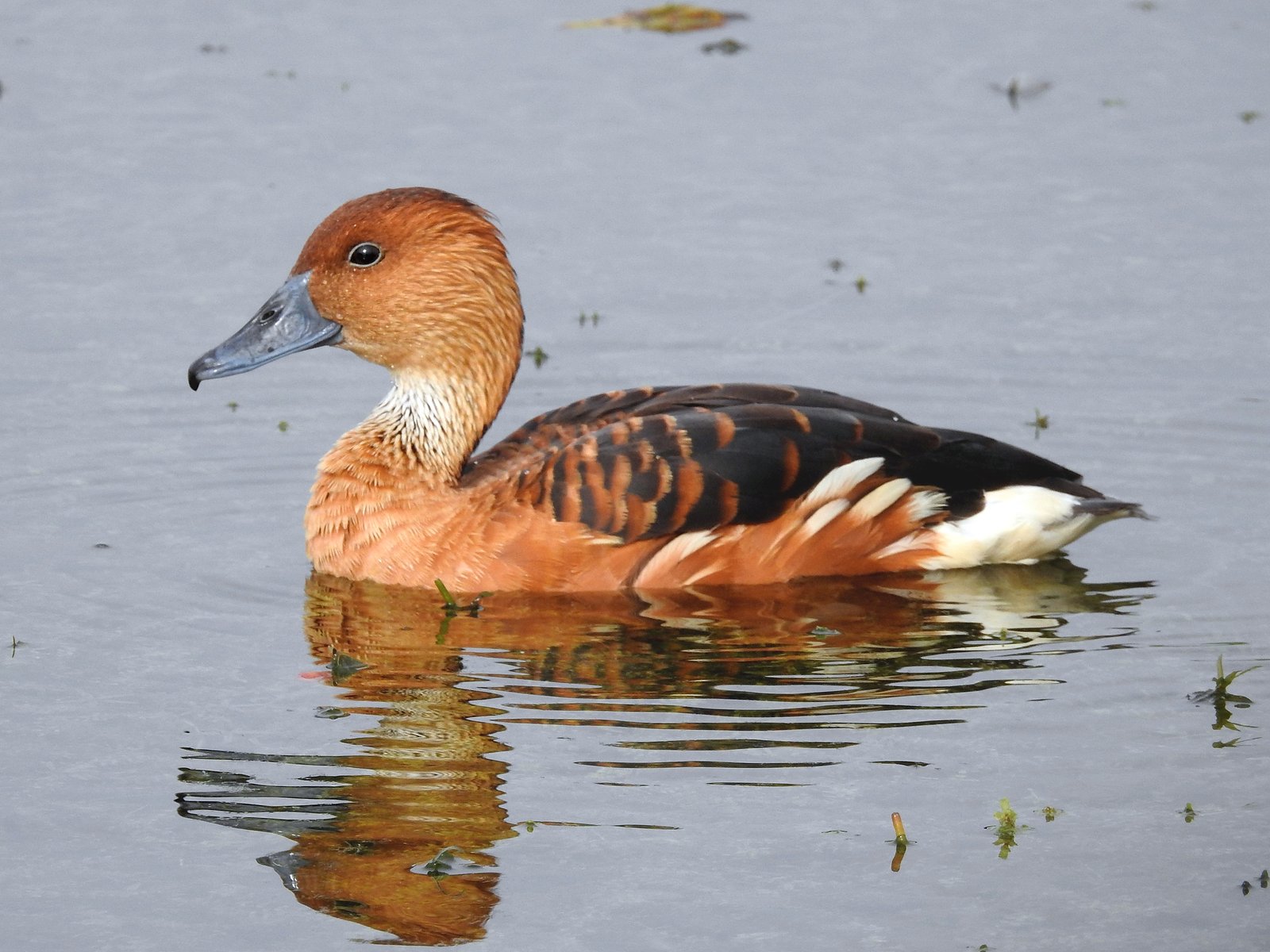
A warm ochre-brown whistling duck with long legs and a white U on the rump, one of the few ducks found on four continents. In North Africa and the Middle East it appears only exceptionally, as a wanderer from the Sahel, East Africa or the Indian subcontinent.
Voice
A thin, squeaky, two-note whistle, tee-wheeoo, softer and less clear than the three-note whistle of White-faced Whistling Duck; often heard in flight and at night.
Recording: José María Loaiza B. — CC BY-NC-SA 4.0 · converted to mono · xeno-canto
Identification
45–53 cm. Head, neck and underparts rich ochre to orange-brown, with a narrow blackish stripe down the hindneck and a pale, finely streaked patch on the side of the neck. Back dark brown with rufous fringes, giving a scaly pattern; long creamy-white plumes along the flanks form a pale stripe. Bill and legs blue-grey. In flight dark wings and a conspicuous white U-shaped band on the rump against the black tail; the feet project beyond the tail. Sexes alike; juveniles duller with less distinct flank stripes.
Confusion species
Lesser Whistling Duck (Dendrocygna javanica) is smaller, with a darker brown crown, rufous upperwing coverts and a chestnut rather than white rump. White-faced Whistling Duck (Dendrocygna viduata) has a white face, black belly and barred flanks. Female Ruddy Shelduck (Tadorna ferruginea) is also orange-brown but shorter-legged, with large white wing panels in flight.
Habitat
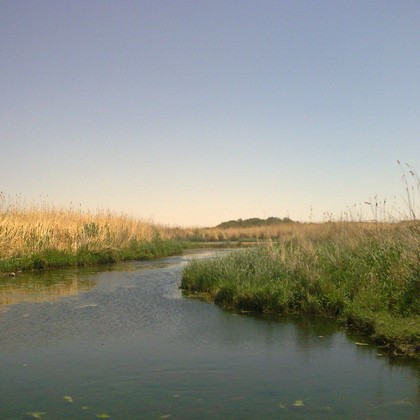
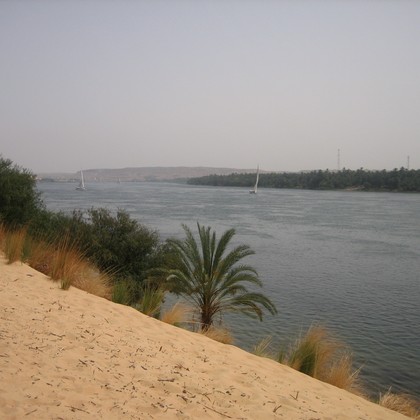
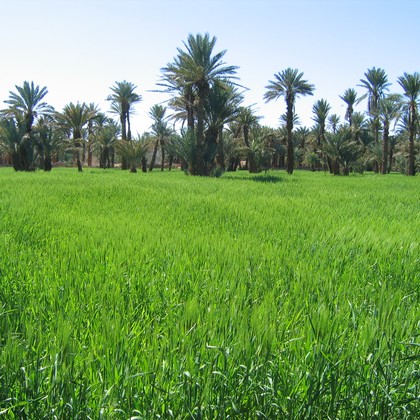
Freshwater marshes with floating vegetation, shallow lakes fringed with reeds, rice fields and irrigated farmland. It feeds largely at night on the seeds of aquatic plants and rice, often dabbling or feeding while swimming; by day it rests in tight groups in vegetation. Vagrants in the region have been seen on reservoirs, oasis pools and sewage ponds.
Where the bird is most at home, classified by the habitats of North Africa and the Middle East.
Range and movements
Within the region a vagrant with isolated records in Morocco, Saudi Arabia, Yemen and Oman. Beyond it found in sub-Saharan Africa (from the Inner Niger Delta and Lake Chad to East and southern Africa and Madagascar), on the Indian subcontinent and in the Americas from the southern United States to Argentina. It wanders widely with changing water levels.
How and when to look
Given its rarity, finds are a matter of luck; the best chances are in south-west Arabia and southern Oman, on fresh water near the coast, and in Morocco on the large merjas. In flight look for the white rump and pale flank stripe. Tame or ringed birds may have come from captivity.
Conservation status
Not threatened; numerous across its large range, although it declines locally through wetland drainage and poisoning in rice fields. In the region only a rare vagrant with no settled population.
Scientific name
Dendrocygna bicolor | (Vieillot, 1816)
Vieillot described the species in 1816 as Anas bicolor; because it was later moved to another genus, the author and year stand in brackets. The genus Dendrocygna was introduced in 1837 by Swainson. Dendrocygna comes from the Greek dendron, 'tree', and the Latin cygnus, 'swan' — 'tree swan', because some whistling ducks perch or nest in trees. bicolor is Latin for 'two-coloured', for the contrast between the rufous body and the dark back. The specimen the first description was based on came from Paraguay.